
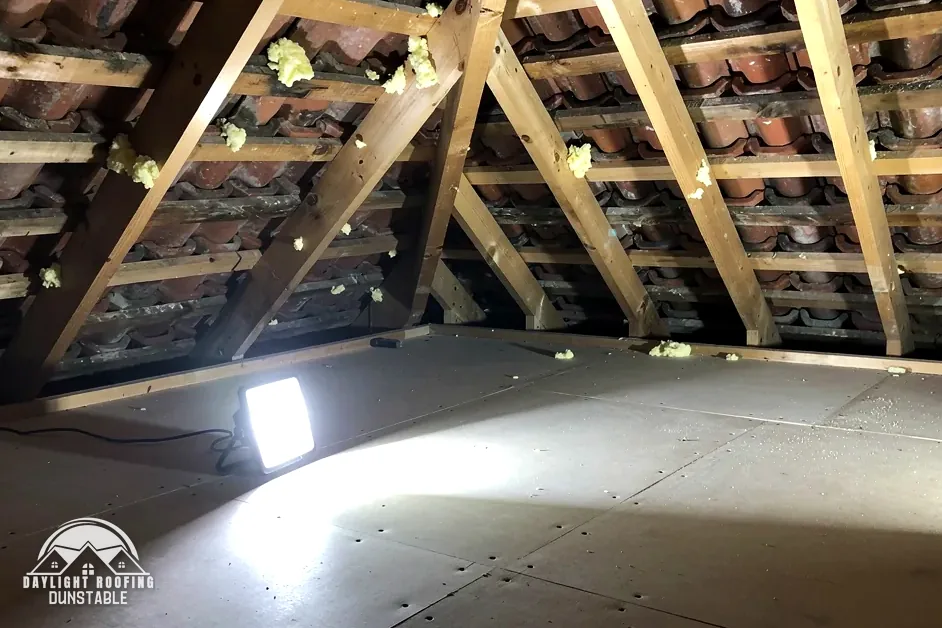
01 Damp in a cold loft
Heat and humidity rise from the rooms below into the loft, and on cold timber or felt they can condense into droplets. A dark bloom on the rafters, or a felt that drips on a cold morning, is a sign of condensation, and a roof that seems to leak only in winter may be condensing and not letting rain in. Marley's table, for a cold roof where the underlay is high-resistance, asks for 25 mm along the eaves at pitches of 15 degrees or less, and 10 mm along the eaves above 15 degrees, which is a narrow slot that insulation can easily close.
Marley treats one build-up differently. Where the ceiling below is well sealed, the underlay offers low resistance and the covering lets air through, "fortuitous ventilation at the eaves via normal eaves construction (3mm) is all that is required, provided the requirements of UKAS Third Party certification are fully met". BS 5250:2021 is the current moisture code and is under review. Insulation pushed into the eaves can block the air path, so shine a torch along the eaves from the hatch and see whether the gap is clear.