A ceiling stain or bulge
Check 1 of 8
A leak that shows indoors is the plainest roofing emergency, because the water has already got past the tiles, the underlay and the loft insulation. It spreads across the top of the plasterboard until it reaches a joint or a light fitting it can drop through, so the wet patch can sit some way from the fault above. A ceiling that has started to sag is holding water, and plasterboard soaked through can give way, so the room below stays empty until the water is out.
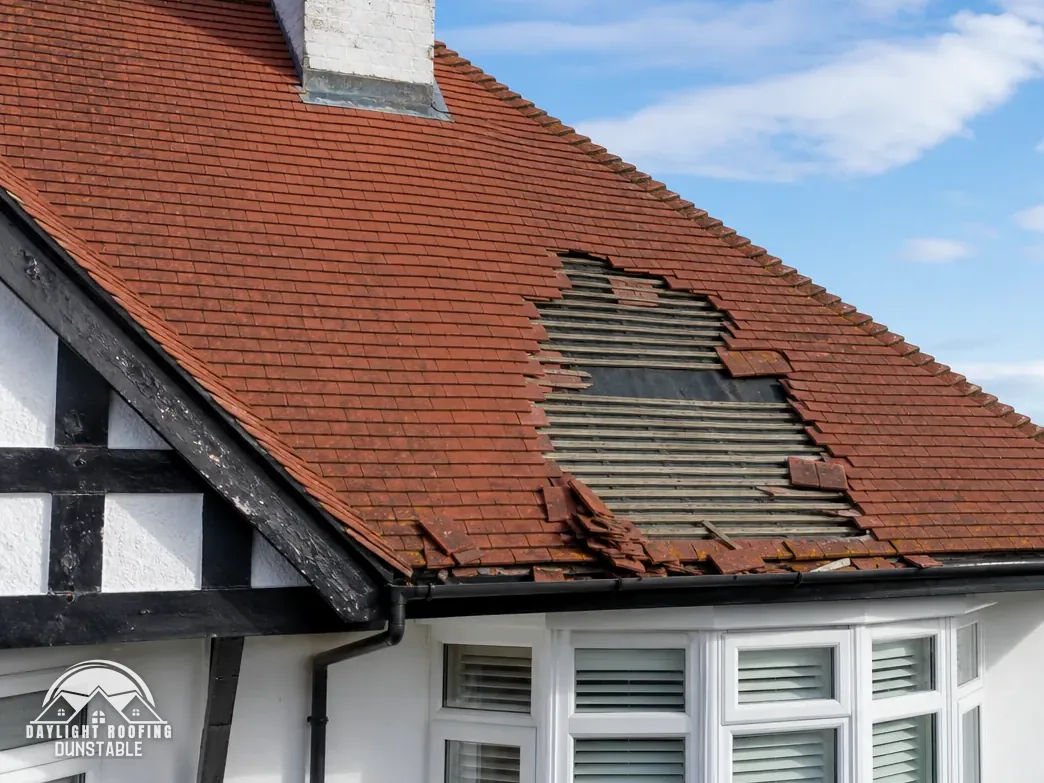
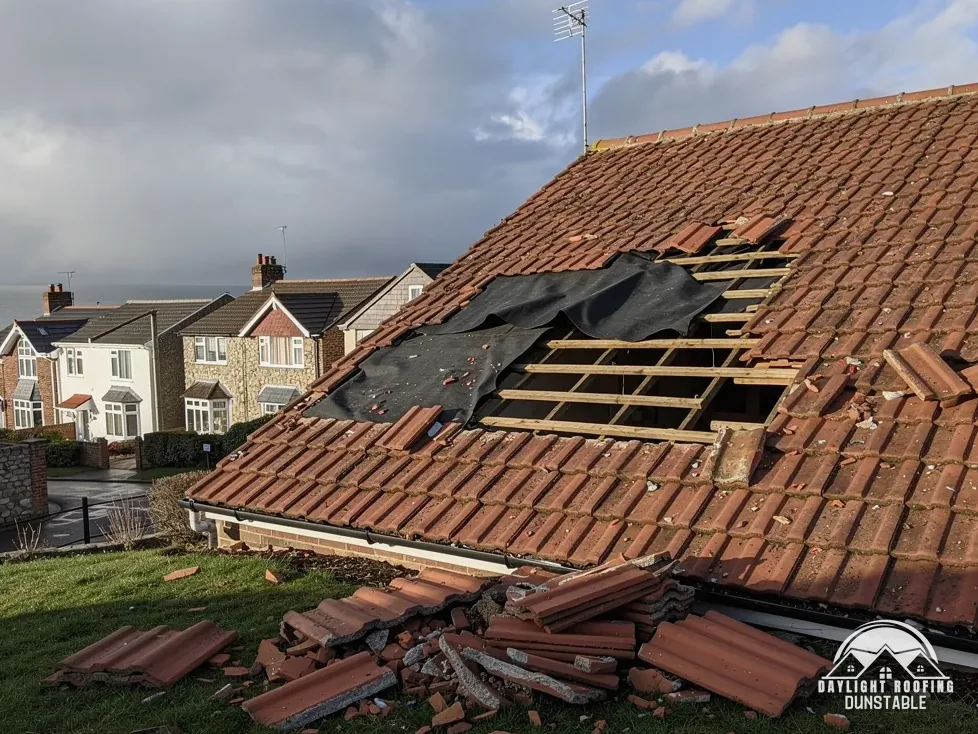
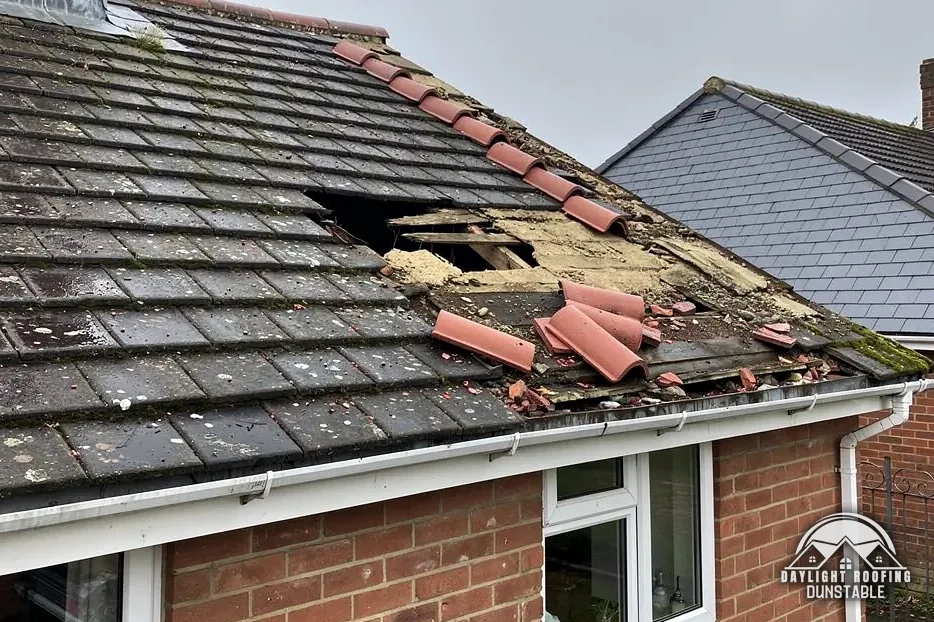
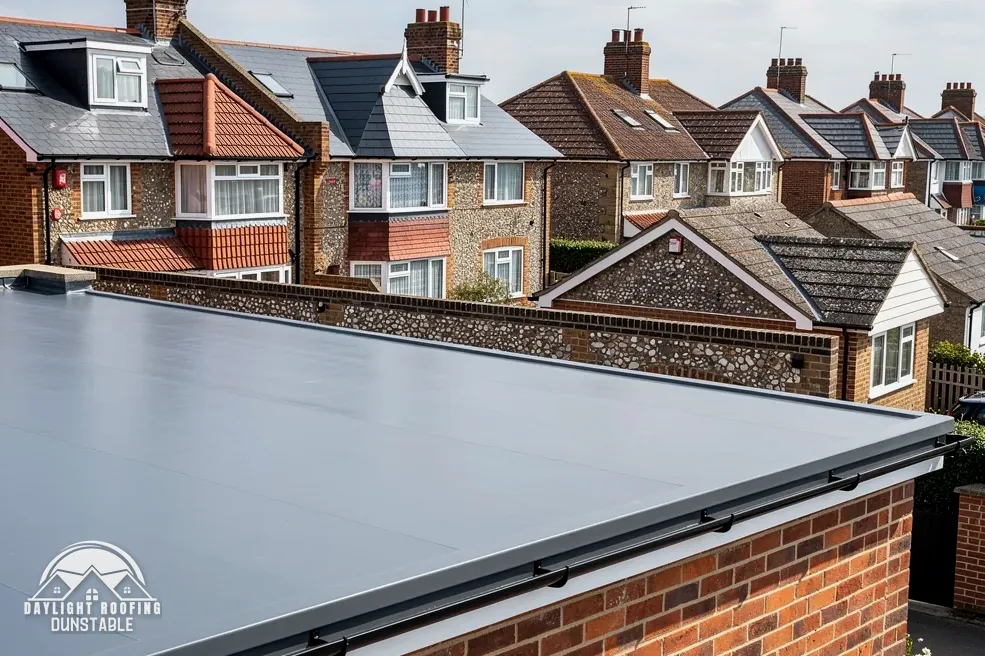
Not every fault calls for urgent roof repairs. A single slipped tile on a dry day, moss in a gutter or a cracked joint in the ridge mortar can wait for a booked survey. Water coming in cannot wait, and nor can a section of roof open to the sky, a chimney or ridge that looks loose above a path or drive, or a flat roof covering lifting in the wind. The guide to what counts as a roofing emergency sorts faults into the two groups.
Indoors, the aim is to hold the damage where it is while the outside is made safe. Put buckets under the drips with towels round them, move furniture and rugs away, and unplug electrical items and lift them clear. Go up to the loft only if the hatch and boards are safe to stand on, and look along the underside of the roof for the wet track with a torch. Photograph the ceiling, the loft and anything spoiled before it is moved or thrown away.
What you will see
A brown ring on a ceiling, drips from a light fitting, or plaster sagging under the weight of water.
What it means
Rain has passed the roof covering and is collecting on the ceiling or running along a joist.
What to do
Keep everyone clear of a bulge, keep water away from sockets and fittings, and catch the drips.
Signs a roof will not wait
- Water dripping through a ceiling
- Daylight showing in the loft
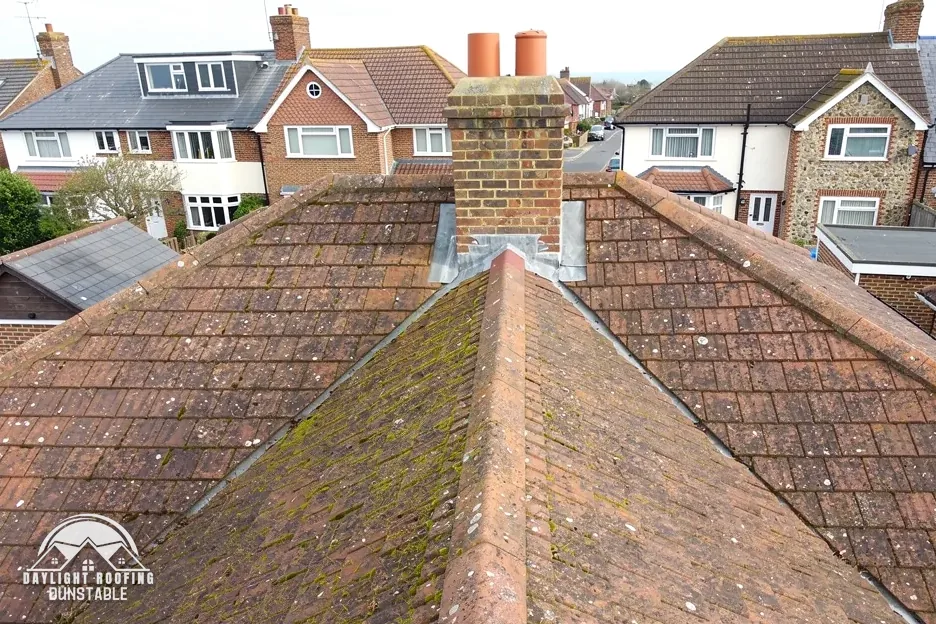
- A chimney leaning or cracked
- A ridge tile hanging loose
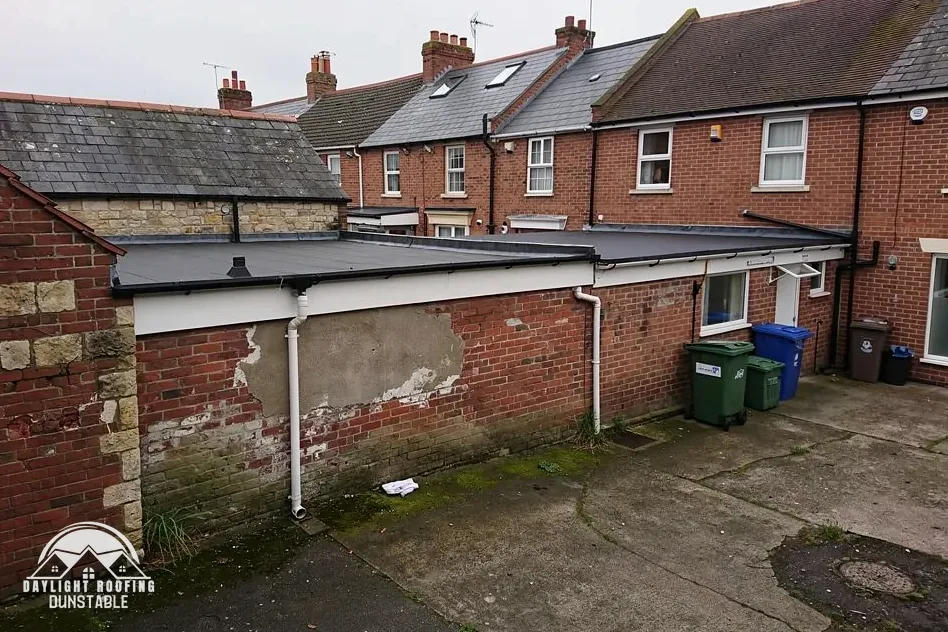
- A flat roof covering flapping