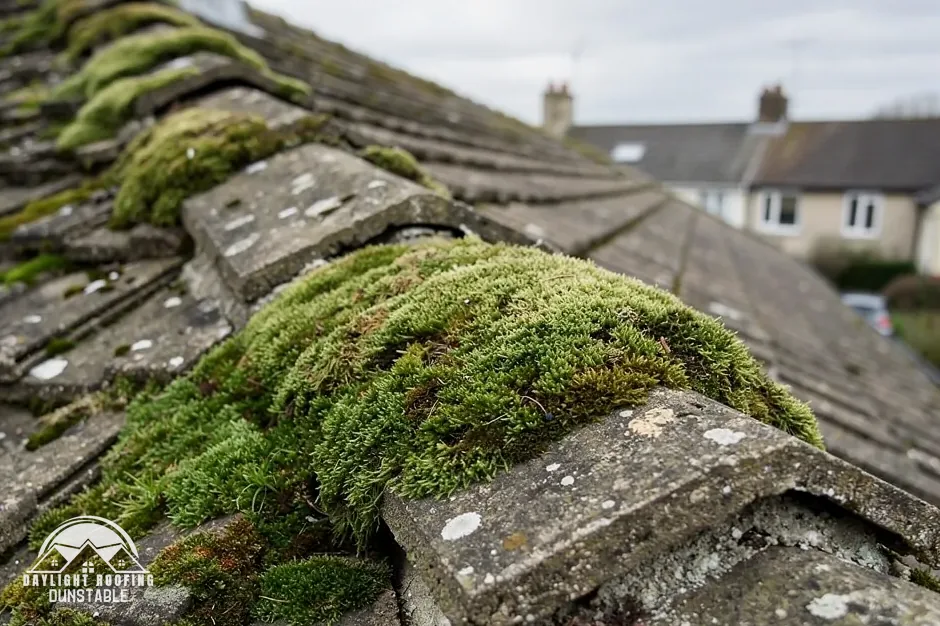
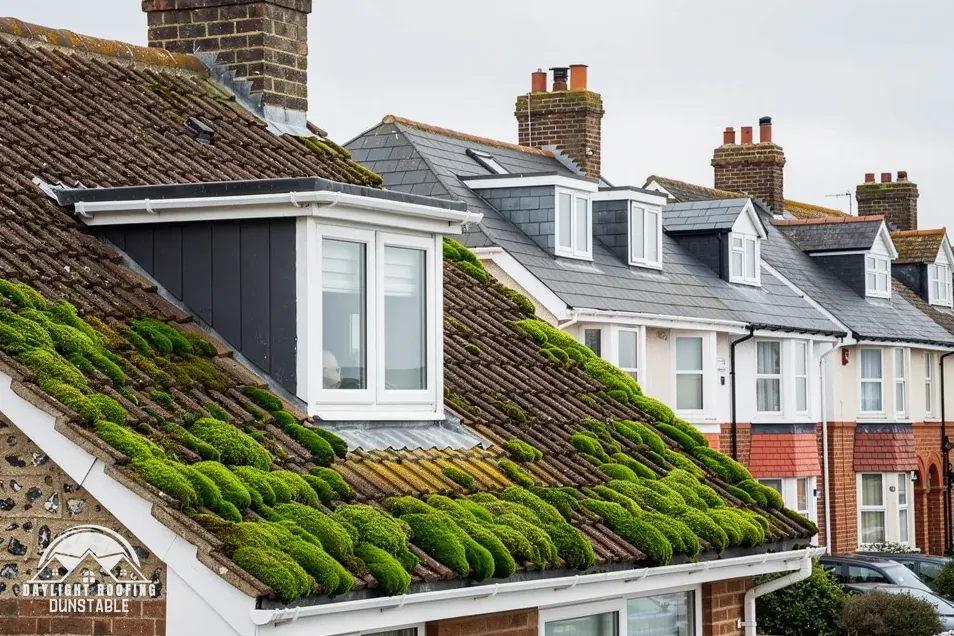
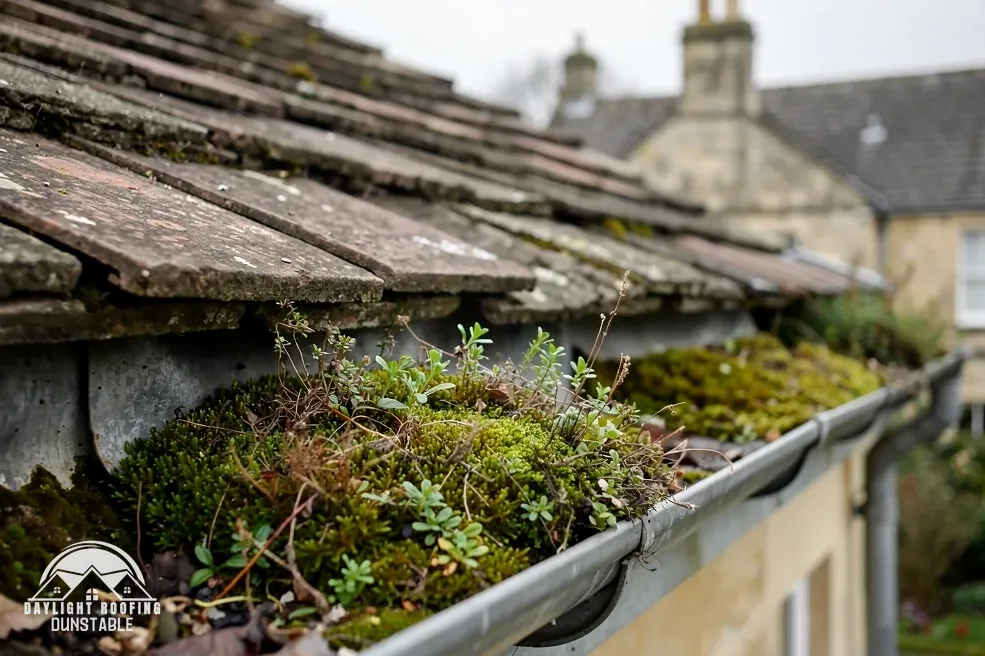
Moss cushions in the tile laps
Check 1 of 8
Moss is a small plant with no true roots. It anchors itself with fine threads into any rough surface that stays damp, and on a pitched roof the damp place is the lap, where the bottom edge of one course of tiles overlaps the course beneath. Once a cushion forms there it traps leaves and grit, and the mat thickens season by season. A slope that faces north, or sits under a tree, dries slowly after rain, and that suits moss far better than a sunny slope does.
The cushion itself is not a hole in the roof. The concern is what it does to the water. Tiles are laid so rain runs down over each lap and off at the eaves; a packed lap holds that water back, lets it creep sideways and upwards between the tiles, and keeps the tile and its nail damp for long spells. In frost, water held in a wet mat freezes against the tile face, and over several winters that can loosen the surface.
Removing moss by hand means lifting each cushion out of the lap with a scraper and brushing the channel clear, working down the slope so the debris falls towards the gutter rather than being pushed up under the course above. Our guide to moss, lichen and algae on roofs tells the three growths apart, and the post on clearing moss without damaging the tiles covers the gentler routes in more depth.
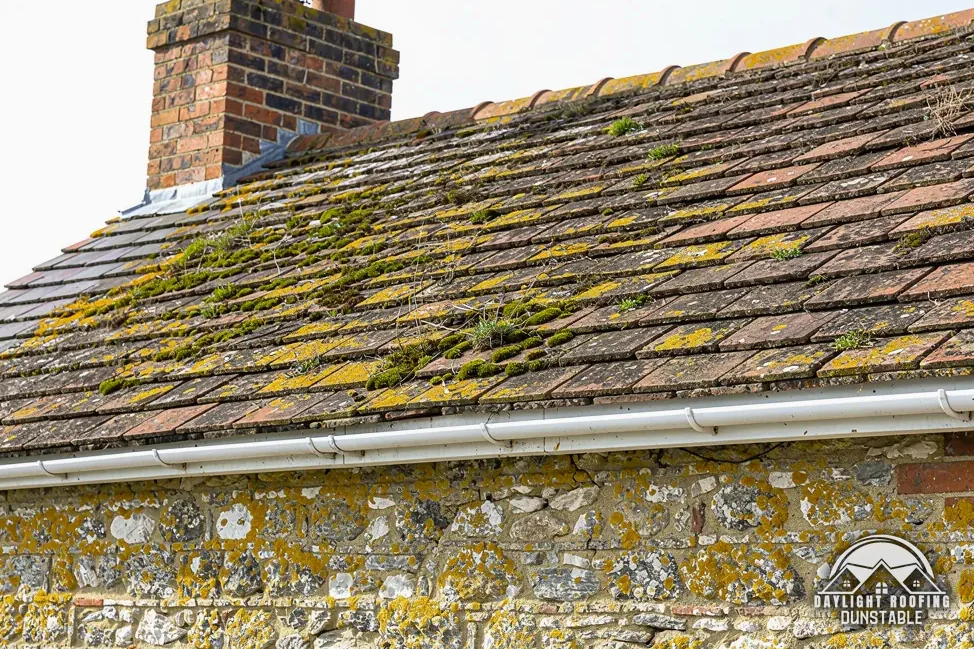
What you will see
Rounded green or brown cushions of moss along the lower edges of the tiles, thickest where the slope gets little sun.
What it means
Moss has rooted into the overlap between courses and is holding rainwater there like a sponge.
What to do
Note which slopes carry the thickest growth and photograph them from the lawn or a bedroom window.
- MossA cushion-forming plant that holds water in the laps.
- LichenA crusty growth of fungus and algae living together.
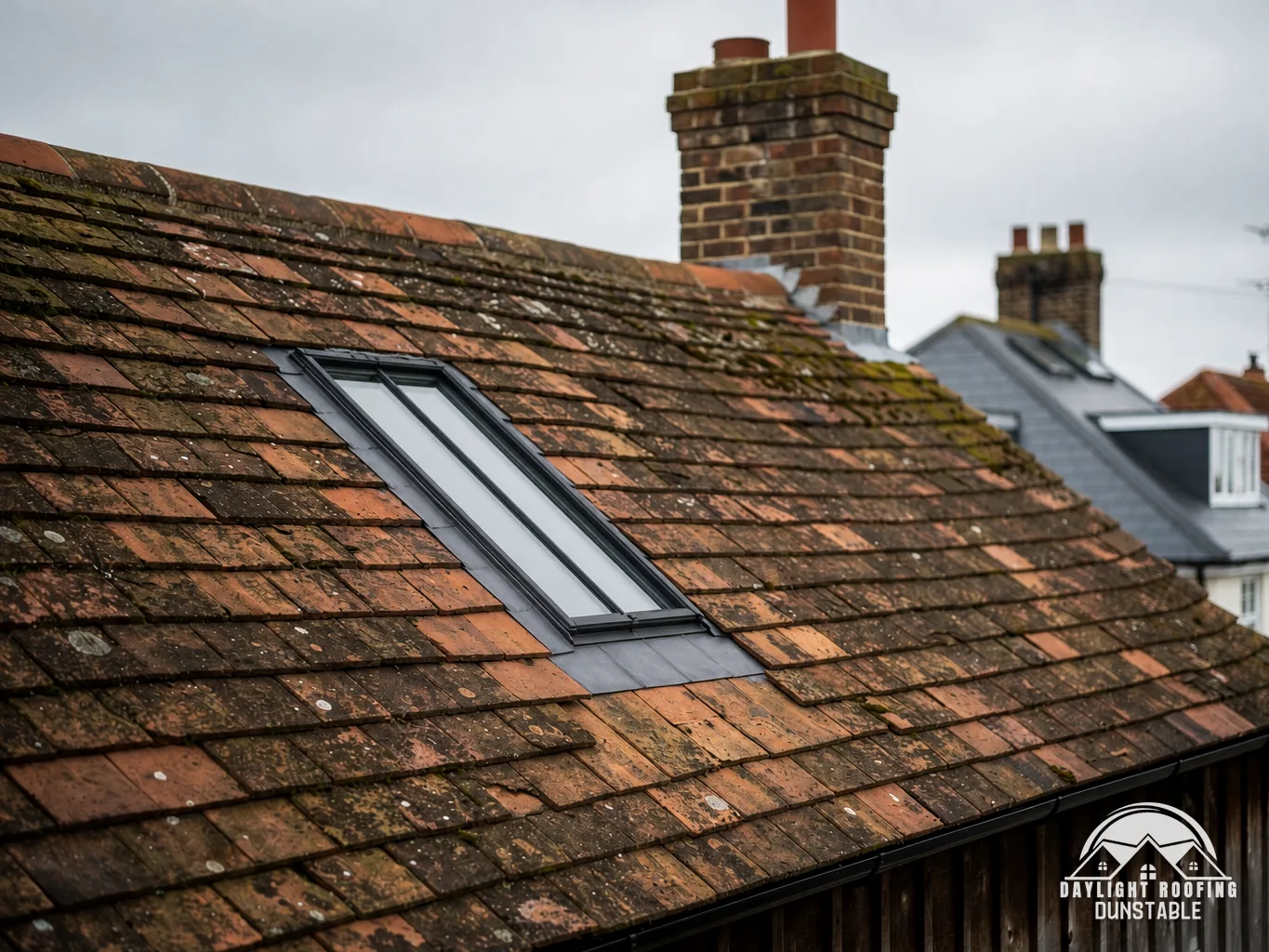
- AlgaeA thin green or black film on the tile face.
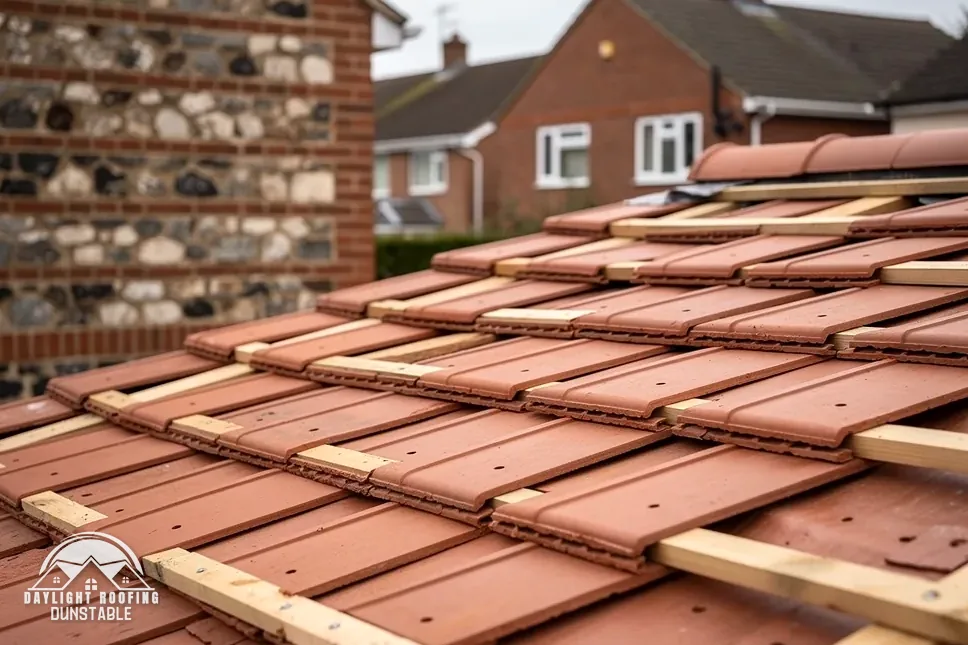
- LapWhere one course of tiles overlaps the course below.