
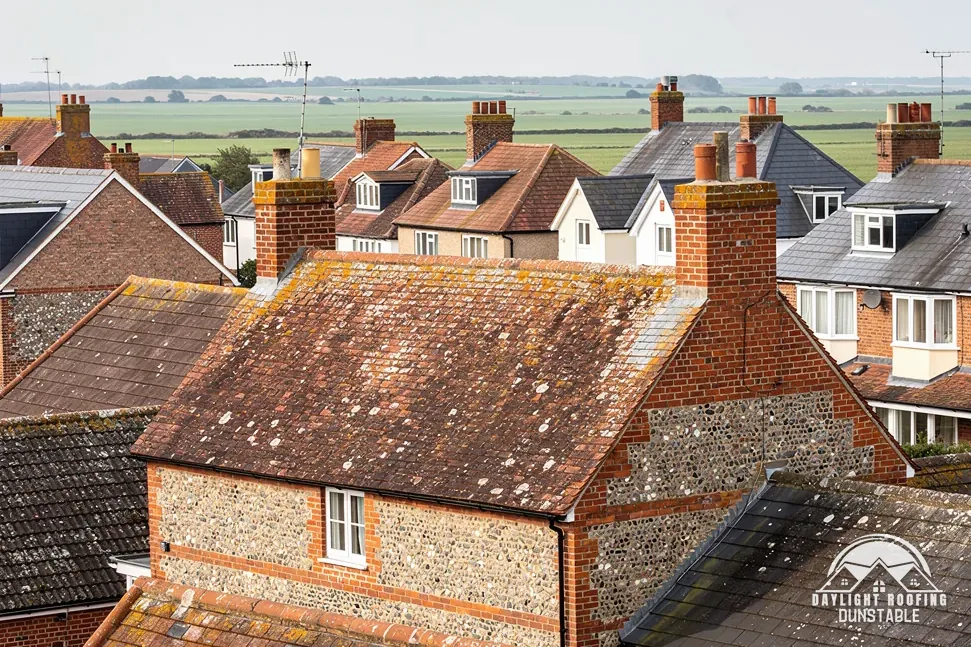
01 Gaps where birds and bats get in
A loose tile at the eaves, a gap under the verge or a missing piece of soffit makes a sheltered space, and birds and bats can use it. Look for droppings below the eaves, staining on the wall, or birds flying in and out at the same place. Leave any gap you suspect is in use exactly as it is. The Wildlife and Countryside Act 1981 catches anyone who "intentionally" "takes, damages or destroys the nest of any wild bird while that nest is in use or being built". Cobwebs, rodent droppings and a musty smell in the loft are separate signs worth noting in the same visit.
For bats the position is firmer. Regulation 43(1)(d) of the Habitats Regulations 2017 covers anyone who "damages or destroys a breeding site or resting place of such an animal", and it carries no intent word. GOV.UK lists "repairing or replacing a roof" among activities that can need a Natural England licence. If you suspect either, say so at the outset, and the work is planned around it. Dates in the year are no guide to whether a nest is occupied, so a nest is judged on what is in front of you. If the answer turns out to be a nest or a roost, the repair waits.