
The short answer
Yes. Water that gets through a roof covering can run along timbers, soak the insulation and then appear as stains, damp patches or mould on ceilings and upper walls, sometimes some distance from the opening. Damp indoors does not always come from the roof, so a survey traces the source before anything is repaired.
How roof water reaches your rooms
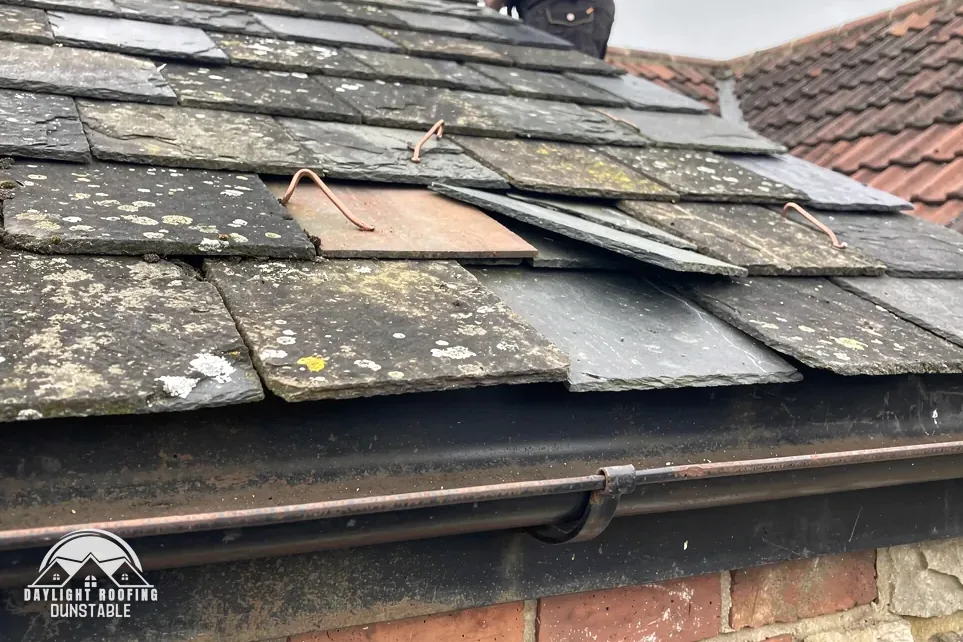
Think of a pitched roof as a stack. Tiles or slates take the rain, an underlay beneath them catches what slips past, and the timbers and insulation lie under that. When a tile slips, a flashing lifts or a valley blocks, water reaches the underlay and can pass through a torn or lapped section into the loft.
Once inside the loft, water follows gravity along the timbers. It can run down a rafter, cross a ceiling joist and drip onto the plasterboard from a point well away from the opening. That is why a stain over the bed may belong to a ridge two metres further up the slope, and why looking only at the stain can send a repair to the wrong place.
On a flat roof the route is shorter. A split in the membrane or a failed joint can send water straight through the deck to the ceiling underneath, and a slow seep can soak the boards for a long time before a mark shows.
Our guide to how to find a roof leak describes how the source is traced from the loft and from outside.
What the damp looks like
Roof-related damp can show on the top storey first, because that is where the water arrives. The signs below point towards the roof rather than towards a plumbing fault or condensation, although none of them proves it on its own.
- A brown or yellowish stain on a ceiling that spreads after rain and dries back to a ring.
- Peeling paint or blistered plaster near the top of an external wall.
- Damp or compressed insulation in the loft, or timber that is dark and wet to the touch.
- A stale, earthy smell in a bedroom or landing cupboard beneath the slope.
- Black or green mould on a ceiling or in a corner of the room.
Mould can grow on any surface that stays wet, and a ceiling that is damp for weeks gives it the conditions it wants. Mould is a symptom of the moisture rather than the cause, so cleaning it off without stopping the water means it returns.
Condensation can look similar. It forms on cold surfaces from moist indoor air and can be spread right across a room, while a roof leak can be a patch that changes with the rain. Our page on the signs of a leaking roof helps to separate the two.
Dealing with damp from above
Stopping the water comes first, because drying and redecorating before the roof is sound only repeats the problem. Where water is entering now, the immediate aim is to limit the damage: move furniture, catch drips and photograph the stains with a date, so the sequence of events is clear later.
Wet insulation and timber then need time to dry, and a surveyor or roofer can say whether insulation has been soaked enough to need replacing. Whether plaster must be renewed is a question for the person doing the decorating, once the moisture has gone, and a damp meter reading can show whether the surface has dried. Do not paint over a damp ceiling, because stain-blocking paint hides the mark and not the moisture, and the patch can come back through the new coat.
A roof survey looks at the covering, the flashings and the gutters to find where the water gets in. A visit to the roof starts with looking, before any price is given, and a repair is aimed at the point where the water gets in rather than at the stain.
The page on what to do if your roof is leaking lists the steps in order, and our roof repairs page covers the work itself.