
The short answer
It can contribute. Moss does not eat through a tile, but a thick mat keeps the surface damp, can block gutters and valleys, and can hide a cracked or slipped tile beneath it. Marley does not recommend jet washing, so removal needs a gentler method.
How moss can lead to a leak
Moss is a living mat, and a thick one soaks up rain like a sponge. On a tile or slate it holds moisture against the surface long after the sun has dried a clean roof. That extra wetness does not make a sound tile leak, but it keeps the covering wet through the days when it would otherwise dry, and a wet surface suffers more in a frost.
The bigger danger is further down the slope. Loose moss and the grit it collects wash into the gutter, where they can block an outlet or a valley. When a gutter overflows, water spills over the fascia and soaks the wall and the eaves, and a blocked valley can send water sideways into the tiles next to it.
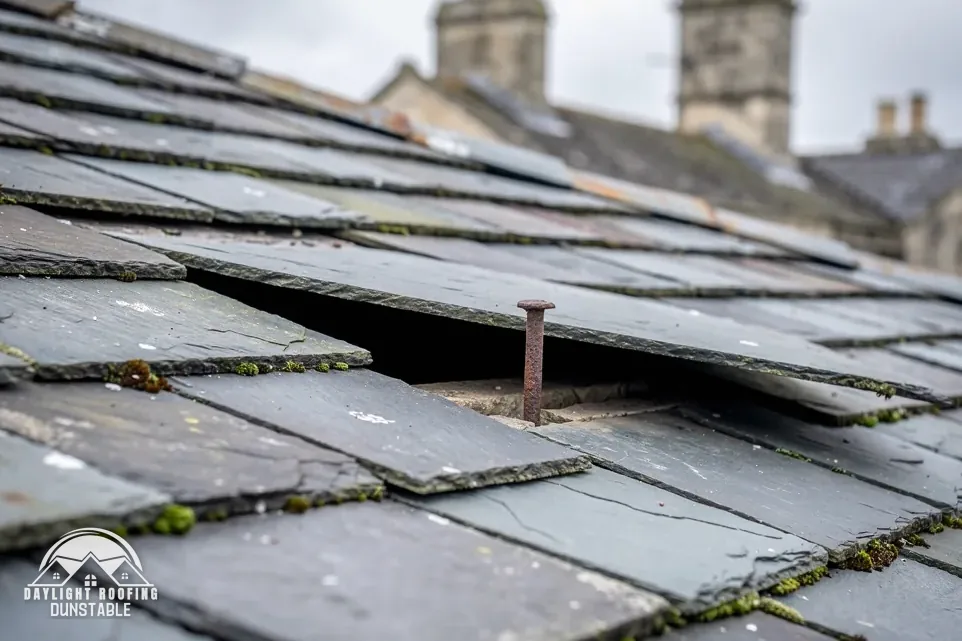
Moss can also cover a fault, which is the reason it matters for leaks. A cracked tile, a slipped tile or a gap at a hip can sit under a green mat where it cannot be seen from the ground. Water then enters at a point nobody has looked at, and the moss is blamed for a leak it only concealed.
That is why a roof covered in moss is worth looking at properly before and after it is cleaned.
Removing it without damage
Cleaning a roof is not the same as blasting it. Marley, a tile maker, advises: "The use of high powered jet washes is not recommended as it can damage the surface of the slate or tile, thus reducing its expected life considerably". A forceful jet is also hard to control on a sloping surface, and it strips more than moss.
Gentler methods are the norm for a reason. The usual options are set out below.
- Dry brushing or scraping with a soft tool, working from the top downwards.
- A moss-killing wash applied and left to work, followed by gentle rinsing.
- Removing loose debris from gutters and valleys as the cleaning goes on.
Whatever the method, access matters. Moss grows where it is damp and shaded, so the slopes that need cleaning are the ones that stay slippery, and work at height is a task for a roofer with proper equipment.
Checkatrade says roof cleaning typically costs £8.50 to £14 per m² (April 2026), a rate per square metre that depends on the roof's size and access. After a survey, our written quote is one total price. Our guide to roof repair costs covers the wider picture.
When moss points to something else
Moss grows where a roof stays wet and shaded, so a heavy patch is a clue about the conditions. It is worth asking why that part of the roof stays damp, because the cause could well be a fault that cleaning will not cure. A north-facing slope under trees and a slope below a leaking gutter can look identical from the ground, yet they need different answers.
- A blocked or sagging gutter that keeps the lower courses wet.
- An overhanging tree that drops water and shade onto one slope.
- Tiles that have lost their surface and hold moisture.
- A low pitch that sheds water slowly.
Once the moss is gone, look for the signs that it was hiding something. Our page on the signs of a leaking roof lists what to check in the loft and on the ceilings below.
A survey of the whole roof will show whether a mossy slope needs a clean, a repair or more. Moss on its own does not mean the roof has failed, and where the covering is sound, cleaning may be all that is wanted. See the roof repairs page for the work we carry out.