
The short answer
A make-safe roof repair is a temporary fix that stops water coming in and removes immediate danger, such as a loose tile or a hole left by storm damage, until the permanent repair can be done. It is a stopgap, not the final job, and the damage should be photographed for any insurer before anything is moved.
What a make-safe covers
A make-safe deals with the immediate problem and nothing beyond it. The aim is to stop rain entering the building and to remove anything that could fall onto someone, and the measures vary with the damage that turns up:
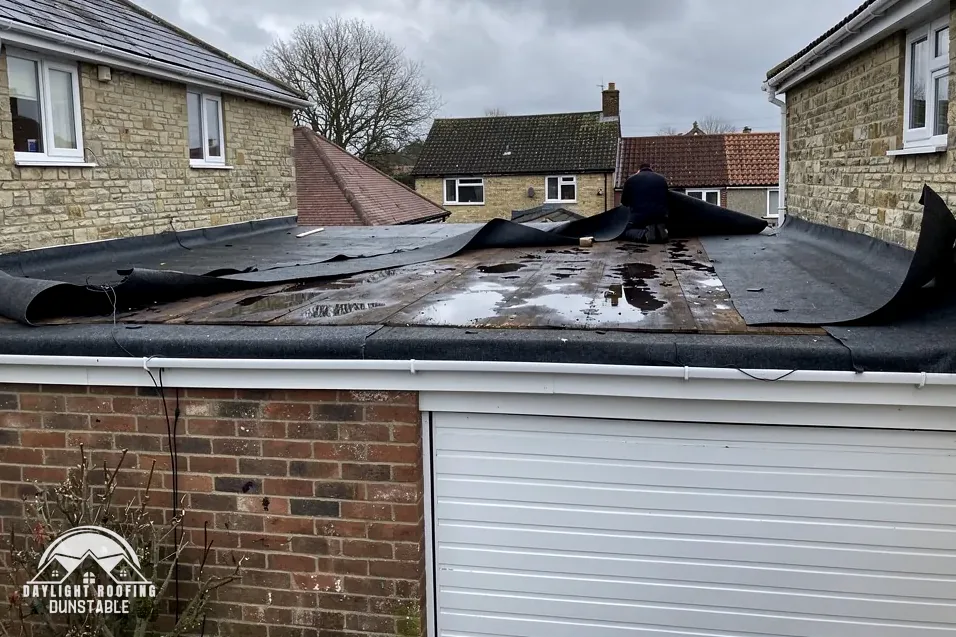
- Where a patch of covering has gone, sheeting or boarding can be fixed over the gap.
- Where tiles are loose above a path or doorway, they can be secured or taken down for the time being.
- Where a gutter or fascia has pulled away, it can be propped or fixed so it cannot drop.
- Where the roof structure itself looks weakened, the area below is cleared and the room closed off.
The cover is built to last for the gap between the emergency and the proper repair, and no longer. Sheeting can flap in wind, boards can shift, and a temporary patch does not match the roof around it. That is acceptable only because it is short term, and it is why a make-safe is followed by permanent work instead of being left in place. The page on emergency roof repairs and making a roof safe goes through the situations in more detail.
Photographs and the insurer come first
When the damage might be an insurance matter, the order of events counts. On a storm complaint, the Financial Ombudsman Service says it will usually look at expert reports and photos, so photograph the damage before anything is moved, covered or taken away. A shot of the roof from the ground, one of the ceiling and one of any debris make a useful set, and each should show the date if the phone allows it.
The make-safe itself need not wait on the insurer. Policies differ, though, so the wording of your own policy and any instructions from the insurer come ahead of anything written here. The page on storm damage and insurance sets out how the Ombudsman describes a storm and what an insurer has to show if it relies on an exclusion.
Hold on to pieces removed from the roof, such as broken tiles, until the insurer says they are no longer wanted, and keep receipts for the temporary work. If the roof is an old sheeted one, remember HSE's advice: if the building was built or refurbished before 2000, assume that there is asbestos in it. Broken sheets of that kind are never swept up or bagged by hand.
From make-safe to the permanent repair
A make-safe buys time, and the permanent repair uses it. With the water stopped, the roof can be surveyed in good light and dry weather, the cause of the damage can be traced, and the lasting work can be planned. Rushing that work while the roof is wet or the light is poor does not help the result, which is why the two stages are kept apart. Dry timber and dry insulation also make it easier to see what the damage really was.
For the lasting work, the price comes as one sum in writing following the survey. According to MyJobQuote, emergency roofer call-out costs typically range from £150 to £300, while extensive storm damage repairs can cost £1,200 or more (its page, last updated 22 October 2026). Those are that site's ranges for emergency work in general, not a quote for your roof, so the figure given after the survey is the one to work from.
A photo of the damage sent to 07880 284133 on WhatsApp is a quick way to begin. It gives a sense of the problem, and it can sit alongside the photographs kept for the insurer. If water is still coming in while you wait, the page on what to do if your roof is leaking covers what can be done indoors, and the roof repairs hub covers the permanent options.