
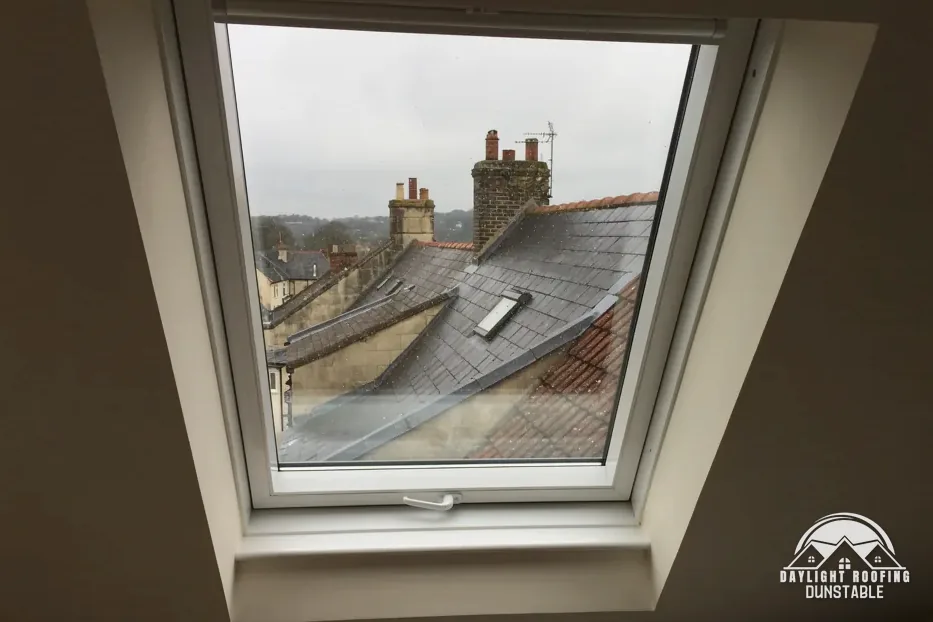
Why the glass runs wet in winter
Air indoors carries water vapour, and warm air can hold more of it than cold air. When that warm, damp air touches a surface colder than itself, some of the vapour turns back into liquid. A window in the roof slope is a cold surface in a warm room, so in a cold spell the glass and the frame are places where droplets can appear.
That is the mechanism, and it explains the pattern a householder sees. Droplets gather on the inside face of the glass, run down onto the sash and the lower frame, and sometimes pool on the sill. The effect is strongest on the coldest mornings, after a night when the room has been closed up and breathed in.
A roof window is not at fault for being cold. Any window, rooflight or conservatory roof can show the same effect when moisture indoors is high and the surface is cold, so the question to ask is where the moisture is coming from and where it can go.
Whether the droplets point to a problem depends on how much appears and how long it stays. A film that clears from the glass within the morning is the room doing its job as the day warms. Water that is still there all day, or that stains the lining of the opening, calls for a closer look, and so does a frame that never seems to dry.
Where the moisture comes from
Everyday life puts water vapour into the air. People breathe it out, and a bedroom with the door and window shut holds a night's worth. Cooking, showering and boiling a kettle add more in the hours they happen, and clothes dried on a radiator release what they carried into the room.
A loft room or a bedroom under the roof slope can be exposed to this, because the roof window can be the coldest surface in the space and the room is small, which leaves the moisture little air to spread into. Nothing here is a measurement, and no figure for any particular house can be given without looking at it.
- breathing, especially overnight in a closed bedroom
- cooking and boiling water without the extractor on
- showers and baths, with the bathroom door left open to the landing
- laundry dried on radiators or airers indoors
- unflued heaters that burn fuel in the room
New building work can add its own moisture: freshly plastered walls and new screeds give water back as they dry. A room that has had its roof window replaced and its walls redecorated at the same time may mist in its first winter for that reason, and the effect should ease as the building dries.
Ventilation that helps
The aim is to remove damp air before it reaches the glass. Moving moist air out of the building, and letting drier air in, lowers what the window has to cope with. That is a matter of habit as much as hardware, and a few changes can make a difference to a room.
Run the extractor in the kitchen and bathroom while the moisture is being made, and for a short while after. Close the door of a steamy room so the vapour is carried outside rather than up the stairs to the loft. Open a window for a few minutes at a time to swap damp air for dry, instead of leaving one ajar all night in cold weather.
- run extractor fans while cooking and bathing
- shut the door of a steamy room
- air a bedroom in short bursts after waking
- keep furniture a little way from walls and under-roof slopes so air can move
- dry washing outdoors or in a vented room
A dehumidifier can lower the moisture in a room that stays damp. Where condensation returns every cold morning even after these changes, it is worth finding out whether the ventilation in the house as a whole is adequate, since one window cannot be fixed in isolation.
Trickle vents in the frame
A trickle vent is a small adjustable opening in the frame that lets a little air through while the sash stays shut. Because it works with the window closed, it gives steady background ventilation without the draught or heat loss of a window left ajar. Whether a given roof window has one depends on the model and its age.
Opening a vent in winter can look odd, since it lets cold air in, but it is the air that is then drawn through the room that carries moisture away. The vent has a use in a bedroom where the door and window are kept shut overnight, and in a loft room where the roof window is the main route for air.
- a vent works with the sash shut
- it is adjusted by the user, not left to chance
- it supports extraction and airing without replacing either
A vent does not replace the other measures, and it will not clear a room that is making a great deal of moisture. It supports extraction and airing, and the three do more together than any one does alone.
If the window you have does not include a vent, the model's own instructions say whether one can be added. Asking the manufacturer's installation guide is better than drilling into a frame to try one, since the frame is part of what keeps the window watertight. A change of this sort belongs in a conversation with a roofer who has seen the window.
Repairing or replacing a roof window covers what a survey of the window itself can find.
Condensation, or a leak?
Wet glass raises a fair question, and the answer depends on where the water is and when it appears. Condensation forms on the inside surface of the window, on cold mornings and after moisture has been made in the room. A leak appears after rain, and the water comes from outside: from around the frame, from the flashing where the window meets the roof, or from the tiles above it.
| Clue | Points toward condensation | Points toward a leak |
|---|---|---|
| When | Cold mornings, after showers | During or after rain |
| Where | Face of the glass, lower frame | Corners, the lining, the ceiling nearby |
| Pattern | Fine droplets over the glass | A drip, a stain, a tide mark |
| Clears? | As the room warms | Stays and returns with the next rain |
Mist between the two panes of a double-glazed unit is a third case. It sits inside the sealed unit, where wiping cannot reach, and it points to a seal that has failed and a unit that needs replacing, not to a damp room.
A dated photo of each occurrence, with a note of the weather and the time, helps sort the three cases. A picture can be sent on WhatsApp to 07880 284133, and the written price for any work follows a survey. Roof window and skylight costs sets out published figures.
Replacement glazing and the rules
Where a unit has failed or a window is beyond repair, replacing it brings the energy rules in. Approved Document L (2021 edition, England) sets 1.4 W/m²K or Window Energy Rating Band B for a replacement roof window and 2.2 W/m²K for a rooflight, and Appendix A keeps the two apart. Its definitions read: "A glazed unit installed out of plane with the surface of the roof on a kerb or upstand" for a rooflight, and "A window installed in the same orientation as, and in plane with, the surrounding roof" for a roof window.
A lower U-value means the glazing loses less heat, and that can leave the inside face of the glass warmer. Whether replacement changes the condensation in your room depends on how much moisture the room makes, so the ventilation steps above still apply with new glass.
On cost, MyJobQuote says "Average cost for a standard mid-range Velux window is £1,100." It adds that replacement costs around £100 less for a straightforward swap, because the opening is already there. That is a published average on a page dated 22 September 2026, never a quote for your window.
A roof window on a side slope must be "obscure-glazed", and it must also be "non-opening unless the parts of the window which can be opened are more than 1.7 metres above the floor of the room in which the window is installed". Roof windows and Building Regulations sets out the rules.
Winter habits, escape routes and the room
Cold weather changes habits, and some of the habits that stop condensation can clash with others. Where a roof window doubles as the exit from a room in the loft, it has to stay usable, so it is neither hemmed in by furniture nor sealed shut for the winter, and its handle can be reached from the floor.
AD B reserves escape windows for storeys no more than 4.5 m up. A loft conversion that adds a storey beyond that falls under para 2.5, which offers a protected stairway or an alternative escape route. The window's own size is set in para 2.10 at a minimum area of 0.33 m², with a minimum height of 450 mm and a minimum width of 450 mm, and the bottom of the openable area at a maximum of 1100 mm above the floor.
- keep the opening part of an escape window clear
- do not paint or seal a sash shut for the winter
- keep a trickle vent adjustable, not taped over
- wipe away standing water so the frame does not stay wet
Wood and plastic frames both prefer to stay dry. Water that sits on a timber sill for weeks can stain it and, over a long period, may start to affect the wood, so wiping the sill is a small habit that protects the frame. If the lining or plaster around the window turns dark, treat it as a sign that moisture is staying there and ask for a survey.
The hub page for skylights and roof windows covers the full range of work.