
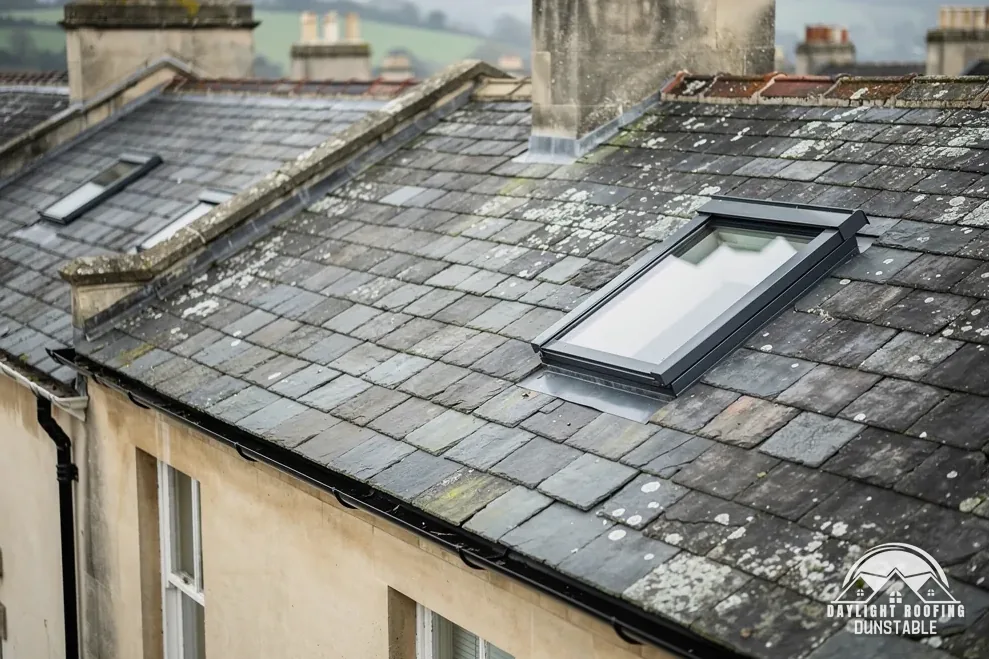
Two protections, two different tests
A conservation area is a place. The council designates an area of special historical value and architectural interest, and planning controls inside it are stricter than outside. A listed building is a single building, listed for its special architectural or historic interest, and work that affects it is controlled by a separate consent. A house can sit in a conservation area, be listed, both or neither, and each answer changes the roof window question.
The owner's first job is to find out which applies. A home in a conservation area is not listed because of where it stands, and a listed home need not be in a conservation area. Each status is looked up on its own, through the council, and the answers add together.
Neither status is a ban. Roof windows are fitted in conservation areas and in listed homes, and what differs is the route: which rights apply, whether an Article 4 direction removes any, and whether listed building consent is needed. That route starts with the planning class that covers roof windows at all.
A roof window can be a small change to a roof or a visible one on a slope facing the street, and the councils that decide such matters look at the building in front of them. The guide gives the tests the councils use and not a forecast of how any one will rule.
Class C inside a conservation area
Class C of Part 1 of Schedule 2 to the General Permitted Development Order 2015 covers "Any other alteration to the roof of a dwellinghouse." The government's technical guidance says it covers "re-roofing or the installation of roof lights/windows." That is where roof windows sit.
Conservation areas are article 2(3) land. The guidance says: "In National Parks, the Broads, areas of outstanding natural beauty, conservation areas, and land within World Heritage Sites, roof extensions are not permitted development and will require an application for planning permission." Roof extensions here means Class B, the class for dormers and similar enlargements.
Class C has no article 2(3) exclusion. A roof window is not a roof extension, so a conservation area does not remove the Class C right by itself, and the Class C limits and the side-slope condition apply as they do elsewhere.
| Rule | Conservation area | Listed home |
|---|---|---|
| Class B dormers | Not permitted development | Class B kept, consent needed |
| Class C roof windows | Kept | Kept, consent needed |
| Listed building consent | Not applicable | For work affecting character |
| Article 4 | Can apply | Can apply |
The last row is why the table has to be read with the next section. An Article 4 direction is the way a council can take Class C away, and for a home in a conservation area the council is asked about it before anything else.
Article 4 directions can change the answer
GOV.UK describes an Article 4 direction as "a direction under article 4 of the General Permitted Development Order which enables the Secretary of State or the local planning authority to withdraw specified permitted development rights across a defined area." A council can use one to bring a roof alteration back under planning control.
What a direction covers depends on its wording, and councils differ. Several published lists are quoted in the table in the next section. A few examples show why the wording matters. Hitchin's conservation area has an Article 4 direction that covers alterations to a house's roof and chimneys, so we check with North Herts Council before roof work there. In Fairfield, in Central Bedfordshire, dormers and other roof enlargements need planning permission under an Article 4 direction from 5 January 2021, and the council says whether a given address is caught.
Toddington's conservation area also has a direction, and its list names extensions, porches and outbuildings among other works, but no roof item. Luton's current directions concern changes of use, so for a roof window in a Luton conservation area the answer comes from Luton Council.
Where a council's list does not settle a particular road, the answer to give is to ask. A direction can cover a whole area or a few streets, and the council's property search or its planning team says whether an address is caught. A neighbour's answer is not a safe guide, because two houses on one street can sit either side of a boundary.
What nearby councils publish
Each council in the area publishes its own conservation area and Article 4 information, and the pages differ in what they list. The table sets out what is published, council by council, without ranking them.
| Council | What its pages say |
|---|---|
| Central Bedfordshire | Postcode map; Article 4 in Fairfield, Toddington, Husborne Crawley |
| Luton | Rothesay (2003) and Luton South (2010) among its residential areas |
| Milton Keynes | 27 conservation areas; Article 4 in Wolverton and Olney |
| North Herts | 44 conservation areas; Article 4 in Hitchin and Stockens Green |
| Hertsmere | 15 conservation areas |
| St Albans | Four main Article 4 areas, named on its page |
Central Bedfordshire tells residents that they can find conservation areas "just by entering your postcode on My Central Bedfordshire." Elsewhere, the council's planning team or its map answers the same question. The result is the first thing to know before a roof window is priced, since it shapes the questions put to the council, the Article 4 question among them.
In Milton Keynes, a house on the New Town Heritage Register keeps its permitted development rights, because the register leaves existing rights intact and unchanged. Where a council's pages give no list of what a direction covers, the answer is to ask the council whether a direction applies.
Listed homes and listed building consent
A listed home keeps its permitted development rights for roof work, because Class B and Class C carry no listed-building exclusion. That is the planning side. Listed building consent is a separate permission, and the test is work done "in any manner which would affect its character as a building of special architectural or historic interest."
A roof window changes a roof, so the question for a listed home is whether it affects the building's character. That is a judgment for the council, and it can turn on where the window goes, how it sits in the slope and what the slope faces. A rear slope and a slope facing the street are not the same question.
The consequence is that planning rights and listed building consent have to be answered separately. A roof window may be within Class C and still need consent, and doing the work without it is a problem for the owner whatever the planning position. The order matters too: the council is asked first, because consent is applied for before the work starts and not after.
Listed building consent is also the route for the building's roof covering when the work changes its character. Where the roof is being renewed at the same time as a window is added, both are put to the council together, and the roofing is done to the consent.
Conservation rooflights and Part L
A conservation rooflight is a product made to sit flush with the roof slope and to look closer to a traditional roof light than a standard window. The name can suggest the 2.2 rooflight entry in Part L, and the definitions say otherwise.
Approved Document L's Appendix A describes a roof window as "A window installed in the same orientation as, and in plane with, the surrounding roof." A conservation rooflight fitted flush lies in plane, so Part L treats it as a roof window and the entry is 1.4 W/m²K or Window Energy Rating Band B minimum, with the rooflight figure not applying. Appendix A reserves the other word for "A glazed unit installed out of plane with the surface of the roof on a kerb or upstand."
These figures are quoted for new fabric in an existing dwelling. For a listed home or a building in a conservation area, how far a particular requirement can be applied is a question for building control, which is the council's team or a registered building control approver. The decision belongs to them and not to the product's name.
Our guide to roof windows and Building Regulations sets out both sets of figures, and the page on rooflights and roof windows goes into the definitions.
Asking the council first
The practical order is simple. Find out whether the house is in a conservation area, whether it is listed and whether an Article 4 direction applies, and put all three to the council before work is planned.
Send a photo of the slope the window is wanted on to 07880 284133 on WhatsApp, and it can be seen before a visit. The survey then looks at the roof, and the council is asked about the planning route before work starts, so the answer comes from the council and not from a guess.
Where a listed home or a conservation area is involved, allow for the council's own time. A plan that depends on listed building consent is a plan that waits for it. The survey prices the roof work as one written total, while the consent itself is dealt with between the owner and the council.
If the home is not listed and not in a conservation area, the routes above reduce to Class C and its limits, and the page on roof window and skylight costs gives dated third-party figures for the work. If the home is in either category, the council's answer comes first, and the survey and the written total follow it. A window that was priced before the council had been asked can be priced again if the answer changes what is allowed.