
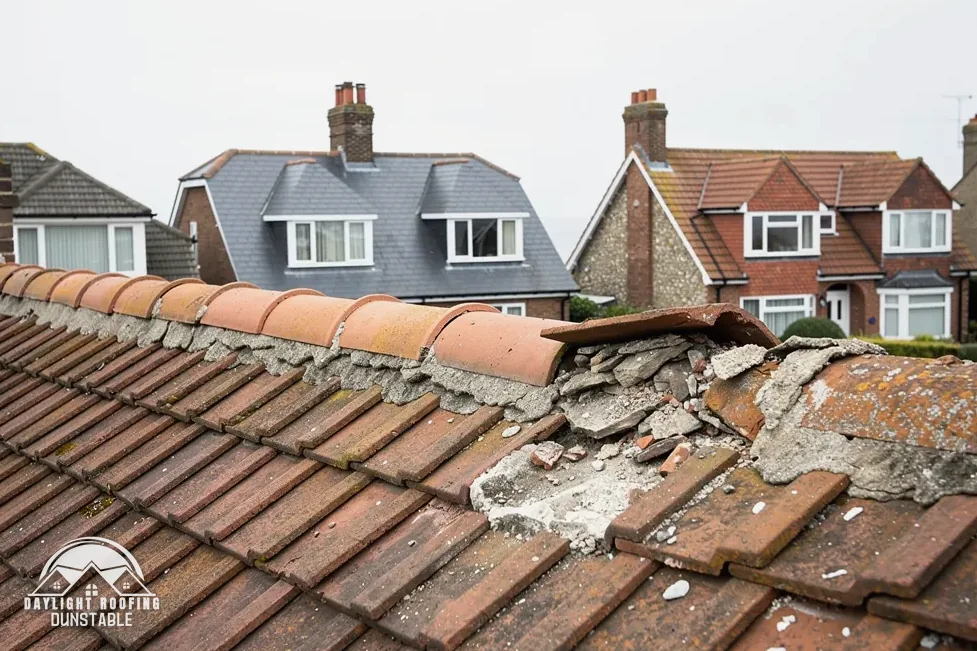
What a conservation area changes for a roof
Two permitted development rights matter for a roof, and a conservation area treats them differently. Class B covers dormer windows and other roof enlargements. A conservation area is article 2(3) land, Class B does not apply there, and a dormer therefore goes through a planning application. Class C is the separate right for re-roofing a dwelling and for installing roof lights. It has no article 2(3) exclusion, which means that standing in a conservation area does not take it away.
The government's technical guidance puts Class C this way: it covers "other alterations to roofs such as re-roofing or the installation of roof lights/windows". Re-roofing a house is normally permitted development under Class C, in a conservation area or out of one. Three things can alter that: an Article 4 direction, a listing, and flat status.
| Work | In a conservation area |
|---|---|
| Re-roofing a house | Class C still applies |
| Dormer or roof enlargement | Planning permission needed |
| Chimney, flue, soil pipe | Outside Class C: ask the council |
| Roof of a flat | No householder rights: ask the council |
| Listed building | Listed building consent for character |
The planning guide sets out the tests for Class C in full, including the limits that run from the original roof. Everything below is about the extra layers that sit on top of those tests around Dunstable: the council's maps, its Article 4 lists, and the questions to put to it.
Finding out whether an address is inside one
Central Bedfordshire Council does not print a list of conservation areas on the page that explains how they affect planning. It points readers to its map instead: "You can find conservation areas … just by entering your postcode on My Central Bedfordshire." A postcode search is therefore the quickest route for a house in Dunstable, Houghton Regis, Toddington or anywhere else in the council's area.
The same page says that "Permitted development rights are stricter for properties within conservation areas." That is the council's own summary, and the specific tests sit in the order and in the government's guidance, which the table above follows. Where a particular repair seems to fall between the summary and the tests, put the question to the council about that house and that work, in writing.
Luton Council's page is more direct. Its commercial areas start with High Town Road and go on to Plaiters' Lea: The Hat District, and it lists two residential ones: Rothesay, designated in 2003, and Luton South, designated in 2010. The Luton conservation areas post reads that page in more detail.
A designation attaches to an area, so a house on the next street may sit outside it. An estate agent, a seller or a buyer's conveyancer can request the council's position on a specific address, and the council's own answer carries more weight than a brochure does.
Central Bedfordshire's Article 4 list
An Article 4 direction withdraws specified permitted development rights across a defined area. Central Bedfordshire Council keeps a list of its directions, and for house roofs the list holds one entry that names roofs and two that do not. Reading the entries as the council publishes them keeps the three apart.
Fairfield is the entry that names roofs. The council says: "From 5 January 2021, dwellings in Fairfield must submit a planning application for the following works:", and the works include "roof enlargements (e.g., dormer windows)" and "additional storeys on roofs of dwellings", along with porches at external doors. Dwellings in the converted former hospital are left out of the direction.
Toddington and Husborne Crawley are conservation areas, and each has an Article 4 direction whose works are listed by name. Neither list has a roof item. In Toddington the named works run from householder extensions through front porches and outbuildings to hardstanding, domestic heating fuel tanks, walls and fences, plus dropped kerbs. Husborne Crawley's list is the same, with "painting the exterior of a building" added.
| Area | Roof item named | Other works named |
|---|---|---|
| Fairfield | Yes: enlargements, extra storeys | Porches |
| Toddington | No | Extensions, porches, walls |
| Husborne Crawley | No | Toddington's works, painting added |
Entries that are not about house roofs
The council's list carries further entries that have nothing to do with a house roof. Other entries on the list are about something else: a change of use at the Wrest Park Estate near Silsoe, agricultural buildings at Lower Sundon, and markets on land beside the Sandhouse Public House at Heath and Reach. None is a householder roof direction, and none should be read as one by anyone planning repairs.
The two conservation-area entries deserve a second look, because the absence of a roof item is easy to over-read. Toddington's list names specific works, and a re-roof is not among them. It does not follow that the town is free of any considerations. A conservation area has its own planning considerations that sit apart from Article 4, which is why the council's answer for the address matters more than any summary.
A direction can also be varied or added to over time, so the list on the council's website on the day you write is the document to rely on. Treat this post as a guide to how the entries read, not as a substitute for the council's current list, and put the address and the planned work to Central Bedfordshire Council before the covering is ordered. A reply that names the direction, or says none applies, is worth having in writing.
You might hear
An Article 4 direction always brings roof rules.
Plain as day
Fairfield's names roof enlargements; Toddington's and Husborne Crawley's name no roof item.
Luton's directions: uses, not roofs
Luton Council's list is a different kind of document from Fairfield's. Three entries, covering the town centre and its surrounds, Butterfield and Capability Green, deal with Class MA, the right to convert commercial buildings into homes. The rest run from 1960 to 2002 and concern a mast and two groups of streets. The council does not describe any of them as a rule about a householder's roof.
That leaves the conservation area itself as the thing to check for a Luton house in Rothesay, Luton South or any other designated area. Class C stays available for re-roofing, a dormer needs an application, and a chimney being rebuilt in an older area merits a question to the planning team, since chimneys, flues and soil and vent pipes lie outside Class C.
Demolition in a conservation area needs planning permission, and the old stand-alone consent for it has gone. A flat sits outside householder permitted development altogether, so a flat roof in such an area goes to the council before work is ordered. Write to Luton Council, give the address, and describe the job in a line or two. The council can say whether the house falls inside one of its conservation areas and whether any direction touches the street, which no general article can settle for a particular house.
Listed roofs and consent
Listing is a separate status. A house can be listed, in a conservation area, both or neither, and each status raises its own question. For a listed house the roof classes still exist: neither Class B nor Class C names a listed-building exclusion, so the permitted development rights remain. The brake is listed building consent, which is needed for works done "in any manner which would affect its character as a building of special architectural or historic interest".
Whether a plain swap of tiles affects character is for the council to say, and so is whether a different colour, a different pattern or new detailing at the eaves does. Owners should ask before materials are ordered, attach the listing entry that describes the building to the email, and keep the decision notice that comes back, since a later buyer or a lender may ask to see it. Consent decisions are tied to the building, so the notice stays useful long after the work is finished. A roof that was re-covered under consent, with the decision on file, is easier to explain at a sale than one where nobody can say what was agreed.
The page on whether a roof repair needs planning permission covers the planning side for repairs. On a listed roof, the part a roofer plays is a plain description of the covering as it stands and the work it needs, and the consent question stays with the council.
What to send the council, and what follows
A short email is the surest route to a clear answer. Say whether the building is a house or a flat, and whether it is listed. Describe the covering now and the covering wanted, attach two or three photographs, and ask three questions: is the address in a conservation area, does an Article 4 direction apply, and does the planned work need an application.
Building Regulations are a separate matter. Under the Planning Portal's guide, a job that touches less than 25 per cent of the building envelope and also less than 50 per cent of the roof normally needs no application. A complete re-roof passes the roof limit, enough for approval. Central Bedfordshire Council's building control team is on 0300 300 8635, a line for building control and not for planning enquiries. Luton Council's building control service is on 01582 546607, and 01582 546000 is the council's main switchboard. The roof repairs and building regulations page covers the detail.
Once the planning answer is in hand, the roof is surveyed and priced. MyJobQuote, on a page last updated on 6 October 2026, gives around £650 as the average roof repair in 2026, and one roof's price only emerges once it has been surveyed. We check the planning or building-control route with the council before work starts, and a quote from us is one total, set down in writing. Where the job needs scaffold over the footway or road, the highway authority in Dunstable is Central Bedfordshire Council, and it licenses scaffolding on its roads. Whichever council it is, we arrange the licence with our scaffolder.
The roof repairs hub covers the repairs themselves, and a photograph sent to WhatsApp on 07880 284133 gets looked at before a survey is booked. The office line is 01582 935272.