
The short answer
Sometimes, but safety decides, not the repair. Strong gusts make ladders, scaffold boards, loose tiles and sheeting dangerous to handle at height, so a roofer may hold a make-safe until the wind eases. No wind speed is a fixed cut-off, and the decision is made on site for each roof.
Why wind changes the job
A roof in wind is a different workplace from the same roof on a still day. A gust can catch a sheet of covering, a bundle of tiles or a tarpaulin and turn it into something that pulls the person holding it off balance. At height, a small loss of footing is a serious matter, and the surface underfoot may already be wet, loose or damaged by the same storm that caused the call.
The way up is part of the risk. A ladder footed on soft ground, a tower on a sloping drive or scaffold boards lying free of their fixings can all move when the wind gets under them. A roofer has to judge whether the access can be made secure before anyone climbs, and that judgement belongs on the spot, because conditions change from one gust to the next.
A single wind speed would suit neither a low garage roof nor a high gable, so no number is offered as a cut-off. The same wind is not equally dangerous everywhere: a sheltered back slope and an exposed front elevation can behave quite differently on the same afternoon.
What gets weighed before work starts
Several questions are asked together, and the answers set whether work goes ahead, goes ahead in part, or waits.
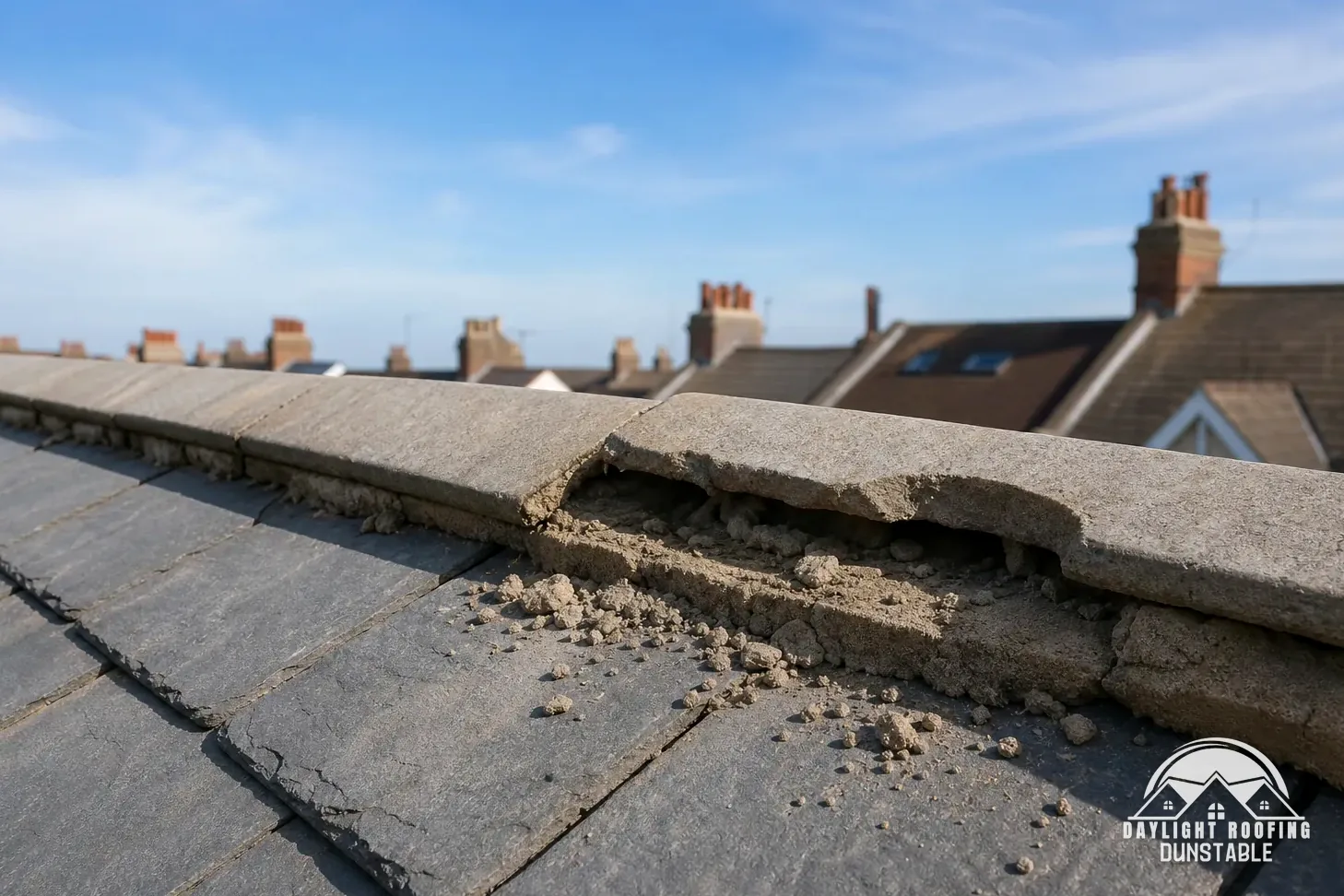
- Is anything already loose that could fall on people below, such as ridge tiles, a chimney pot or a slipped slate?
- Can the access be fixed firmly enough to climb?
- Can a cover be laid and fixed without being lifted away as it is unrolled?
- Is the danger to the household greater from the wait than from the work, for instance an opening that lets rain into a bedroom?
The last point is the hard one. Where rain is entering the house, there is pressure to act at once, and that is when a poor decision is most tempting. Under CDM 2015, a homeowner's client duties pass to the contractor (or the principal contractor when there is more than one), and every project has a construction phase plan. Planning the work safely therefore rests with the contractor, and a sensible plan can include a decision to wait.
Fixing a cover is a design question too. Marley explains that tile fixings are set by a fixing specification for the particular site, which allows for exposure, and a temporary cover on a high roof meets the same wind that the permanent covering was fixed against. The page on temporary roof covers looks at how a cover is held down.
What you can do while the wind blows
Staying off the roof is the first thing, and it applies to you as well as to anyone you ask for help. A homeowner on a wet roof in a gale is exposed to the same dangers described above, with less equipment and no plan. Look at the roof from a window or the garden instead, and keep clear of the ground beneath any damaged edge, chimney or ridge until it has been checked.
Inside, limit what the water can reach. Move furniture and electrical items out of the wet area, put containers under drips and lift rugs off the floor. If a ceiling is bulging, stay out from under it. Photograph the damage as it stands before anything is moved: the Financial Ombudsman Service says it will usually look at expert reports and photos if an insurance complaint reaches it.
A photo sent to 07880 284133 on WhatsApp can be looked at, and it helps to show where the damage sits and how the roof would be reached. The page on wind damage to roofs describes what gales do to coverings and fixings, and the emergency roof repairs page covers the whole subject. Once the gusts ease, the roof is surveyed and the lasting repair is priced in writing.