
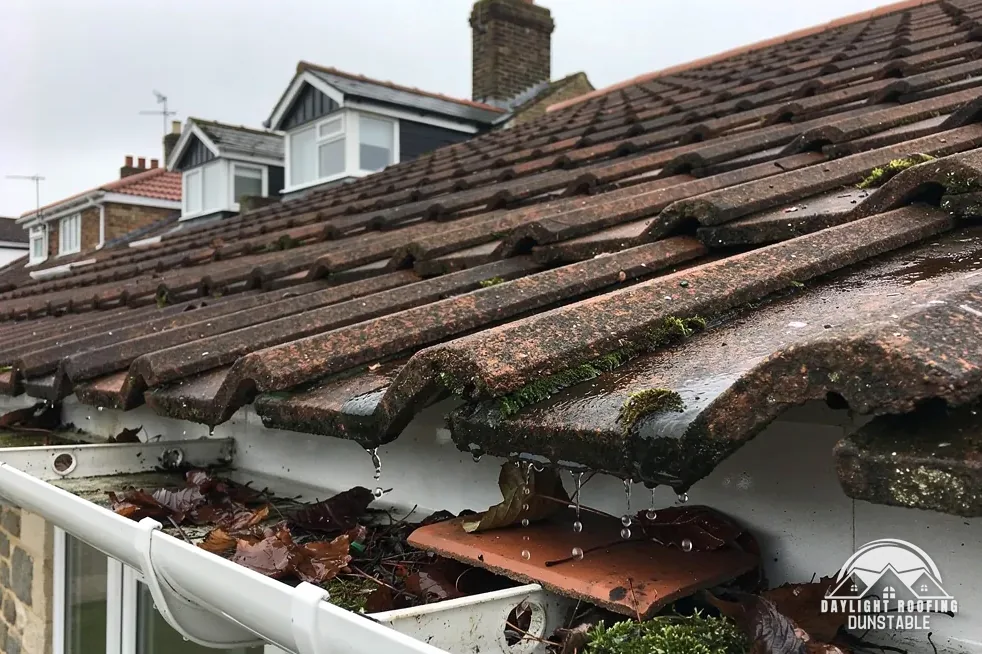
The short answer
Yes, new fascias can go over the old ones, a job called capping, but only where the boards underneath are sound. New cladding gives the roofline a fresh face and takes the gutter brackets, yet it cannot repair rotten timber or settle a doubt about asbestos, so both are checked before anything is fixed.
What capping a fascia involves
The fascia is the timber board at the eaves that holds the gutter and covers the rafter ends. Capping leaves that old board in place and wraps it in new cladding, in uPVC or another cladding material, with the soffit beneath treated in the same way. The gutters come off and go back on, or are replaced, because their brackets have to be fixed through the new faces.
The attraction is plain. The roofline looks fresh, flaking paint is covered and there is no need to prise old timber off the rafters. The risk is just as plain. The new cladding takes its fixings from the board behind it, so it is only as sound as the old timber is. Cladding hides what lies underneath, which means rot can carry on out of sight.
MyJobQuote's average for this job is around £800, on a page last updated on 17 September 2026, with no VAT basis stated. "The average gutter replacement cost in the UK is around £1,000 to £1,600," the same site says on a page last updated on 20 October 2026. Those are third-party averages, not a quote. The guttering and fascia costs guide explains what moves a figure up or down.
When capping works and when it does not
The deciding factor is the state of the old boards. A board that is straight, solid and dry gives the new cladding a firm backing. A board that is soft, split or bowed gives it a poor one, and a cover fixed over it will follow the same shape and the same fate. The table pairs each condition with a sensible reading.
| Old board | Capping | Reason |
|---|---|---|
| Straight and solid | Can suit | Firm backing for fixings |
| Soft or rotten | Replace first | Screws cannot hold in it |
| Bowed or split | May not suit | A cover copies the shape |
| Old asbestos board | Identify first | Fixing into it disturbs it |
A cover also adds thickness, so the gutter brackets are set against the new face and still have to hold the run to its fall, which Brett Martin gives as 1 mm for every 600 mm towards the outlet. A cover that pushes the gutter out of line can leave a dip where water collects.
Ventilation needs the same attention. Some soffits carry vents or gaps that let the roof space breathe, and a cover that closes them off can cause trouble later. The how long fascias and soffits last page looks at the age side of the question.
Checks before anything is fixed
A survey is the place to settle this, and it comes before any written quote. The gutters in the way are only part of the picture; the timber behind them is the part that matters, because that is where rot hides. The survey looks at the boards, the rafter ends behind them, the soffit vents, the age of the board material and the gutter run.
- Whether the boards are firm, or whether a screwdriver tip sinks into them.
- Whether the rafter ends behind the board have stayed dry.
- Whether the soffit carries vents that must stay open.
- Whether old board material could be asbestos.
- Whether the gutter run is sound enough to refit, or past it.
On asbestos, HSE advises: "If the building was built or refurbished before 2000, assume that there is asbestos in it." HSE lists "AIB white soffit panels to underside of roof eaves" among the places where asbestos insulating board turns up, and most work on that material is licensed. Drilling or sawing into a suspect board is not something to try yourself. The asbestos soffits guide covers how the question is settled.
After the survey, the price goes down in writing as a single total. The whole roofline, boards, soffits and gutters together, sits under the guttering, soffits and fascias service.