
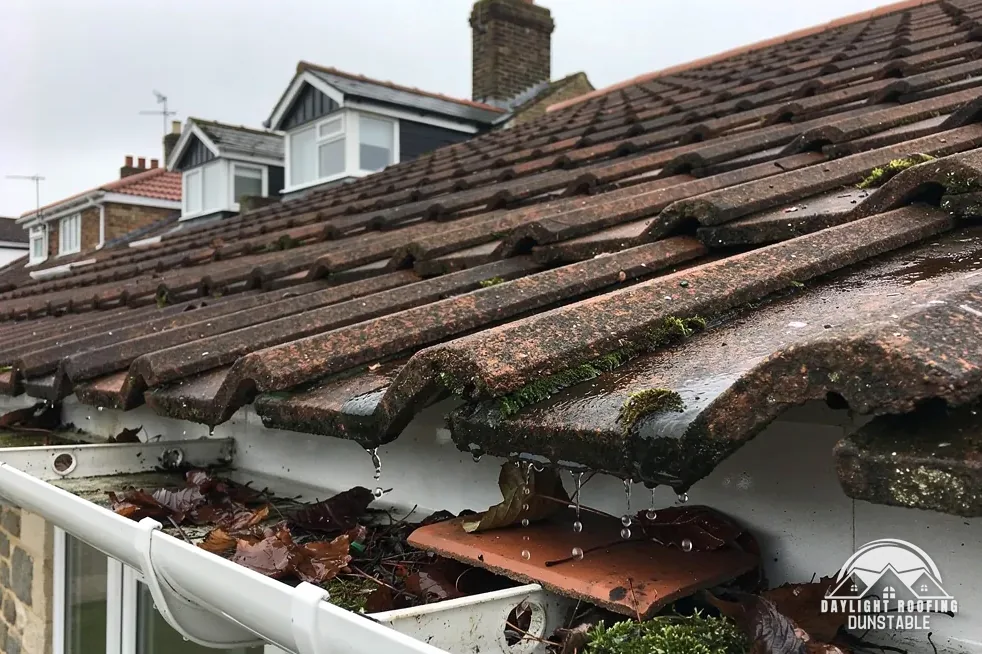
The short answer
It can, depending on the policy and the cause. Gutters are part of the building, so a claim would sit under buildings cover, and storm damage can be covered while a policy may exclude wear and tear or gradual decay. Check the wording, photograph the damage and tell your insurer.
What the policy has to say
Gutters, downpipes, fascias and soffits are fixed to the house, so any claim would be made under buildings cover, not contents. Whether it succeeds depends on the policy, because every insurer words its cover differently. A policy that lists storm as an insured event may pay for a gutter torn off in one. A policy that leaves out accidental damage may not pay for a ladder dropped against a run.
The wording to look for sits in three places: the list of insured events, the exclusions, and the section that sets out what the insurer expects the owner to do to keep the building in repair. Many policies exclude damage that builds up slowly, and an old run that has rusted through or a plastic one that has gone brittle can fall on that side of the line. Reading these sections before a fault appears is easier than reading them in the middle of a claim.
- The definition of storm, and whether it names a wind speed or a type of weather.
- Any exclusion for wear and tear, rust, rot or gradual damage.
- Whether accidental damage is included or is an optional extra.
- The excess, which is the sum you pay before the insurer pays.
- Any clause about maintenance and the condition of the building.
Storm damage and wear and tear
The Financial Ombudsman Service sets out how it reads a storm. It says: "We say that a storm usually involves violent winds, usually with rain, hail or snow." It adds: "Rain, hail or snowfall by itself can constitute a storm." So a gutter broken by a fallen branch in a gale can qualify, while one that has simply worn out in calm weather does not.
| What happened | May be treated as | Evidence that helps |
|---|---|---|
| Run torn off in a gale | Storm damage | Dated photos, weather news |
| Metal rusted through | Wear and tear | Age and past repairs |
| Overflow from blocked outlet | Maintenance | Record of clearing |
| Branch falls on a run | Storm or accident | Photo of the branch |
A table like this is a rough guide, not a ruling. Insurers sort claims by their own wording, and a dispute can turn on a single clause. A blockage left to build up may be argued as a maintenance matter, while a sudden break in a named storm may not be. The signs your gutters need work guide helps to separate a sudden fault from slow decline, and your own photographs and dates help in either case.
Making a claim and answering a refusal
Photograph the break while each piece is where it fell, and keep any broken pieces. Wide shots and close shots both help, taken from the ground. Contact the insurer soon and ask what it wants to see. The Ombudsman says it will "usually look at expert reports and photos" and that "Your insurer will normally ask a surveyor to write a report." A written repair quote from a roofer can go to the insurer with your photographs, and the decision stays with the insurer.
A refusal is not always the end. The Ombudsman states: "The insurer has to prove that the exclusion applies - for example, with an inspection report." If the insurer rejects the claim, complain to it first. "For most complaints, a business has up to 8 weeks to consider a complaint." After a final response, the Ombudsman's time limits page says: "You have 6 months from the date on the final response". The Financial Ombudsman Service can be reached on 0800 023 4567.
Where the gutter is beyond repair, the repair or replace guttering guide sets out the options, and the work as a whole sits under guttering, soffits and fascias.