
The short answer
A temporary make-safe can sometimes be done in the rain, but a permanent repair should wait for dry conditions. Wet slopes are dangerous to work on, and mortar, sealants and felt laps do not bond properly when soaked. A leak in progress is held with a temporary measure until the weather allows proper work.
Temporary work and permanent work are different jobs
When rain is coming through the ceiling, the aim is to stop more water getting in. That is a make-safe: a sheet pinned over a damaged slope, a loose tile pushed back into line, an open gap covered for now. It is built to survive until the weather improves, and it is not meant to be the final answer.
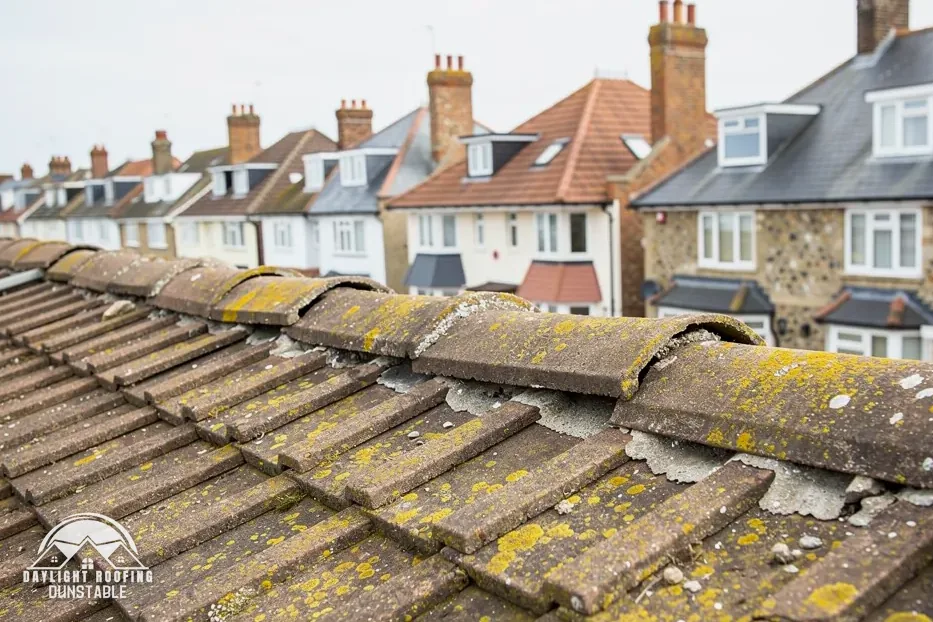
Permanent repairs are a different matter. Renewing a section of felt, rebedding a ridge, dressing lead or replacing a run of tiles all involve materials that have to stick, set or lap cleanly. They are done to last for years, and a joint made on a wet surface in falling rain is the sort that can fail early. Setting the permanent work for a dry spell protects the result.
The split also helps with timing. A leak found on a wet Tuesday does not have to wait for a month of good weather, because the make-safe holds the position, and the permanent repair follows once conditions allow. The roof is then dry for the work that matters. Our page on making a roof safe in an emergency describes what a make-safe involves.
Whether a temporary fix is possible at all depends on access, wind and the state of the surface, so a judgement is made on the day, and sometimes the right answer is that nobody should go on the roof until it has dried.
Why felt, mortar and sealant need a dry surface
Materials behave differently when they are soaked. The points below are the reasons permanent repairs are held back for dry weather.
- Mortar bedding for ridges and hips needs to cure, and extra water at the wrong stage can weaken it.
- Sealants and adhesives need a clean, dry surface to grip, and they can skin over damp rather than bond.
- Felt and membrane laps are joined by adhesive or heat, and moisture trapped inside a joint can blister it later.
- Timber battens that are wet when covered can hold that moisture beneath the new layer.
Marley, a tile maker, notes that since the 2015 amendments to BS 5534, mortar "could no longer be relied upon as the only means of securing the roof covering". Clips and nails now share that job, but mortar still beds ridges and hips and seals gaps, and it still wants suitable conditions to set.
A repair done in poor weather can look finished and still leak a few weeks later, at which point the job is done again. Waiting a day or two for the surface to dry is cheaper than redoing the repair.
Working safely when it is raining
Falls from roofs are a serious risk even in good conditions. Rain makes slates, tiles and membranes slippery, moss turns slick underfoot, and a gusting wind adds a pull on anyone carrying a sheet. For those reasons, a roofer may decide that the make-safe has to wait, even with water coming in, until the worst of the weather passes.
Anyone on the roof needs safe access, such as a scaffold or a tower where the job calls for one, and we arrange the licence with our scaffolder when scaffold is needed on the pavement or road. A ladder against the gutter is not a safe base for work on a wet slope, and a wet rung or wet boots make a slip more likely.
If you are the homeowner, stay off the roof. Deal with the water inside: catch drips, move belongings and photograph the stains. The page on what to do if your roof is leaking gives the steps, and how long a roof repair takes covers the length of the permanent work.
Our roof repairs page sets out the work we carry out.