
What listed building consent covers
Listing protects a building as a whole, with its roof included in what is protected. Section 7 of the Planning (Listed Buildings and Conservation Areas) Act 1990 requires consent for works that affect the building "in any manner which would affect its character as a building of special architectural or historic interest". The test is the effect on character, so a job can need consent even when it looks small from the pavement.
Listing does not switch off the householder permitted development classes. A listed home keeps the rights that Classes B and C give for roof work, but listed building consent is needed for anything that affects the building's character. That consent has to be obtained apart from any planning application, and having one does not stand in for the other.
- consent is judged on the effect on the building's character
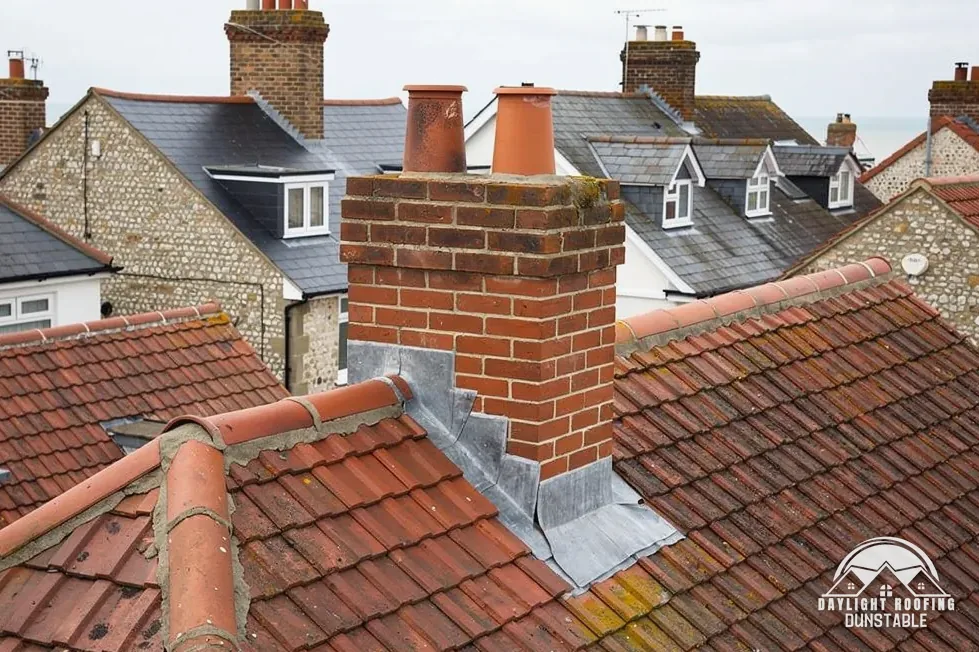
- a roof covering, ridge, chimney, lead flashing and rooflight can each carry that effect
- the grade on the list entry describes the building, and the consent rule applies at every grade
- works done without consent can be put right at the owner's cost, which is why the question comes first
A like-for-like replacement is the natural thing to hope for, but nothing in the rules read for this guide says that swapping one tile for another of the same type is exempt on a house. The council is the one to ask, with the roof in front of it and the proposed material named. Our own roof replacement work on a listed roof starts with that conversation.
Who to ask first
The local council receives applications for listed building consent and for planning permission, so it is the first call. Its planning team can say whether a particular piece of roof work counts as affecting character, whether an Article 4 direction applies at the address and whether the property sits in a conservation area as well.
Before work begins we check the route with the council, so the question does not arrive halfway through a job. A homeowner can speed that up by gathering a few facts beforehand.
- the address, and the list entry number if you have it
- what covers the roof today, and photos of the slopes, ridge and chimneys
- what you want changed, in plain words
- whether any part of the roof has been altered before
A photo sent on WhatsApp, 07880 284133, is welcome for the first look. A written answer from the council is the thing to hold on to, since it settles the route for everyone concerned and answers a neighbour's questions as well, should one ask why scaffold has gone up.
If the home is a flat or part of a building containing flats, there is a further point: flats have no householder permitted development rights, so the council's view carries more weight still.
Conservation areas are a different control
A conservation area is a designation for a whole neighbourhood, and it works on different rules from listing. A house inside one is not listed because of it, and a listed house is not always inside one. The two can apply together, and the sensible habit is to find out about both at once, because a house can be listed and stand in a conservation area, which doubles the questions to settle before a start date is fixed.
The planning guidance puts conservation areas in a category called article 2(3) land. Adding a dormer, or enlarging the roof in any other way, calls for an application to the council there. Re-roofing is a different class: Class C, which covers "Any other alteration to the roof of a dwellinghouse", has no article 2(3) exclusion, and the re-roofing of a house is normally permitted development under it.
What can change that is an Article 4 direction. GOV.UK describes one as a direction that "enables the Secretary of State or the local planning authority to withdraw specified permitted development rights across a defined area". Each council keeps its own list, and the reach of a direction varies between councils.
Older council pages still speak of a separate consent for demolishing in the area. That was replaced, and demolition there now needs planning permission, so the old term should not be relied on if it turns up.
Article 4 lists across the area we cover
Councils name different places and different works, and the table gives the entries we have checked, each with the council that issues it. Roof-covering work is the interest here, so only directions that bear on roofs, extensions or alterations are shown. Where a council is missing from the table, ask it directly, because a gap on this page is not a statement that nothing applies.
| Council | Place | What its list says |
|---|---|---|
| Central Bedfordshire | Fairfield parish | Roof enlargements such as dormers and extra storeys need an application, from 5 January 2021 |
| Central Bedfordshire | Toddington and Husborne Crawley conservation areas | Extensions, porches, outbuildings and similar; no roof item is named |
| North Herts | Hitchin and Stockens Green | Alterations to a roof and to chimneys, among other matters |
| Luton | Current directions | Changes of use, not householder roofs |
| Milton Keynes | Wolverton and Olney | Extensions and alterations to the outside of a house, with matching repairs generally not development |
St Albans City and District Council lists four areas that carry directions, Fishpool Street among them, and what each controls is for the council to say. In Bedford Borough, Buckinghamshire, Watford, Hertsmere, Welwyn Hatfield, East Herts, Stevenage, Dacorum and Three Rivers, ask the council whether a direction covers your street.
What a listed roof needs from the survey
The survey of a listed roof follows the pattern of any survey, with added attention to original fabric. The covering is looked at slope by slope, the battens and rafters beneath it come next, and the lead at chimneys, valleys and abutments is checked, because a failure there can be mistaken for a failure of the whole roof.
Lifespans help in judging what is worth keeping. HomeBuilding gives approximate lifespans of 100+ years for Welsh slate, 50-80 years for reclaimed Welsh slate, 60-80 years for clay tiles and 40-50 years for plain concrete tiles. MyJobQuote says correctly installed lead flashing "can last for over 80 years". These are published ranges for roofs in general, never a promise about a particular building.
- the covering, slope by slope
- the battens, lining and timbers behind it
- lead flashings, valleys and gutters
- the chimneys and how they meet the roof
- signs of birds or bats in the roof space
Reuse of any old covering is decided by what the survey finds and by the council's view. The written quote follows, and it is worth keeping it to hand with any letters from the council, because the council may ask what is proposed for the roof before it decides.
Churches and other special buildings
A listed church in use follows a different route, and the denomination decides which. Where the building is a Church of England parish church still holding services, the system that governs it is "the faculty jurisdiction of the Church of England" instead of listed building consent, and some like-for-like roof repairs call for just the archdeacon's written notice. A Roman Catholic, Methodist or United Reformed church in use is dealt with under that denomination's own system.
A Baptist chapel is exempt only where a Schedule 1 trust corporation holds it for a church in membership with the Baptist Union. Unitarian and Quaker meeting houses need listed building consent. A redundant church, one vested in the Churches Conservation Trust, and a minister's house all need listed building consent too.
The exemption removes listed building consent and nothing else. An outside change may also meet the ordinary planning tests, and then needs planning permission, so the council is worth asking even about a church.
A scheduled monument is different again. The Secretary of State grants consent, requests go to Historic England, and carrying out unauthorised works is an offence; the listed building consent procedure is not the mechanism that applies to such a site. The Faculty Jurisdiction Rules include the like-for-like replacement of roof lead on a listed building among the matters that need no more than the archdeacon's notice.
Building Regulations and wildlife on an old roof
The technical rules sit alongside heritage consent. Under the Planning Portal's guide, work that goes past either limit, such as a full re-roof, needs Building Regulations approval, and the council's building control team or a registered building control approver carries it out. A listed home is not left out of that.
Old roofs can be homes for wildlife. It is an offence to intentionally take, damage or destroy a wild bird's nest while it is in use or being built, and damaging or destroying a bat roost is an offence whatever the intent. GOV.UK includes "repairing or replacing a roof" among the activities where a Natural England licence may be needed, so bats in the loft stop the job until advice has been taken.
Asbestos can turn up in buildings of any age that have been refurbished. HSE says: "If the building was built or refurbished before 2000, assume that there is asbestos in it." That matters for soffits, flues and outbuilding roofs, and it is checked before anything is disturbed.
Costs on a listed roof follow the covering chosen, how the scaffold can be placed and the state of the timbers below. New roof costs and what sets the price sets out the published figures, and the planning guide covers permitted development in more detail.