
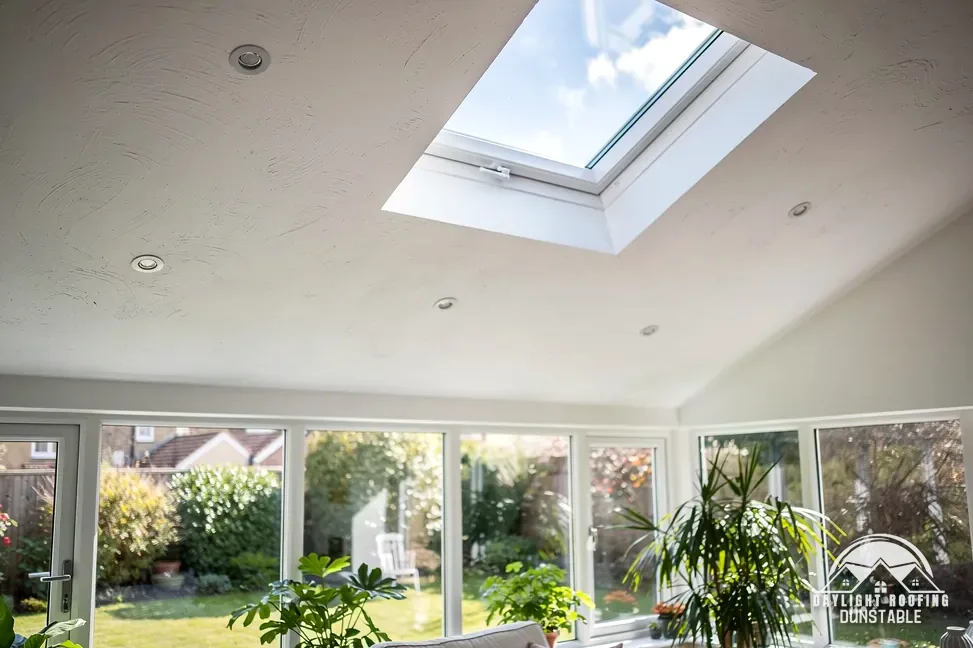
The short answer
A replacement roof window needs a U-value of 1.4 W/m²K, or Window Energy Rating Band B minimum, under Table 4.2 of Approved Document L, 2021 edition. The 2.2 figure is for rooflights, which stand on a kerb. The smaller the U-value, the less heat the unit lets through.
The figure and where it comes from
Approved Document L, Volume 1, is the guidance that sets energy standards for homes in England, and its 2021 edition took effect on 15 June 2022. Table 4.2 covers new fabric put into an existing dwelling, which is what a replacement roof window is. Its window row reads "1.4 or Window Energy Rating(10) Band B minimum", with a note that the row includes roof windows.
The 1.4 is a U-value in W/m²K, a rate of heat flow worked out per square metre of the unit for each degree of temperature difference across it. It measures how quickly heat leaves, so a lower number means a unit that holds more heat in. A unit has to come in at 1.4 or below on that route. The alternative is the rating route, where the unit's Window Energy Rating must reach Band B minimum. Either one is enough on its own.
A newer edition, AD L 2026, applies from 24 March 2027, and its tables are renumbered 3.2 and 3.3. Until then the 2021 numbers are the ones to read. The page on roof windows and Building Regulations covers the rest of the regulations that touch a replacement.
Why 1.4 and 2.2 get mixed up
Two figures sit close together in Table 4.2, and both turn up in conversations about roof glazing. The reason they get confused is naming, because the trade has several words for what are only two kinds of unit. Appendix A of Approved Document L gives the word rooflight to "A glazed unit installed out of plane with the surface of the roof on a kerb or upstand." It adds that a rooflight is "Also sometimes referred to as a skylight." The window lying in the roof slope has its own name.
Those two units carry two figures. A rooflight takes 2.2, and a roof window takes 1.4 or Band B minimum. Where a quote or a brochure says only the loose word, it leaves open which row applies. The 2.2 figure is the rooflight row, which applies to a unit on a kerb, and it appears nowhere else in the table.
| Unit | How it sits | Figure |
|---|---|---|
| Roof window | Flush, in the slope | 1.4, or Band B minimum |
| Rooflight | Raised on a kerb | 2.2 |
A lantern is a rooflight, and so is a unit on the upstand of a flat roof. The roof lantern page covers that side.
Checking the figure before you order
The figure to look for covers the whole unit as supplied, glass and frame together. A figure quoted for the glazing alone can be better than the figure for the finished window, so a brochure headline is not enough. The data sheet for the model gives the unit's own U-value or its Window Energy Rating, and that is the document to hold against Table 4.2.
The quote should name the model and give its figure. A name on the frame is not a pass: the rules name no maker, and they test the rating only. If the figure cannot be shown on paper, another unit is the safer choice, however well known the name on the frame.
The roof around the window follows a separate test. A renovated roof is measured against Table 4.3, with a 0.35 threshold and an improved 0.16, and glazing stays out of that definition. Building control, run either by the council's building control team or by a registered building control approver, is the body to ask where a specific job is unclear. For the full range of roof window work, see the skylights and roof windows hub.