
The short answer
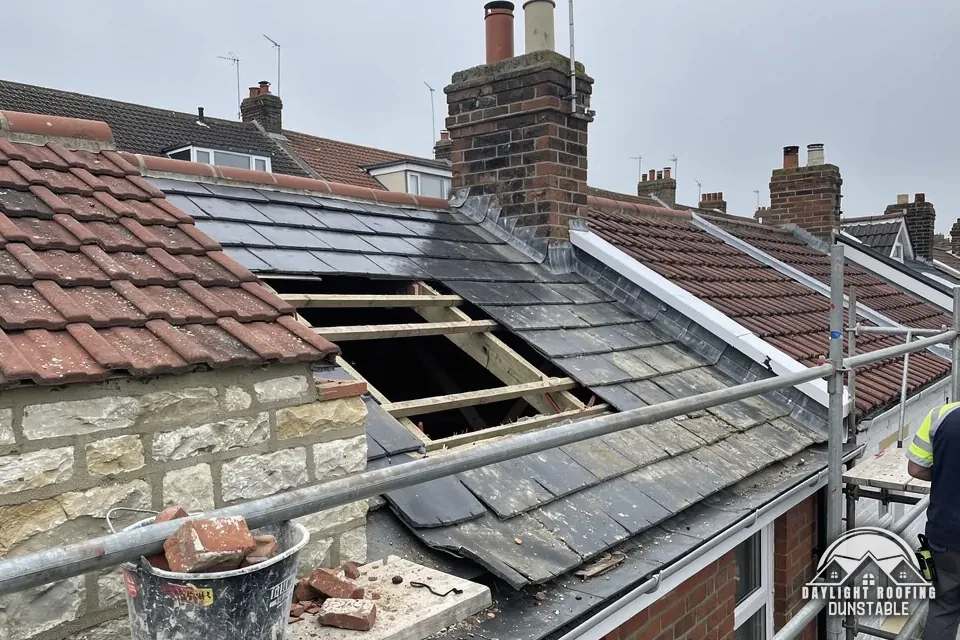
Yes, chimney repairs can be done in winter, but the weather decides what is sensible on the day. Fresh mortar needs time to harden, and a hard frost can break up a young joint, so a mortar job may be paused for a cold snap while a leak is made safe.
What cold and frost do to new mortar
Chimney repairs that use mortar, such as repointing a stack or bedding a new flaunching, rely on the mix setting properly. Mortar gains strength as it cures. In a hard frost the water in a fresh joint can freeze before that has happened, and ice inside a young joint can break it up from within. A repair that looks sound on the day may then crumble by spring, which is why a roofer may hold a mortar job back for a cold snap even when the stack is easy to reach.
Rising clear of the slope with each face open to the air, a stack cools fast after dark. It is also awkward to protect once it is wet. A sheet can be tied over the top of the stack, but wind can lift it, and a covered joint that stays damp does not harden any faster. A dry, mild spell between frosts gives new mortar a fair chance, and a roofer may choose to wait for one.
Work that does not depend on mortar is less tied to the temperature. Clipping a new pot or cowl onto an existing flaunching, or swapping a cracked pot, can be planned around the weather more easily. Where the old flaunching around a pot has crumbled, though, the new one is mortar again and the same frost question comes back.
Jobs that can wait and jobs that cannot
Not every fault carries the same urgency. Some can be planned for a milder week, while others are about keeping rain and falling debris away from the house. The table sets the two groups side by side.
| Job | Timing question |
|---|---|
| Repointing worn joints | Mortar needs a frost-free spell to harden |
| New flaunching | Mortar again, so the same frost test applies |
| Loose or leaning stack | A safety matter, so it is not left for spring |
| Active leak into the house | Make it safe first, then repair when the weather allows |
Repointing and flaunching are the two jobs most tied to the thermometer, so a roofer weighing a winter booking is really asking whether the next few days look dry enough. A job that has to be split, with the first part done and the rest left until the weather turns, is not unusual and is better than a rushed joint that fails.
A leak that shows as a damp mark on the wall below the stack, or a stack that rocks or has shed bricks, is a question of keeping people and the house safe. A temporary cover or a make-safe visit can hold the position until the weather suits a proper repair. Our page on chimney leaks in wet weather looks at where water gets in around the stack.
Planning a winter repair with a roofer
Ask any roofer how they would handle a frost forecast before work starts. A sensible answer covers what happens to a mortar job if the temperature drops overnight, and what the plan is if rain arrives halfway through. If a firm gives you a firm date in the coldest part of the year for a repointing job, it is fair to ask what that date depends on.
Access also matters more in winter. Wet slopes and icy edges make a roof harder to work on, and a stack high above the eaves calls for scaffold or a safe platform instead of a ladder. Our chimney repairs page explains the range of jobs on a stack, from pots and flaunching to repointing and rebuilding.
A photo of the stack sent to WhatsApp on 07880 284133 is a useful start. Once the roof has been surveyed, a single written figure covers the chimney work, and scaffold sits inside that figure where the stack needs it. If you want to know how a repair is chosen over a rebuild, our guide to repairing, rebuilding or removing a chimney sets out the options.