
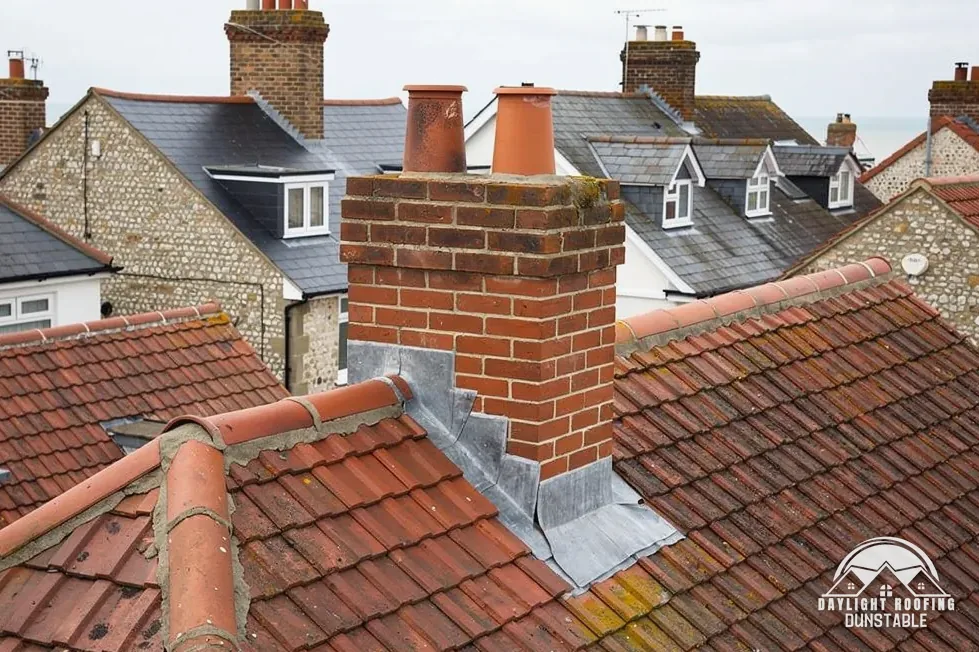
The short answer
Check with the council before removing a chimney, because Class C, the permitted development right for re-roofing, excludes chimneys at C.1(d). Listed status, a conservation area or an Article 4 direction can add controls. Building Regulations approval always applies to removing a chimney breast, as it is part of the structure.
Where planning stands for a chimney
Re-roofing a house is normally permitted development under Class C of Schedule 2, Part 1 of the General Permitted Development Order, and the government's technical guidance says Class C covers alterations to roofs such as re-roofing or the installation of roof lights. Chimneys are carved out of it. Paragraph C.1(d) excludes the installation, alteration or replacement of a chimney, flue or soil and vent pipe from the class.
That leaves a gap for owners. Nobody can lean on the re-roofing right to claim that taking a stack off the roof needs no conversation with the planning authority. The council knows the house, the street and any designation that applies, so only the council can settle whether a given removal needs an application, and a short email to the planning team before booking the work gets the reply in writing. Correcting a mistake afterwards costs far more than asking, whether the correction is a retrospective application or a stack that has to be rebuilt.
Flats are a separate case: a block containing flats sits outside the householder permitted development rights, so a flat owner or the freeholder has to put the same question to the council. Our page on chimney breast removal regulations covers the structural side of the question.
When extra controls apply
Some settings add layers on top of the national rules. The table sets out three, with the question to put to the council in each.
| Setting | What to ask the council |
|---|---|
| Listed building | Whether listed building consent is needed |
| Conservation area | What stricter rules cover roof and chimney work |
| Article 4 direction | Which permitted rights it has withdrawn |
Listing leaves the roof work classes in place, so the extra step is listed building consent: it is required for works "in any manner which would affect its character as a building of special architectural or historic interest", and a stack can be part of the look of an old house. Central Bedfordshire Council states that permitted development rights are stricter for properties within conservation areas.
An Article 4 direction takes away named permitted development rights inside a set boundary, and the list differs from council to council. North Herts Council's list says the direction for the Hitchin conservation area covers alterations to a dwellinghouse roof and the installation, alteration or replacement of a chimney, flue or soil and vent pipe, among other matters. For any other address, ask the local council whether a direction applies.
Building Regulations, the breast and the neighbours
Building Regulations are a separate system from planning. The Planning Portal says that "Building regulations approval will always apply when removing chimney breasts as they are part of the building's structure." That sentence is about the breast inside the house, so it applies whichever planning answer you get. Approval comes through building control, which is either the council's own team or a registered building control approver.
A party wall notice may also come into it. Where the breast stands against a neighbour's wall, notice comes from the building owner, giving at least two months before the cutting away starts, and the neighbour then has 14 days to answer. Our answer on party wall notices for a chimney breast gives the details.
We check the planning or building-control route with the council before work starts, so the owner is not left to untangle it halfway through, and a refusal or a condition is known before scaffold goes up. For the wider picture of repair, rebuild or removal, see our guide to repairing, rebuilding or removing a chimney, or start at the chimney repairs page.