
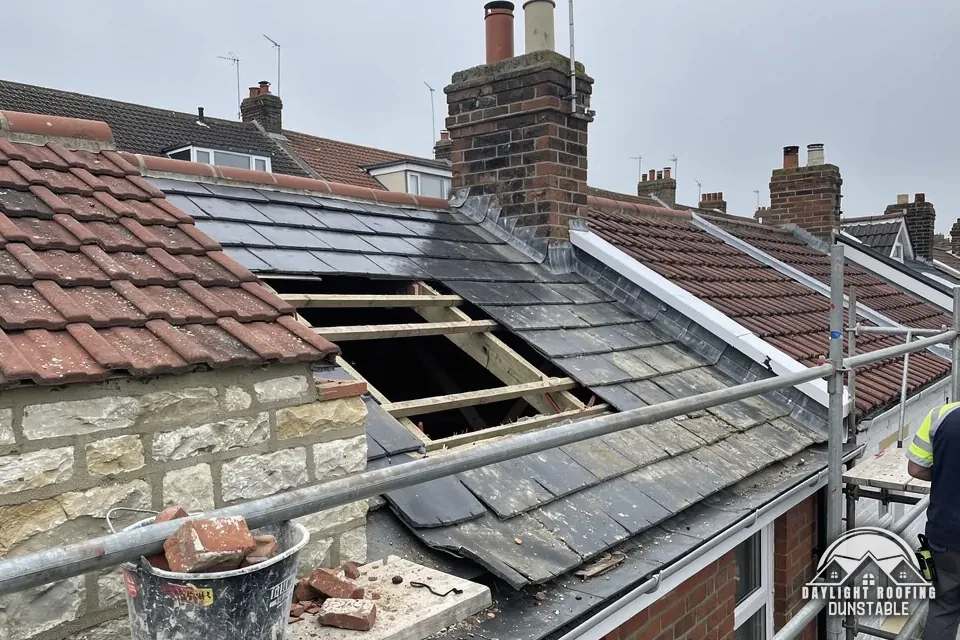
Three choices for a failing stack
The stack is the section of the chimney that stands above the roof, and it can be dealt with in three ways. It can be repaired, with the faults mended and the stack left in place. It can be rebuilt, with the stack taken down to a sound level and built up again. Or it can be removed, with the stack taken down and the roof made good where it stood.
None of the three is a better answer in general. Which one suits a chimney depends on the fault, on whether the flue is still wanted and on what lies beneath the stack. A survey that covers the stack and the slopes beside it settles the question, and the owner decides once told plainly what was found.
The table sets the three side by side. A fourth choice, removing the chimney breast inside the house, is a separate decision with its own approvals, and a later section deals with it.
| Choice | What it means | Suits |
|---|---|---|
| Repair | Mend the faults, keep the stack | Sound brickwork with worn joints |
| Rebuild | Take down and build up again | Loose or leaning brickwork |
| Remove | Take the stack down, make the roof good | A flue no longer wanted |
When a repair is the right size of job
A repair keeps the stack as it is and mends what has worn. Four parts can be dealt with, and any of them can be done on its own. Pointing means the mortar joints that bind the bricks, and they can be raked out and renewed where they have worn back. Flaunching means the sloping mortar cap that holds the pots, which can be patched or laid again. Flashing means the lead sealing the base, which can be patched or renewed, and pots and caps can be reset or replaced.
A repair suits a stack whose bricks are sound. Brickwork that is square, firm and free of cracks can take new mortar, and the stack goes on standing as before. The survey checks the joints, the brick faces and the top of the stack to judge this, and a flashing that is lifting is a separate question covered in the guide to chimney flashings and leadwork.
Repair has limits. Mortar renewed behind a brick face that is crumbling soon fails again, and lead laid against loose masonry has nothing firm to sit against. Where the brickwork itself is the fault, a repair to the joints treats a symptom and leaves the cause, and the survey will say so rather than offer a patch that cannot hold.
Parts a repair can cover
- Pointing between the bricks
- Flaunching on the stack top
- Lead flashing at the base
- Pots and caps
When the stack needs rebuilding
A rebuild is a bigger job. The stack is taken down brick by brick to a level that is sound, at or just above the roof line, and then built up again with fresh mortar. Pots, flaunching and the base lead are renewed as the work is finished. The result looks like the old stack, with brickwork that is firm again.
The signs that point to a rebuild are structural ones. A stack that leans, bricks that have come loose or moved, cracks that run through several courses and joints that have lost their mortar to a depth where repointing cannot hold all call for a closer look. A stack in that state is a safety question as well as a weather one, because loose masonry can fall onto the roof or into the garden.
A rebuild is described as the same stack built again, and that raises a planning question. The permitted development right for roof alterations, Class C, excludes the installation, alteration or replacement of a chimney, flue or soil and vent pipe, so Class C does not settle a rebuild. The council is the place to ask, and a listed home needs listed building consent for work that affects its character.
The survey settles whether the fault is local or runs through the whole stack. A stack with a bad top section can sometimes be rebuilt from there down to a sound course, and the owner gets the survey's findings in everyday language ahead of any written price.
When the stack comes down
Removal suits a stack that serves nothing. A flue that carries no fire or stove and is not wanted again is a stack that costs money to keep sound, and taking it down ends the upkeep. A chimney whose brickwork is beyond a sensible rebuild can fall into the same case.
Where a stack has stood, a gap is left in the roof. The opening is closed and framed, the covering is laid back round it, and the slopes either side are made weathertight. That roof work is the part a roofer does, and it is judged on the same terms as any re-covering of a small area, with the old covering and the battens around the gap checked as the work goes on.
Where only the stack above the roof is removed, the breast inside the house and the flue below the roof line stay. Where the whole chimney is to go, the breast comes out too, and that has its own approvals. A stack that is removed is also removed from the roofline, and the neighbours see the difference, so a quiet word with them is worth having.
The same planning caution applies: Class C excludes a chimney from its rights, so the council is asked whether permission is needed before the stack is taken down.
Taking out the breast is a separate decision
The breast is the masonry inside the house that carries the flue to the stack. A repaired stack and a rebuilt stack both leave it where it is. Removing it is a different matter, and the Planning Portal is plain about the approval: "Building regulations approval will always apply when removing chimney breasts as they are part of the building's structure." That is the rule for every house, from a terrace to a detached home.
A breast that forms part of a wall two households share brings in the Party Wall etc. Act 1996, which adds a notice. The building owner serves it at least two months before work to cut the breast away. Notices and approval come before any breast is touched. A chimney stack can stay above the roof when the breast below goes, but it has to be supported afresh, and that is a structural question for the approval.
Because the two decisions overlap, a survey of the stack is worth having before the breast is touched. The guide to chimney breast removal regulations sets out the approval, the notice periods and the certificate that follows. Whether the roof is a few years old or has stood for generations, the approval comes first.
Listed homes, conservation areas and older houses
Listing does not take away the permitted development rights for roof work. Work done "in any manner which would affect its character as a building of special architectural or historic interest" does need listed building consent, though. A stack can be part of a listed roofline, so the question is put to the council before a stack is rebuilt or taken down, and the council's answer should be on paper before work starts.
An Article 4 direction can remove further permitted development rights in a conservation area, so the council is asked whether one applies. Each council keeps its own list of directions, and the answer for a house comes from that list and not from a general rule. A short description of the stack and a photograph of the roofline help the council give a clear answer.
A thatched house puts fire safety ahead of roofing when the chimney is in question. The fire services' guide for thatched homes asks that the chimney be "swept regularly by a qualified chimney sweep". A thatcher's advice on the thatch comes before any stack work, and the stack is planned with that advice in mind.
The same care applies to a stack that serves an older fireplace still in use. A flue in service is swept and left in working order, and a repair or rebuild keeps the pots and the flue lining as they need to be for the appliance below.
What the survey and the price settle
The survey looks at the stack from top to base. It covers the pots and the flaunching, the brick faces and joints, the lead, and the roof round the stack. Faults beyond the stack, spotted from the roof, are reported to the owner as well. The choice between repair, rebuild and removal is then the owner's, and the owner receives one written price for the option chosen, with scaffold part of that price when the job needs it. The same survey informs all three choices, so the owner knows what each would involve before deciding.
Published averages give scale. On MyJobQuote's chimney breast removal page (3 November 2026) the average is around £2,500 for the breast alone and around £3,000 to £3,500 for the whole stack with the breast. Its guide to chimney leadwork (22 September 2026) reads: "A chimney lead flashing patch repair typically costs around £200, while a full replacement averages around £570." No VAT basis is stated for either page. Repointing is priced after a survey.
The guide to chimney repair and removal costs goes through what moves each price, and the page on chimney repairs shows the range of work done on stacks. A photo on WhatsApp (07880 284133) or a call to 01582 935272 starts the conversation.