
The short answer
Capping an unused chimney can be a sensible way to stop rain, debris and birds entering the flue, but the flue should stay ventilated so damp cannot build up inside. A cap does not repair a damaged stack, so check the brickwork and flashing first. Sweeping advice applies to chimneys in use.
What a cap on an unused flue does
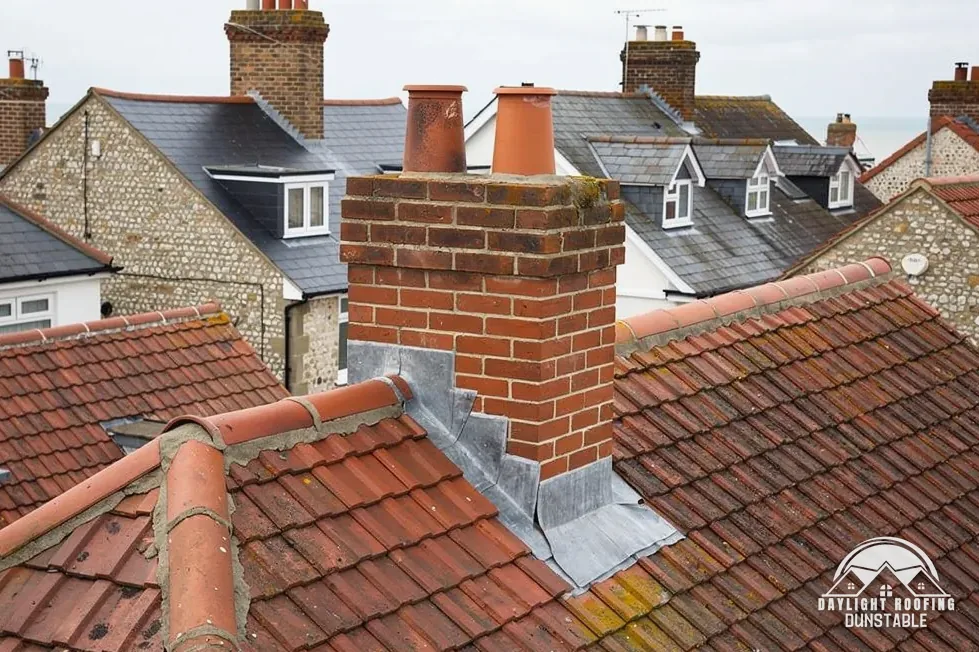
A chimney that nobody lights any more keeps its open flue, a passage from the fireplace up to the pot. Left uncovered, that opening takes in rain, leaves and nesting material, and the water can run down the flue and show up as a damp patch on the breast inside. A cap closes the top, so the flue behind it stays drier and clearer.
The cap has to be chosen with care. A flue that is sealed tight can hold moisture, and a stack with no air moving through it can stay wet for longer than one that breathes. For that reason a cap on an unused flue can be paired with some ventilation, such as a vented cap or an air brick at the base of the breast, so air can pass through. Which arrangement suits a particular stack is something the survey decides, and the roofer will explain the reasoning.
Capping is not repair. If the pot is cracked, the flaunching has crumbled or the flashing has lifted, a cap placed over the top does not mend any of those. Water can still enter through the faults beneath it. A walk round the garden with binoculars can reveal several of them, and it is wise to fix those faults before the cap goes on.
When capping fits, and when repair or removal does
Capping suits a stack that is sound and that you do not intend to use. It is less suited to one that is leaning, shedding bricks or beyond sensible repair. The table sets out the situations and the route each one points to, and none of them is a rule, since a survey of the stack comes first.
| Situation | Route to consider |
|---|---|
| Sound stack, flue never used again | Ventilated cap |
| Cracked pot or crumbling flaunching | Repair, then cap |
| Leaning or failing brickwork | Rebuild or remove |
| Flue might be lit again | Leave open, keep swept |
If you may light the fire again one day, a cap is the wrong choice, because it would have to come off and the flue would need sweeping and checking first. The safety guide for thatched homes, written with fire service input, says: "Have the chimney swept regularly by a qualified chimney sweep." That advice concerns chimneys in use, and it is a reason to keep an in-use flue clear instead of covering it.
Where a stack is past saving, taking it down may beat capping it. Our guide to repairing, rebuilding or removing a chimney compares the three routes.
Rules, checks and next steps
Check with the council before altering the top of a chimney. Class C of the permitted development rules excludes the installation, alteration or replacement of a chimney, flue or soil and vent pipe, so a cap that changes the look of the stack, or any stack on a listed house or in a conservation area, should go past the council planners first. Our page on planning permission to remove a chimney covers the routes.
A damp patch on the breast does not prove that the cap is missing. Water can come from the flashing, the pot or condensation in a flue with no air moving through it, so the cause needs to be found before the cure is chosen. Our guide to chimney leaks in wet weather sets out where water can get in.
Send a photo of the stack to WhatsApp on 07880 284133, or ring 01582 935272 to arrange a survey. The written quote follows as one total, and our chimney repairs page lists the other jobs on a stack. Do not light any fire in a flue that has been capped, or that you have not had checked.