
The short answer
The chimney breast is the block of masonry inside the house that projects from a wall and encloses the flues. The stack is the section that comes up through the roof and stands clear above it. Repairs to a stack happen at roof level, while removing a breast always needs Building Regulations approval.
Where the breast ends and the stack begins
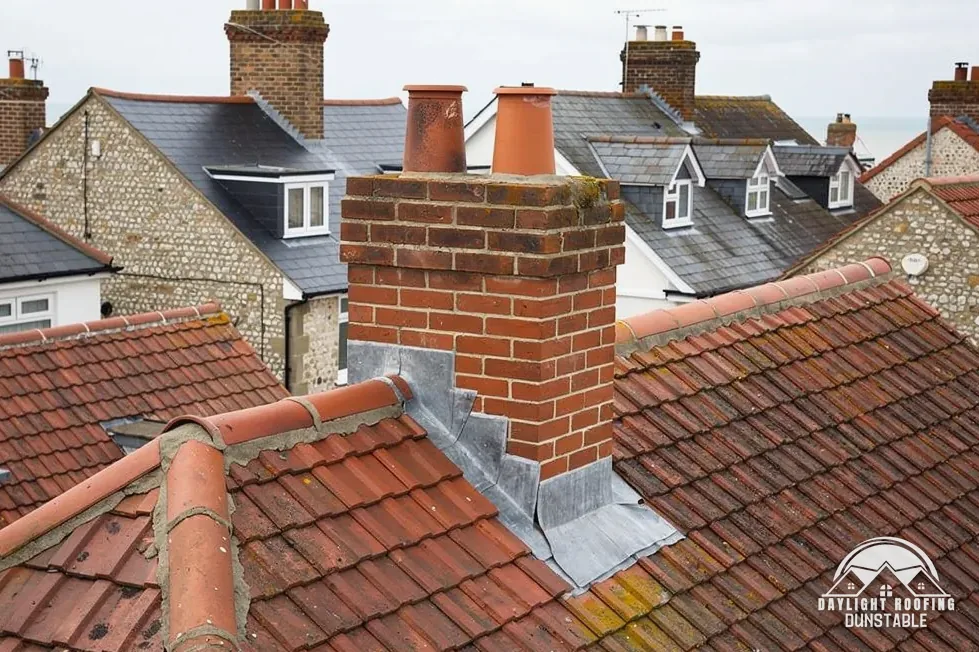
Follow a chimney upward and it changes name on the way. Inside the house, the chimney breast is the block of masonry that projects from a wall and encloses the flues, whether or not a fire opening is still in it. Higher up, the same structure passes through the ceiling, the loft and the roof slope. Once it clears the roof covering it is called the stack.
The two parts share their brickwork but meet very different conditions. A breast sits inside the heated house, so damp reaches it only when water arrives from above, down the flue or through a failed joint. The stack stands in the open, with rain on every face, sun on some of them, frost in winter and no heating behind it. That difference explains why the two parts fail in different ways and are mended in different ways.
A quote that says chimney work could mean either part, so ask which one is meant. Work at roof level belongs with the chimney repairs pages, while work inside the house is another job with its own paperwork, set out further down.
What each part is built to do
The breast does two jobs. It gives the flues a route up through the house, and it is part of the building's structure, which is why the Planning Portal says that building regulations approval will always apply when removing chimney breasts. Where a breast also holds up the stack above it, taking one out while the stack stays needs the load above worked out first.
The stack has a different brief. It lifts the flue outlet clear of the roof so that smoke leaves above the covering. Its top carries the capping and the pots, and the mortar bed that sheds water from around each pot. Flashings with a back gutter seal the join where the stack meets the tiles, because brickwork and roof covering move at different rates and the gap between them needs a flexible seal.
Between the two sits the loft, where the flues pass behind the stack's lower courses. A stain on the loft side of the brickwork tells a different story from a stain in a bedroom, and a note of where each sits helps a survey separate a roof-level fault from an indoor one.
| Part | Position | Weather | Faults it can show |
|---|---|---|---|
| Chimney breast | Inside, in the room and loft | Indoors, damp only from above | Damp patches, loose plaster, staining |
| Chimney stack | Above the roof covering | Rain, frost and sun on every face | Worn pointing, cracked flaunching, failed flashings |
Which job needs which route
Removing a breast is a structural job, and approval from building control comes before any brick is cut. Where a neighbour owns the other side of the wall, the Party Wall etc. Act 1996 adds a second step: a notice from the owner doing the work, to "be served at least two months before the date on which the proposed work will begin". The chimney breast removal regulations guide sets out the sequence.
Cost follows the same split. MyJobQuote, in a page dated 3 November 2026, puts the average for removing a breast at around £2,500, and the average for removing the entire stack together with its breast at around £3,000 to £3,500, so the two jobs are priced apart. Repairs to a stack that stays, such as repointing, wait for a survey before they are priced, because the amount of worn brickwork is known only once the stack has been looked at closely.
Scaffolding on the pavement or road needs a scaffold licence from the highway authority; we arrange the licence with our scaffolder. Whether a stack should be mended, rebuilt or taken down is the question the repair, rebuild or remove guide works through.