
The short answer
A chimney cowl is a cap fixed over a chimney pot or flue outlet. It is designed to shut out rain and birds, and some forms can help with downdraught. Types include fixed hoods, rotating cowls and mesh guards, and the fire services' thatch guide does not recommend spark arrestors.
What a cowl is and the forms it takes
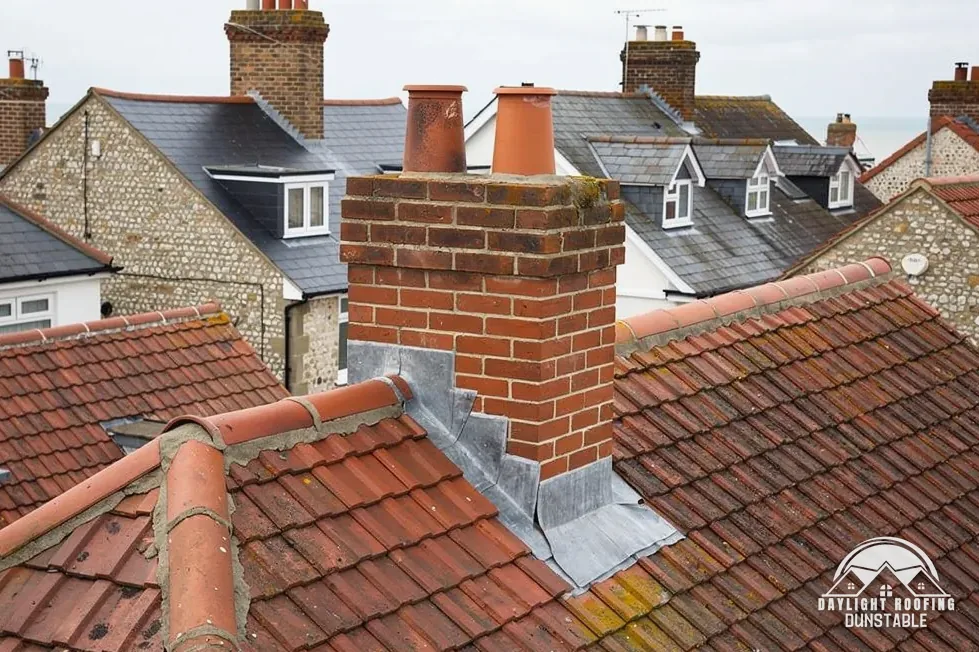
A cowl is a cover over the open top of a flue. A bare pot lets in nesting material, leaves and rain, and gusts can push down it into the room. A cowl closes off part of that opening while still letting smoke and gases escape. It is fixed to the pot or to the top of the stack, by clamp, strap or mortar, depending on the design.
Cowls differ in shape and purpose. The table sets out three forms seen on house roofs, with what each is aimed at.
| Form | How it works | Aimed at |
|---|---|---|
| Fixed hood | A cap with a gap at the sides | Rain falling straight in |
| Rotating cowl | A vane that turns with the wind | Downdraught |
| Mesh guard | A cage over the pot opening | Birds and debris |
No cowl suits every flue. One that is wrong for the appliance beneath can slow the flow of gases, so the form is picked with the flue's use in mind, and a sweep or installer can advise on that. The wider picture of stack parts sits on the chimney repairs page, from the pots down to the flashings.
Cowls, spark arrestors and thatched roofs
A spark arrestor is a mesh fitted to stop burning fragments leaving the flue. On a thatched house the fire risk is serious, and the Thatched Property Safety Guide, written by local fire and rescue services in 2017 and listing the Bedfordshire and Hertfordshire services as contacts, takes it on directly. On arrestors it says the services do not recommend them on chimneys, and that any which are installed "must be kept clean".
The guide also points at the brickwork. It reports that "a major cause of chimney related thatch fires is attributable to heat transfer through the brickwork of the flue into the adjacent thatch". A cowl sits above that path and does nothing to alter it, so fitting one is no stand-in for looking after the flue itself, and the guide asks owners to book regular sweeping by a qualified sweep.
A mesh that clogs with soot and debris blocks the flue, which explains why the guide ties its cleaning condition to every arrestor that is fitted. We are roofers and do not thatch, so questions about the thatch itself belong with a thatcher, while a roof beside a thatched home is ordinary roofing work.
Fitting, replacing and pricing a cowl
A cowl can be replaced as a single item. Old ones corrode, crack or work loose, and a rotating cowl can seize or squeak once its bearing wears. Taking one off a pot that is itself cracked may show that the pot needs attention as well, because a cowl clamped to a broken rim will not hold for long.
Everything at the top of a stack needs safe access. If a scaffold would stand on the pavement or road, we arrange the licence with our scaffolder. A cowl swap is a small job beside a rebuild, yet it is still priced after a survey and given as one written total, with no figure named from the ground. Pots, cappings and flaunching can all be checked on a single trip up, so the whole top of the stack is assessed together.
If you are unsure whether a cowl is helping, a drip at the ceiling beside the breast, or soot and water in the grate, deserves a proper look. The chimney leaks in wet weather guide explains where that water may be coming from, and the chimney repair costs guide covers what shapes the price of any job on a stack.