
The short answer
Responsibility for a shared chimney stack comes from the title deeds and any agreement between the owners, because no single rule names one owner. Where work touches a party wall, the building owner must serve a Party Wall etc. Act 1996 notice, and surveyors are brought in only if the neighbour dissents.
Who answers for a stack serving two homes
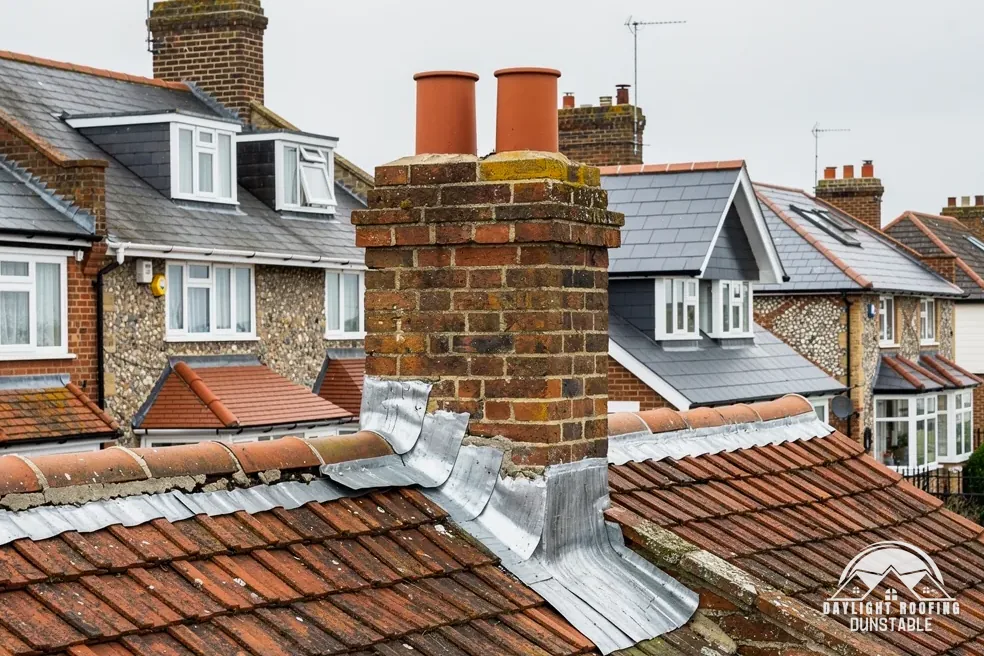
A stack that rises from the wall between two homes carries the flues of both. Each owner uses their own flue, but the brickwork around them is one structure, built on the wall the two homes share. That is why a fault on one side can become a problem on the other, and why neither owner can treat the stack as theirs alone.
No simple rule names one owner. The title deeds are the first place to look, since they may say who owns the stack or the wall beneath it, and whether either owner has a duty to repair it. Where the deeds say nothing, the owners need to reach an agreement of their own, and a solicitor can read the documents and explain what they mean.
A failing stack does not wait for that conversation. Loose pots, worn pointing or split flaunching can drop material onto a neighbour's roof or into their garden, and a neighbour who is told early is easier to work with than one who is surprised by a scaffold. A written note, with a photograph of the fault, is a fair way to begin. Roof questions about the stack itself sit under chimney repairs.
What the Party Wall Act asks of whoever starts the work
The Party Wall etc. Act 1996 puts a duty on the owner who wants the work done, called the building owner, to tell the neighbour first. Section 2(2)(g) lists, among the works it covers, cutting "any projecting chimney breast, jamb or flue" away from a party wall. The table sets out the periods that matter for chimney work.
| Step | Period |
|---|---|
| Notice for work to a party structure | At least 2 months |
| Notice for a wall built on the boundary | At least 1 month |
| Notice before nearby excavation | At least 1 month |
| Time for the neighbour to respond | 14 days |
Silence for 14 days counts as dissent under section 5, and GOV.UK states that you cannot assume that no response means they agree to the works. Dissent sends the dispute to surveyors under section 10, which is a process and not a block. The neighbour may agree in writing too, which lets the work begin sooner. The chimney breast removal regulations guide applies these steps to breast work.
Notices come from the building owner. A roofer prices and carries out the roof side of the job, and a party wall surveyor handles the dispute side if one arises.
Repairs, cost sharing and who to ask
The roofing parts of a shared stack, such as flashings, flaunching and pots, are what a roofer assesses. The stack is surveyed first, and the written total for the roofing work comes after that survey. Scaffolding on the pavement or road needs a scaffold licence from the highway authority; we arrange the licence with our scaffolder. What the neighbour contributes is something the two owners settle between themselves, ideally put on paper before scaffolding is erected.
Splitting a bill is easier when both owners see the same facts. A written description of the fault, a photograph and a quote give the neighbour something concrete to agree to, and the deeds may already say how costs fall. Where owners cannot agree, a party wall surveyor can help with the Act and a solicitor with the deeds. Questions about the Act do not go to building control. Keep every message, since a dated record settles later arguments about who agreed to what.
The repair, rebuild or remove guide helps owners compare the options before they sit down together, and it is worth reading beforehand so that the first conversation starts from the facts.