
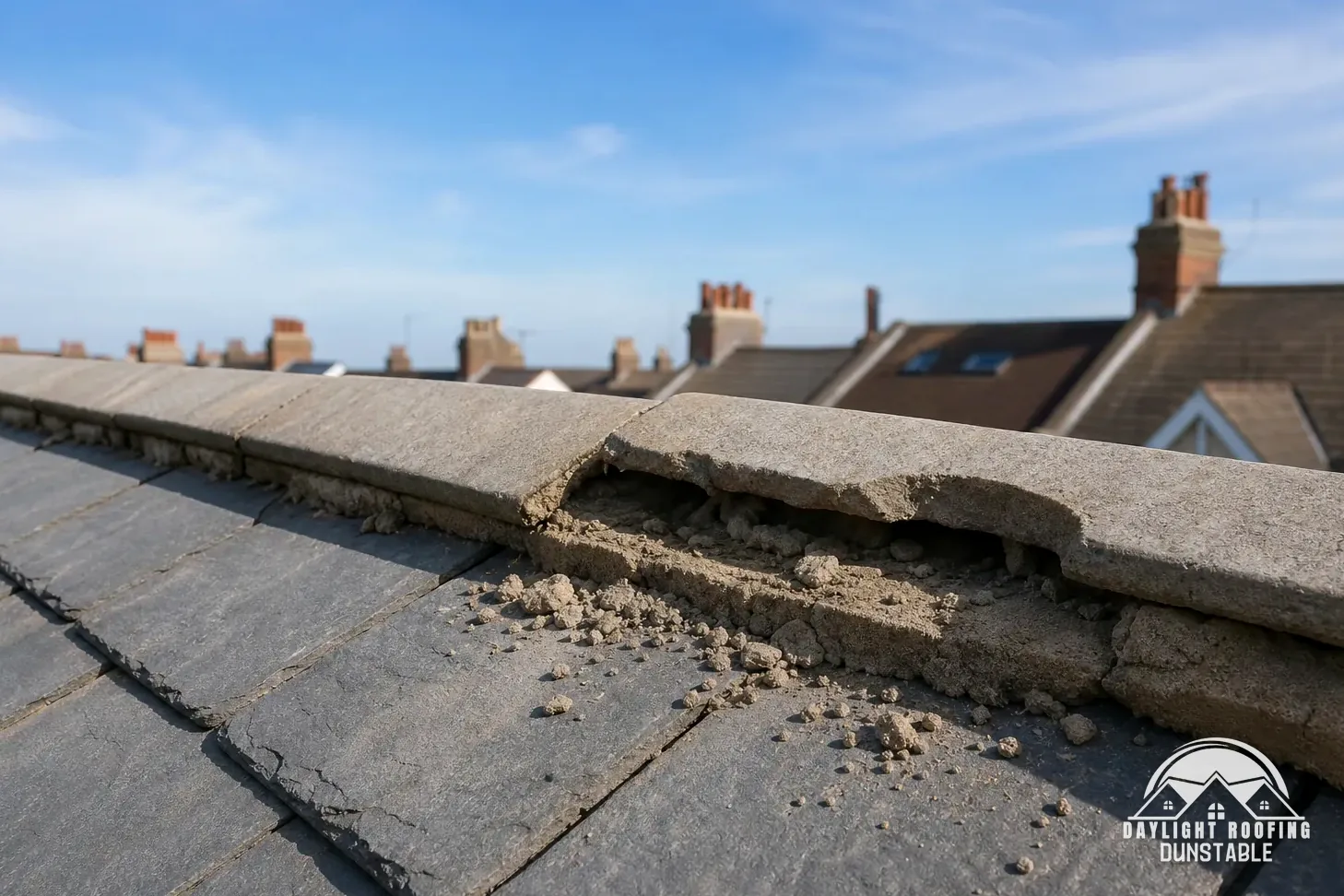
The short answer
It may, but it depends on your policy wording and on what caused the damage. Storm damage and wear and tear are treated differently, so read the policy, tell your insurer as early as you can and ask what it says about emergency work. Photograph the damage first, keep every receipt and keep the damaged materials until told otherwise.
What decides whether the policy responds
A make-safe is the first stage of an urgent repair: stopping water, securing loose material and protecting the building until a permanent repair can be made. Whether an insurer pays for it is a question about your own policy, which is a contract with its own terms, and no general rule covers every policy.
Two things weigh heavily. The first is the cause of the damage. A sudden event such as a storm sits differently from gradual deterioration, and a policy can exclude wear and tear and poor maintenance. The second is what the policy says about steps taken to limit further damage, since some wordings expect the policyholder to act to prevent a loss from getting worse.
The Financial Ombudsman Service describes a storm this way: "a storm usually involves violent winds, usually with rain, hail or snow." It also says that "Rain, hail or snowfall by itself can constitute a storm." That is the Ombudsman's approach when it looks at complaints, and the policy wording still decides what your own insurer must pay. The page on storm damage and insurance sets out the wording in more detail.
Steps that protect a claim
A short routine keeps the paperwork in order, whatever the insurer eventually decides.
- Photograph the damage, outside from the ground and inside the house, before anything is moved or covered.
- Write down the date, the time and the weather.
- Read the policy for the claims section and the emergency or duty-to-protect wording.
- Tell the insurer, and ask what it says about emergency work and who it wants to carry it out.
- Keep every receipt, including sheeting, buckets and drying equipment.
- Keep fallen tiles and damaged items until the insurer says they can be thrown away.
The Ombudsman's storm page says it will "usually look at expert reports and photos". It adds that "The insurer has to prove that the exclusion applies - for example, with an inspection report." Your own photographs are the starting point for any discussion of that, and the page on what photos to take of roof damage lists the pictures worth having. A dated record also helps if the insurer later asks when the damage was first noticed, and what was done in the meantime to limit it.
If the insurer says no or is slow
An insurer's answer is not always the end of the matter. Ask it to explain in writing which part of the policy it relies on, and compare that with the cause of the damage as shown in the photographs and any survey. If you still disagree, the complaint route is set out by the Ombudsman: "For most complaints, a business has up to 8 weeks to consider a complaint." The Financial Ombudsman Service can be reached on 0800 023 4567.
There is also a time limit for going to the Ombudsman: "You have 6 months from the date on the final response". Keep that response safe, and note the date it arrives. Do not let a wait for the insurer stop you protecting the building, since leaving water to run in can add to the loss.
A roofer can make the roof watertight and give one written total price for the permanent repair, and a temporary cover is described on the temporary roof covers page. Send a photograph to 07880 284133 on WhatsApp if you want the roof looked at ahead of a survey. The emergency roof repairs hub sets out the stages from making safe to the final repair.