
The short answer
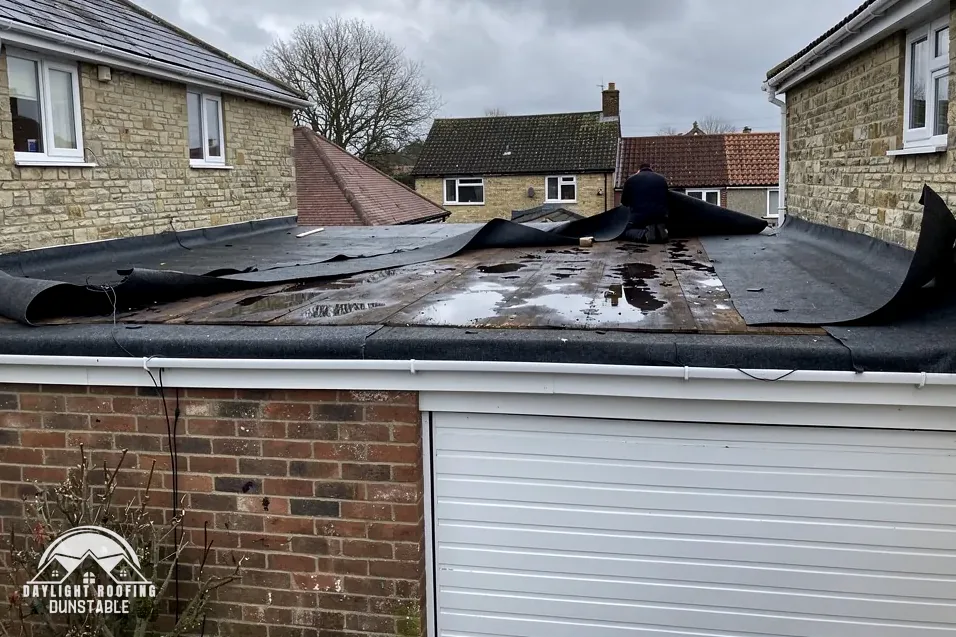
A flat roof can be made safe in the rain with a temporary patch, but a lasting repair has to wait for a dry deck. Wet boards and a damp surface stop adhesive, resin and sealant from bonding. Work done in wet weather is a holding measure that buys time until the roof can be dealt with properly.
Why a lasting repair needs a dry deck
Each flat roof covering relies on sticking to something. EPDM is bonded with adhesive, GRP is laid in resin, and felt is joined with heat or bitumen. Each of those bonds weakens when it is made over a wet surface, because the water sits between the new material and the one beneath it and leaves a film where there should be contact.
Water already inside the roof is a second issue. If the boards or insulation are wet, a new patch sealed over the top holds that dampness in the build-up. The membrane can then bubble or lift, and the repair fails for a reason that has nothing to do with the quality of the patch.
Dry boards matter for another reason. A roofer needs to see the true extent of a fault, and a wet surface hides it. A split can look smaller than it is, and a ponded area can look like part of the leak when it is only standing water. Work done in the dry can go at the cause. Work done in the rain is limited to the symptom.
That is why a spell of dry weather matters so much to flat roof work. Our page on flat roofs in winter treats the season as a planning matter, and the flat roofing page covers the coverings themselves.
What a temporary patch can do
A temporary measure and a repair are two separate jobs. Its aim is to stop water entering the house today, so that the deck and ceilings are not soaked further while the weather turns. Depending on the fault, that can mean a sheet fixed over a split, a cold-applied sealant over a small opening, or a patch of waterproof tape laid across a seam.
The table sets the two jobs against each other, row by row.
| Question | Patch in the rain | Repair on a dry deck |
|---|---|---|
| Aim | Keep water out for now | Fix the fault for good |
| Surface | Wet or damp | Dry and sound |
| Cause | Not always found | Traced and put right |
| What follows | A later visit | The roof is back in service |
A patch is not a promise that the leak has gone, and an honest description of one calls it temporary, whatever the weather brings next. Where a covering has little life left, the better question may be whether to mend it at all, which our guide to repairing or replacing a flat roof goes through.
What to do indoors while it rains
Most of what helps in the meantime happens inside the house. Put a bucket or tray under the drip, and move furniture and anything electrical away from it. If water is gathering in a ceiling, a small hole made with a screwdriver lets it drain into a bowl and can ease the weight on the plasterboard, though anything near a light fitting should stay switched off.
Take photographs of the damage while it is as it was found, and tell your insurer. The Financial Ombudsman Service says that "Rain, hail or snowfall by itself can constitute a storm", and that it will "usually look at expert reports and photos" in a dispute over storm damage, so pictures taken on the day are useful. The Ombudsman's number is 0800 023 4567.
Keep off the roof itself. A wet flat roof is slippery, and an unseen soft patch in the deck can give way. Call 01582 935272 or send a photo to WhatsApp on 07880 284133, and the picture will be looked at. The flat roof problems guide helps match what you can see indoors to a likely fault on the roof.