
The short answer
Torch-on felt is a flat roof covering built from layers of bitumen felt, bonded to the deck and to each other by heating the underside of each roll with a gas torch. It is a built-up system, so it is not single-ply. HomeBuilding gives it 10-15 years and Less 10 to 20.
How torch-on felt is built up
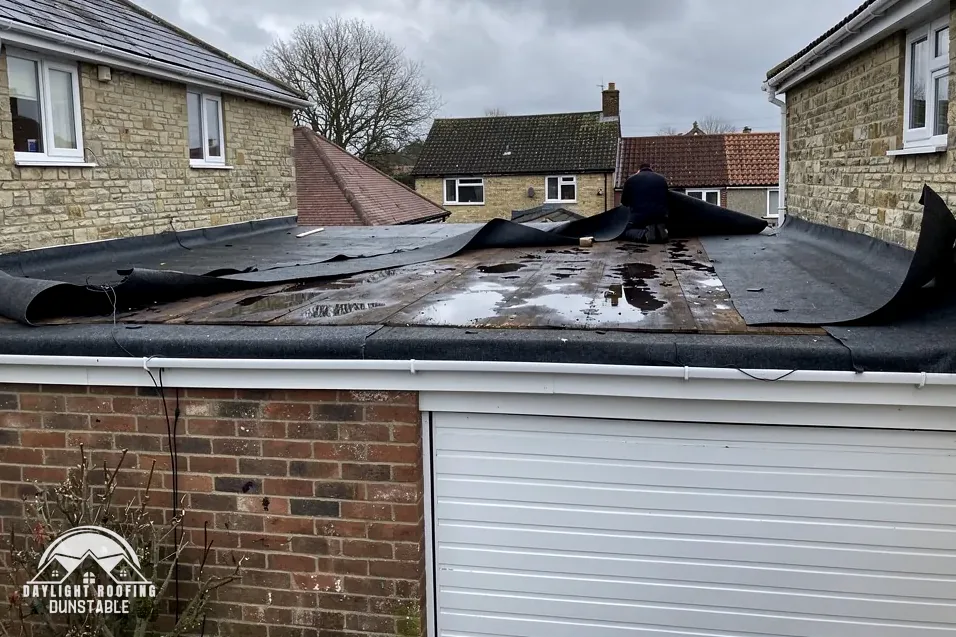
The covering is made on the roof from rolls of felt that carry bitumen, a tar-like waterproofing material. A base layer is bonded to the deck first. A cap sheet goes over it, and further layers are added where the specification calls for them. The roofer unrolls each sheet while heating its underside with a gas torch, which softens the bitumen so that it sticks to the surface below and to the neighbouring sheet along the laps. The sheets overlap, and the bond along the edge of each lap keeps water from reaching the deck at the join.
That layered construction is why felt is called a built-up system. Within flat roofing, it sits in a separate family from single-ply sheets, which are manufactured as one layer, and from GRP, which is a wet laminate. The three are not interchangeable, and a quote should say which is meant.
The edges and details are formed in the same way. Felt is turned up at walls and around rooflight kerbs, and the turn-up is bonded to the roof surface as it goes. A flashing or capping then shields the top edge. How well the laps and turn-ups are made is a large part of what decides how long a felt roof lasts. Where the felt meets a rooflight kerb, the kerb's own upstand is the surface it is bonded to, so that part of the roof is surveyed too.
Lifespan, price and the fire question
Two sources give felt lifespans, and they differ. HomeBuilding says 10-15 years. Less says torch-on felt lasts 10 to 20 years depending on quality and installation. The wording is the source's own, and the gap between the two is left unexplained here. Both numbers describe felt in general, so an individual roof may fall outside the range at either end.
| Source | Figure |
|---|---|
| HomeBuilding | 10-15 years |
| Less | 10 to 20 years |
| Which? Trusted Traders | £1,400 to £3,500, 6m x 3m garage |
The Which? figure comes from a survey of 11 traders in November 2025 and excludes VAT, and it applies to a garage roof of 6m x 3m. A house roof or an extension is a different size, and access, edges and the state of the deck change the figure further. Fire has a second meaning for felt. The Planning Portal lists a covering that performs in a fire very differently from the old one among the reasons Building Regulations approval is needed. The EPDM, GRP and felt guide compares the three coverings. Ask for the name of the covering, not only a product line.
Where felt needs care
The torch is an open flame. Work with it is planned around the materials near the roof, such as timber boarding, fascias and insulation, because a flame near combustible material can start a fire. The roofer's method, the site conditions and what is next to the roof edge all matter, and a survey checks them before a felt roof is proposed. Moss, leaf litter and ponded water are worth removing from a felt roof, since they hold moisture against the surface.
As a covering, felt can blister, split at laps or crack where the bitumen has aged, and standing water speeds the process. Those faults can sometimes be mended locally while the felt is otherwise sound. A roof with felt that has failed across its whole area is a renewal job, and the repair or replace guide covers how that choice is made. A split along a lap can be cut out and bonded again where the felt around it is firm.
A new covering counts as renovation under Approved Document L, so the insulation is checked with the renewal. The flat roof lifespan guide sets felt against other coverings. A felt roof that has been recovered several times can carry a lot of weight on its deck, which the survey considers.