
The short answer
Yes, birds can get in under ridge tiles where bedding has cracked or fallen away or the ridge ends are open. Under section 1 of the Wildlife and Countryside Act 1981 it is an offence for anyone to intentionally take, damage or destroy any wild bird's nest that is in use or being built, so repairs are planned around the birds.
Where birds find a way in
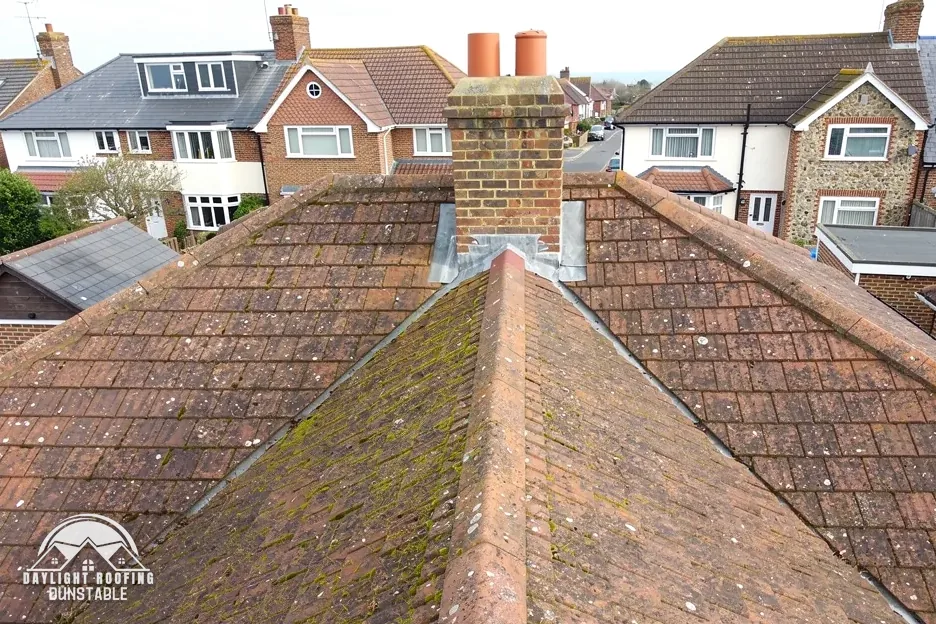
A ridge is a run of tiles laid over the apex, and underneath them sits a hollow. Where the bedding is whole and the ends are closed, that hollow is out of reach. Where the bedding has cracked, shrunk away from a tile or dropped out in pieces, the hollow opens to the outside, and a small bird can use the gap.
| Place | How a gap can appear | What can close it |
|---|---|---|
| Along the ridge | Bedding cracks or drops out | Re-bedding or a dry-fix system |
| Ridge end | An end tile is loose or missing | A refixed tile or an end cap |
| Verge edge | Mortar beside the gable wall falls away | A repaired or dry-fixed verge |
The verge is the exposed edge of the roof beside a gable wall. Its tiles are held by a line of mortar, and when that mortar breaks up the space beneath the tile edge is open to the air. A bird that has found one gap may return to it, which is why a gap that looks small from the ground deserves a proper look.
Not every ridge has birds in it, of course. It means that a loose ridge, a missing end tile or a crumbling verge can give a way in, and that the repair which stops tiles slipping also closes the gap. The why ridge tiles come loose page covers how the bedding fails in the first place.
Nests under ridge tiles and the Act
Section 1 of the Wildlife and Countryside Act 1981 makes it an offence where a person intentionally "takes, damages or destroys the nest of any wild bird while that nest is in use or being built". Two parts of that wording matter: the word intentionally, and the words about use. A nest with eggs or chicks is in use, and a pair still carrying in material is building.
That is the wording for birds. Bats are different: damaging or destroying a bat roost is an offence whatever the intent, and on GOV.UK's bat guidance "repairing or replacing a roof" appears among the works for which Natural England may issue a licence. A gap under a ridge could hold either, so the sensible first step is to look from the ground and see what is using it.
The law is framed around use, not a calendar: a nest in use or being built is protected on any date. If you are not sure whether a nest is active, treat it as active and ask for advice before anything is blocked or pulled out. The separate page on removing a bird's nest from a roof goes through the offence in more detail.
Repairs around a nest
A nest in use can change the order of a repair, or when a particular stretch of ridge is touched. Part of a ridge away from the nest may be repaired while the rest waits, and an end with birds going in and out is left untouched while they are there. The delay has its own cost, because an open ridge lets rain in, so it is worth weighing both together.
Once the birds have gone, closing the gap properly is the lasting answer. Stuffing a hole with material from the loft side hides the problem and leaves the tile or bedding as loose as before. A ridge that is re-bedded with mechanical fixing, or converted to a dry-fix system, has its ends finished with parts made for the job.
If you can see birds going in and out, note the spot and WhatsApp a photo to 07880 284133, so the position of the gap is clear when the roof is surveyed. Daylight Roofing surveys the roof first and gives one written total price afterwards. For the bigger picture of ridge and verge work, see ridge and verge repairs, and the dry verge systems guide shows how a verge can be finished without a mortar line.