
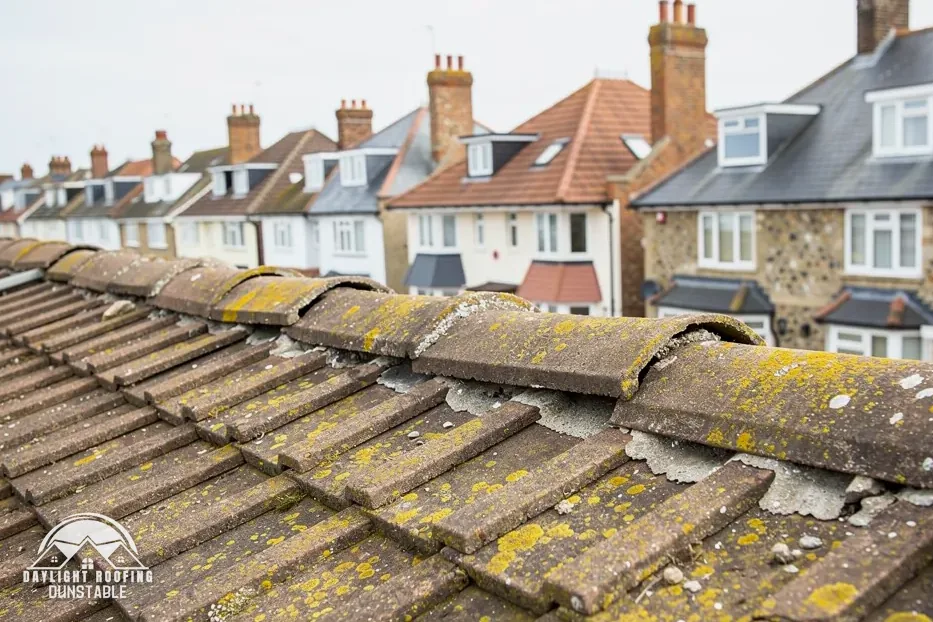
The short answer
Yes, ridge tiles can be repaired in winter, though the weather shapes the method. Fresh mortar can be affected by frost and rain, whereas mechanical dry-fix fittings do not rely on a mortar mix setting. A loose tile can be made safe first and the full repair done when conditions allow.
Why the cold changes the method
A mortar ridge is bedded in a wet mix that has to set and harden where it sits. Mortar laid in freezing temperatures or heavy rain can be harmed before it hardens, which may leave a weaker bed than one laid in milder, drier air. Mortar work is therefore timed with the forecast in mind.
A dry-fix ridge works differently. Clips, screws and a ridge batten hold the tiles, and no mortar has to cure, so the fixing itself does not depend on a mix setting. It still needs a roofer working safely at height. Wind, ice or standing water on the slope can stop work for a spell, because the person on the roof comes before the repair.
| Method | Effect of cold and wet |
|---|---|
| Re-bedding in mortar | Mortar can be harmed before it sets |
| Dry-fix system | No mortar to cure; safety still decides |
| Make-safe only | Holds a tile until the full repair |
None of this rules out a repair in the colder months. It means the method and the day are chosen with conditions in view. Marley, the tile maker, notes that since the 2015 amendments to BS 5534 mortar "could no longer be relied upon as the only means of securing the roof covering", so mechanical fixing has a place in a ridge repair whatever the season.
Securing a loose tile before the repair
A ridge tile that has slipped or dropped is a hazard to anyone below and a gap for rain, so it deserves attention before the full repair is planned. A make-safe is a stopgap: the loose tile is secured or taken down from where it could fall, and an open stretch of ridge is covered, so the damage stays put while the proper job waits for conditions.
If tiles have landed in the garden, keep people and pets away and photograph where they fell. Where a stretch of ridge stands open, rain can soak the roof timbers and drip into the loft beneath, and a stain on a ceiling or a damp patch on a rafter is worth noting with a date. Look from the loft hatch after rain, without going out onto the roof. The emergency roof repairs hub covers the make-safe side in full.
Neither a make-safe nor a temporary cover is the end of the matter. It buys time, and the lasting repair, either re-bedding with mechanical fixings or a conversion to dry-fix, comes once conditions let a roofer work on the ridge line in earnest, with the right fittings to hand and a dry, safe footing. The re-bedding versus dry ridge page sets the two lasting routes side by side.
Storms, claims and a cold-weather plan
Winter weather can be the reason a ridge tile is missing in the first place. For a home insurance claim, take photographs of the ridge and any fallen tiles before they are moved, because the Financial Ombudsman Service says it will "usually look at expert reports and photos". What the cover includes is set by the wording of the policy itself, and the insurer's own terms should be read first.
Planning for the colder months means weighing what is exposed. One missing tile on an otherwise sound ridge can be covered and refixed, while a ridge with several loose tiles along its run may be better redone along its whole length in one visit. The survey looks at the bedding, the ridge ends and the hips and verge before a price is set.
Daylight Roofing gives one written total price after the survey, and a photo sent to 07880 284133 on WhatsApp is a handy first step. How a ridge ends up loose is explained in why ridge tiles come loose, and everything on the subject sits under ridge and verge repairs.