
The short answer
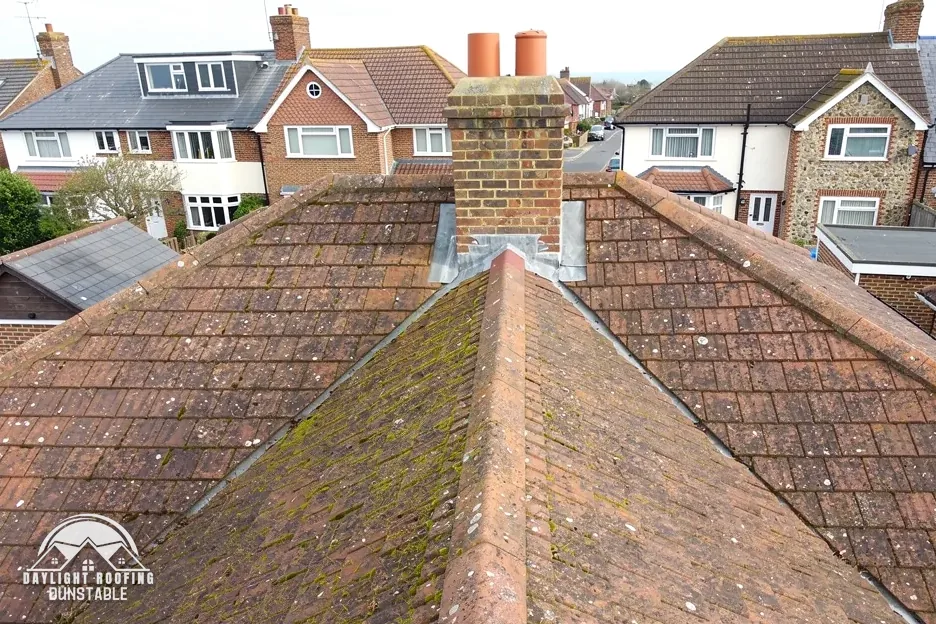
A missing ridge tile is serious enough to act on, though one gap is not a crisis in itself. It leaves a gap along the apex through which rain can reach the roof timbers, the tiles either side may be loose too, and the tile that fell could have landed on people or property. It should be made safe, then refixed.
What a gap at the ridge lets happen
Beneath a ridge tile there is a hollow over the apex, where the two slopes meet and the roof's timbers come together. With the tile in place, rain runs off it and over the tiles on either slope. With it gone, the hollow is exposed, and driving rain can enter right at the apex, run down inside and soak the timbers and the loft below.
A missing tile also says something about the tiles that remain. The one that fell may simply have lost its bed sooner than the others, while the rest of the run sits on bedding of the same age and make. Loose neighbours can lift or slide in wind, and in a gale a single gap can turn into several.
| Risk | Why it matters |
|---|---|
| Water entry | Rain reaches timbers and loft |
| Loose neighbours | Wind can lift or slide them |
| Falling debris | A tile can injure or damage |
| Birds and pests | An open hollow gives access |
None of that means the roof is about to fail. It means the gap is worth closing, and that the ridge on either side deserves a look, which the why ridge tiles come loose page explains in more detail.
Making it safe, then refixing
The first job is to remove the hazard. If the tile has fallen, find out where, since it may be on a path, a car, a conservatory roof or a neighbour's garden. Keep children and animals away from the ground beneath the ridge, and photograph the gap and the fallen tile from where you stand without climbing. Do not go onto the roof.
Making safe is a stopgap while a proper repair is planned. It may mean securing loose tiles near the gap and covering the opening along the ridge, so that rain cannot get in and nothing else can fall. What a make-safe involves is set out on the emergency roof repairs hub.
The lasting repair follows. A single tile can be refixed or replaced where the bedding either side is sound. Where it is not, a length of ridge is re-bedded with mechanical fixings, or the whole ridge is converted to dry-fix. Marley says that since the 2015 amendments to BS 5534 mortar "could no longer be relied upon as the only means of securing the roof covering", so a repair adds fixings and does not rely on a patch of fresh mortar alone.
What to expect from a survey
A survey looks at the whole ridge, not just the gap. The roofer checks the tiles either side, the bedding along the run, the ends and any hips, and the timber at the apex once the gap is open to view. How far the problem runs decides the repair and the price, and a missing tile on a sound ridge is a smaller job than one on a ridge that is failing along its length.
Published figures give a rough sense of scale. Which? Trusted Traders gave £80 to £300 to put in a new ridge tile in a survey of 11 traders in November 2025, with VAT excluded. MyJobQuote, on a page updated on 1 October 2026, gives £225 to £550 as the average ridge tile replacement. Both are general ranges and do not describe a specific house.
Once the roof has been surveyed, the price Daylight Roofing writes is a single total. A picture WhatsApped to 07880 284133 shows the gap beforehand. If an insurer is involved, take photographs of the ridge before any tile is moved. The repair routes are compared in re-bedding versus dry ridge, and the wider subject is under ridge and verge repairs.