
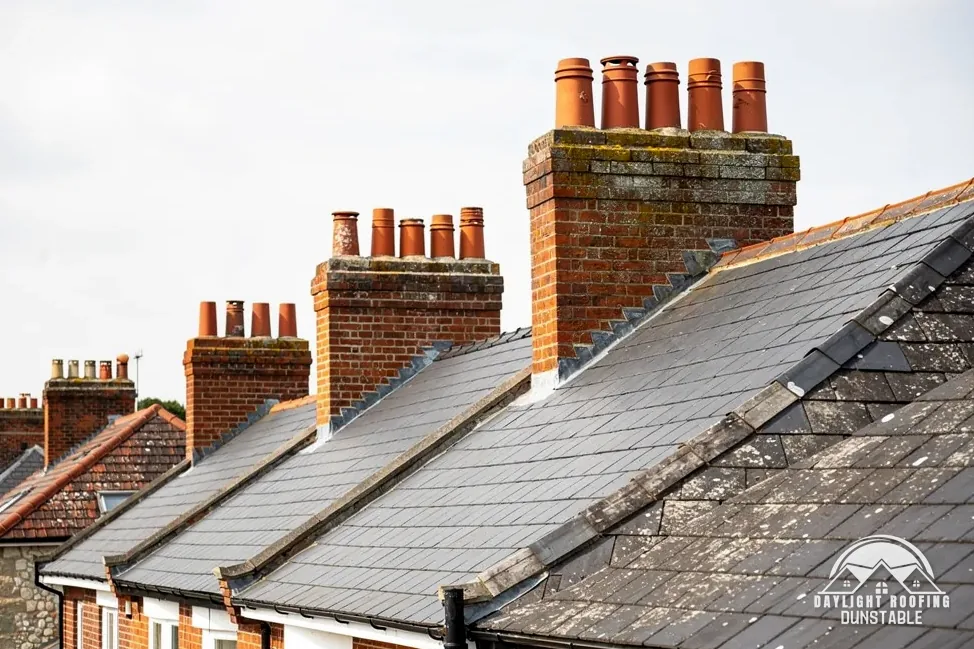
What a coating is
A roof coating is a liquid applied by brush, roller or spray that dries to form a film on the surface. On a tiled roof the product can be a masonry-style paint or a sealant made for tiles, put on after the roof has been cleaned. On a flat roof it can be a liquid membrane, laid over an existing covering to extend or renew its surface.
The thing that sets a coating apart from a cleaning treatment is the film. A biocide is a chemical wash that kills growth and leaves no visible layer. A coating is a layer. It stays on the tile and changes what the surface looks like, how it feels and how water behaves on it. The two can be sold together, and they do separate jobs, which is why the guide to biocide roof treatments sits alongside this one.
Coatings are sold under a range of names: sealants, restorers, colour coats, protective finishes, liquid roofing. The names are marketing, and what matters is what is in the tin, what the tile or covering maker says about using it on their product and what the label says about preparation and weather. A coating depends on the surface under it, and the work before it is cleaning.
Coating a roof is a decision with consequences, because a coating is not easy to take off. A cleaned roof can be cleaned again. A coated roof carries the film until the film wears away, and what comes next depends on what was put on. That is a reason to treat the choice with more caution than a clean.
What a coating can do
A coating can change appearance. A weathered, streaked or patchy roof can be given an even colour, and a faded tile can be brought back to something near its original tone. For an owner who is selling a house or who dislikes how a roof looks, that is a real benefit, and it is the reason coatings sell.
A coating can also add a layer between the surface and the weather. Some products are described by their makers as reducing how much water a tile soaks up, and some as making the surface harder for growth to grip. Those are manufacturers' claims for their own products, and they belong with the product's datasheet. A claim in a sales conversation is no substitute for the printed one.
On a flat roof a liquid coating can renew a surface that has weathered but is still sound, covering small areas of crazing or wear. It is a way of extending a covering that is in fair order, and it is not a repair for one that has failed. The cleaning of flat roofs has its own guide.
- An even colour on a patchy or streaked roof
- A film that can ease how water runs off a sound surface
- A way of renewing the face of a weathered flat roof covering
- A finish that can make a roof look cared for before a sale
What a coating cannot do
A coating cannot repair a roof. A cracked tile stays cracked beneath it. A slipped tile stays slipped. A failed bed of mortar under a ridge stays failed, and a leak that comes from a defective flashing or a split in a membrane carries on. Paint over a defect hides it and delays the point where it is found, and that delay is the most expensive thing a coating can do.
It cannot make an old roof new. A tile that has lost its surface, a covering that has served out its time and a deck that has begun to rot are beyond what a film can address. A coating on a failing roof is cosmetic money spent on the wrong thing, and the better advice for such a roof is repair or replacement.
It cannot be promised to last for any stated number of years. A figure given in a sales conversation should be asked for in writing, with the conditions and the product behind it, since a number with neither is only a number.
A written price for a coating is a total for the work, and the work depends on the roof. Where a cleaning quote and a coating quote arrive together, ask what each covers, since the coating's price can rest on the cleaning being done properly first. The cost side of cleaning is set out in roof cleaning prices.
Moss regrowth and a coated surface
The question owners most want answered is whether a coating keeps moss away for good. It does not, and no seller can promise that it will. Moss grows where there is shade, damp and a surface that holds a little dirt, and a coating changes the surface without changing the shade, the trees or the pitch.
A coating can be a poor partner for living growth. A film put over a surface that still carries spores and fragments of moss traps them against the tile, and regrowth can start beneath or at the edge of the coating. Thorough cleaning first, and a treatment where the label calls for one, is the ordinary order of work, and any shortcut shows.
Coated roofs also collect dirt. A smooth, painted face is not immune to leaf mould, dust and the algae that streak a roof, and a coating that has dulled can look worse than a clean tile. What the roof looks like after a few seasons depends on where it is and what overhangs it, and a seller should be asked what happens when growth returns.
That is the part of the conversation where the roof's own conditions count most. A slope under a tall tree in a sheltered garden is a hard case for any product; and growth may return on any surface there, so any treatment, coated or not, may need repeating. How each growth looks and behaves is a separate subject, and it has a guide of its own.
Breathability and the tile maker's word
A tile is not a sealed object. Clay and concrete take up water and let it out again, and a film that changes how a tile dries is a change to how the tile works. Whether that matters depends on the tile, the film and the weather the roof sits in, and it is not a question to settle by guesswork.
The sensible source is the tile maker. Makers publish guidance on caring for their products, and some say what a tile will accept. The tile maker's guidance on coating is the first document to read before agreeing to a coating, and it is the one a seller should be asked to show.
If the tile is an old one and the maker cannot be identified, the question is harder. The back of a spare tile, the batch marks or an earlier roofer's paperwork may name the maker, and if none does, the caution should be greater. A coating cannot be un-done on a whim, and an old roof gives less margin for error than a new one.
Roofs with a listed or conservation area status add a consent question. A change in how a roof looks is a matter to put to the council before work, and a coating on an old tile is a change of that kind. The position for period homes has its own guide, on listed and period roofs.
Flat roofs and liquid coatings
Flat roofs have their own coatings, and they are a different product from a tile paint. A liquid-applied membrane is laid over a prepared surface to form a continuous waterproof layer. It can suit a roof that is sound but weathered, and it can be a cheaper route than a full re-cover, where the existing covering is in fair condition.
The condition of what lies beneath decides the outcome. A coating over a wet deck, over blisters, over open laps or over a surface that has not been cleaned and primed does not bond, and it can trap moisture. Preparation is most of the job, and a quote that says little about it is one to question.
Standing water is a separate issue. A coating does not change the fall of a roof, and a roof that ponds will go on ponding under a new film. The fall and drainage points are discussed in the guide to cleaning a flat roof, and the wider subject of flat roofing sits under flat roofing.
The energy rules can also come into play where a flat roof's waterproof layer is renewed, since Approved Document L treats a replaced membrane as renovation. A liquid coat over an existing covering is a different thing from replacing it, and where the line falls is a question for the roofer and, if needed, building control, before the work is priced.
Questions to ask before agreeing a coating
The aim of the questions is to separate a product from a sales line. None of them is hostile, and a seller who has thought about the roof will answer all of them without fuss. The answers belong in the quote, in writing, so they can be checked later.
- What is the product, and what does its maker say about using it on my tiles?
- What preparation comes first, and what does it involve?
- What happens if moss or algae returns, and who deals with it?
- Has the roof been checked for cracked tiles, slipped courses and loose ridges?
- Does the quote say what the coating is expected to do, with no promise about years?
- If the house is listed or in a conservation area, has the council been asked?
A coating is a larger commitment than a clean, so a fair quote for one is a single total that follows the survey, with the work described. A figure from a photo only cannot know about the cracks and loose ridges that decide whether coating the roof is sensible at all. A photo to our WhatsApp line starts the conversation, though.
The methods that come first are compared in roof cleaning methods compared, and the other guides sit under roof cleaning. The choice between cleaning, coating and replacing is one that someone who has been on the roof can talk through.