
The short answer
A roof clean can improve how a house looks from the street, but it does not change the condition that a buyer's survey records. Clean when moss, staining or clogged gutters are the visible problem, and repair first when tiles are split or out of line. Nobody can promise that a clean adds value to a sale.
What a clean changes, and what it does not
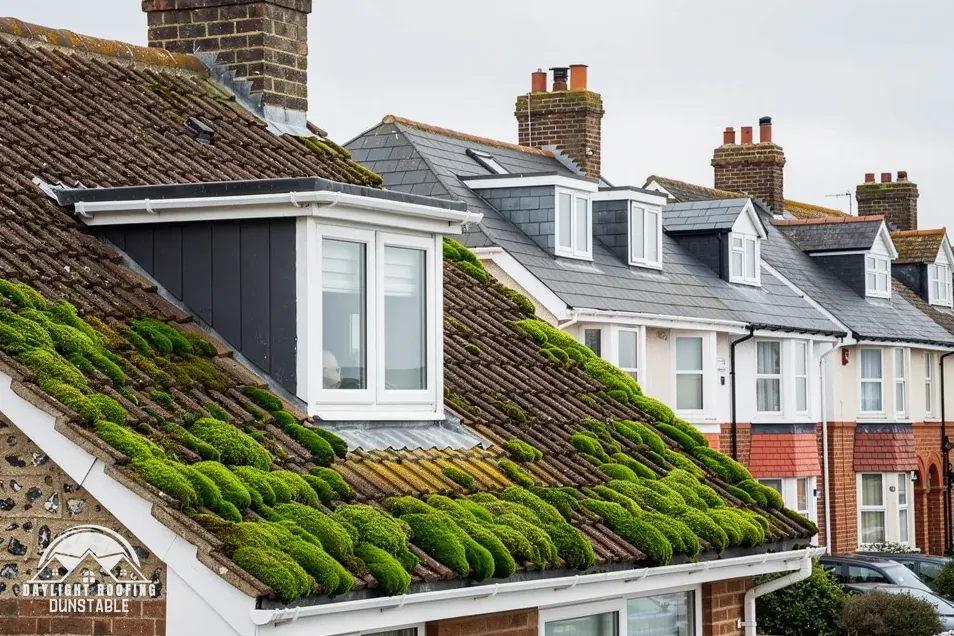
A clean removes growth from the surface. Moss, lichen and algae come off, the tiles show their own colour again and the gutters can be cleared of what has washed into them. From the road, the roof looks cared for, and a first impression counts when a viewing begins at the front gate.
What it leaves alone is just as important. A split tile stays split, a worn ridge stays worn and a failing flashing stays failing. Cleaning does not renew a covering, and it does not make an old roof younger. A buyer who commissions a survey is paying for a view of condition, so the survey report may mention the roof whatever it looks like from the drive.
There is a further risk with a quick clean before a sale. Washing can reveal problems that the growth was hiding, which is useful to know, but it is better to learn it before a buyer's surveyor does. A roof that has been looked at properly gives you a chance to deal with a fault at your own pace and in your own way, instead of through a price renegotiation.
None of this argues for leaving a roof dirty. It argues for knowing what the money is for before it is spent.
Deciding clean or repair first
The right order depends on what the roof shows. A survey of the covering sorts the roof into one of a few situations, and each points to a different first step.
- Moss and staining on a sound roof: a clean is a reasonable choice for kerb appeal and for clear gutters.
- Moss with split, slipped or missing tiles: repair first, then clean, so the cleaned surface is not undone by a leak.
- A worn covering that is nearly spent: a clean will not hide the age, and the larger decision is about repair or replacement.
- Heavy growth in valleys and gutters: clearing the drainage matters before the surface is made to look good.
Our guide to roof cleaning and tile damage explains how a clean and a repair interact, and why the order matters when some tiles are already missing.
If the roof is old enough that replacement is on the table, the page on replacing a roof before selling sets out the wider question. A new roof is a far bigger decision than a clean, and it should not be rushed because a sale date is near.
Putting a price on it
Checkatrade says roof cleaning typically costs £8.50 to £14 per m² (April 2026). The unit is the square metre, so a total only appears once the roof's size and the access are known. Our own written quote arrives as one total price after a survey, so the figure you weigh up is a single amount.
A clean is a smaller job than a repair with scaffold or a new roof, which makes it a tempting step before a sale. It does not, though, deliver a measurable gain in what a house sells for, and nobody should promise one. Any person who says a clean will add a set sum to an asking price is guessing.
A sensible use of the money is to ask whether it would be better spent putting right a fault that a surveyor is likely to note. If the roof is sound, a clean is a modest and sensible tidy-up. If it is not, the repair is the better first spend.
The roof cleaning page explains the methods and what each involves, and the roof cleaning costs guide covers what moves the price.