
The short answer
Yes, with conditions. Tile and slate repairs, flashing work and gutter fixes can go ahead in winter when the roof is dry and the wind is calm enough to work safely. Mortar and felt need frost-free, dry weather, so those jobs may be held back, with a temporary measure keeping the water out until the weather improves.
Yes, but the weather sets the pace
Roofs leak in winter, and leaks do not wait for spring, so repairs are carried out through the colder months. What changes is the choice of work on any given day. A dry, still morning suits almost anything, while a wet, gusty afternoon suits very little.
That is why a winter repair can be planned in two parts. The first is the work that holds up in poor weather, such as replacing slipped tiles, fixing a flashing or sheeting a damaged section. The second is the work that wants better conditions, such as bedding ridges in mortar or laying felt. Where the first part is enough to keep the house dry, the second can follow when the weather turns.
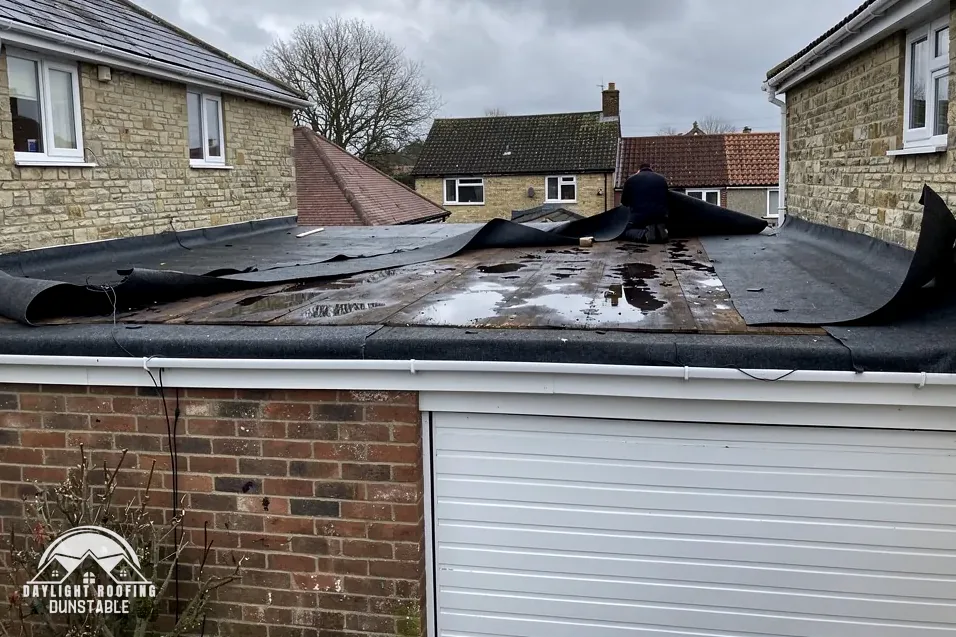
The roof decides as well. A steep slope with difficult access is harder to work on in a wind than a low garage roof, and a surface that is wet or iced is not worked on at all. A roofer makes that call on site, and a postponed day is a safety decision and not a sign that something has gone wrong.
Whether a repair can wait until spring is a separate question from how it is done, and this page deals only with doing the work. Think of the weather as the foreman here: it decides the order of the jobs, and a good plan works with it.
Four winter limits on the work
Each winter condition touches the work in a particular way, and the four below cover most of the decisions made on a cold-season roof.
| Condition | Effect | Response |
|---|---|---|
| Frost | Fresh mortar can be damaged | Delay mortar work |
| Wind | Sheets, ladders and tiles are unsafe | Postpone the day |
| Short days | Less working light | Plan smaller stages |
| Wet felt | Laps will not bond cleanly | Wait for a dry spell |
Frost matters because mortar holds water while it cures, and water that freezes inside it expands. A ridge bedded on a freezing night can crumble within weeks, which is why a mortar job is held back or covered. Wind matters for a plainer reason: loose tiles and unfixed sheets turn into hazards for anyone below.
None of the four stops a roofer from making a leaking roof watertight. They shape how, and when, the permanent repair is finished. Daylight is a limit that is easy to forget: in midwinter a slope can lose usable light early, and a job that is started late may be left half done, so winter work can be cut into smaller stages that can each be closed up before dark.
Planning a winter repair
A winter repair begins with a survey, so the real fault is found and not just the stain beneath it, and so the stages can be matched to what the roof actually needs. A leak that appears in the bedroom can start well up the slope, and finding the source before work begins avoids repairing the wrong place. Our guide to repairing a roof in the rain deals with the wet-weather end of that.
Where water is coming in, the leak is held first and the permanent work scheduled afterwards, as the page on making a roof safe explains. The permanent stage then goes ahead on a day that suits the materials, and the length of that work is covered in the guide to how long a roof repair takes.
Access matters too. If scaffold has to stand across the footway, we arrange the licence with our scaffolder. After the survey the repair is priced as one total in writing, and the staging of the winter work is worked out around the weather rather than squeezed into one visit.
For the full range of repair work, see our roof repairs page.