
The short answer
A Velux window can leak because the flashing kit around the frame has failed, a seal has worn, a pane or the frame has cracked, or debris above the window holds rain against its head. A damp mark can also be condensation on cold glass, which has a different cause and a different remedy.
Where the water can get in
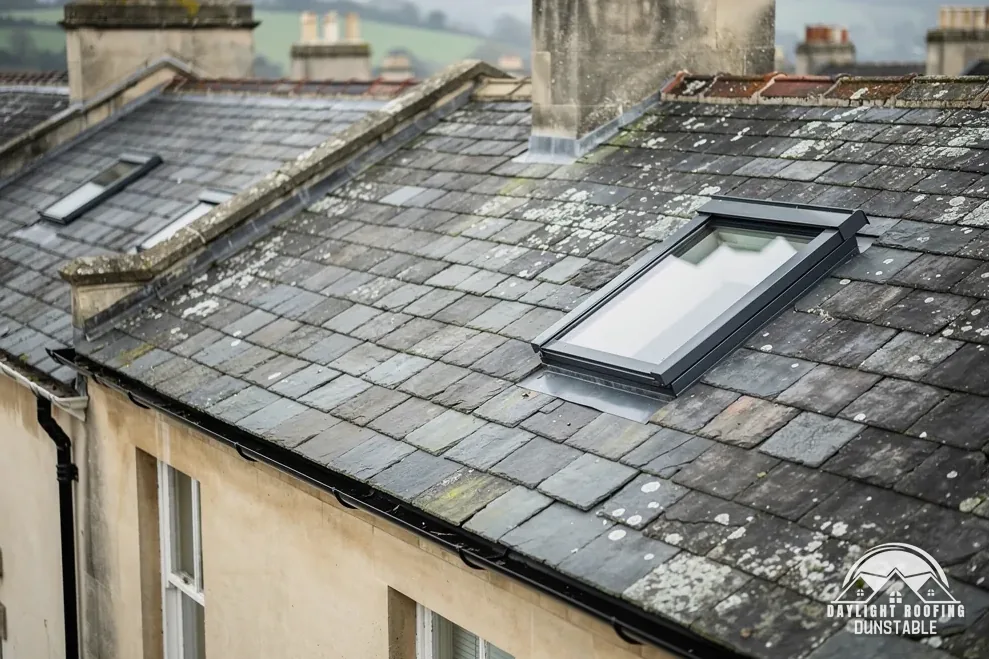
A roof window has several places where rain can get past it, and the cause decides the repair. The routes run from the edges of the frame to the glass itself:
- the flashing kit that joins the frame to the tiles or slates, which can be damaged, aged or the wrong match for the covering
- the seals around the sash, which can harden or split
- debris, leaves or moss lying above the window, which can hold water against its head
- a cracked pane or a damaged frame
- a tile or slate beside the frame that has slipped or cracked
The kit deserves a close look because it is the only part sealing the frame to the covering, and it carries the run-off from the slope above round the window. A kit that does not suit the profile of the tiles or slates can leave a gap from the day it goes in. The page on flashing kits explains how the pieces work.
The age and make of the window matter less than where the stain appears. A mark at the top corners of the lining points one way, a drip from the bottom of the sash another, and a wet patch across the whole ceiling below a third. Where the stain sits tells the roofer where to look first.
Looking from inside the room
None of these needs a ladder or a climb onto the roof, and none should be tried. From inside the room, look at the lining around the window after rain has stopped. A stain that spreads after wet weather and takes days to dry points to a leak. Note which side it is on and how big it is, and photograph it beside a coin or a ruler.
Next, look at the glass itself. Wetness on the inner face of the pane in the morning, with beads of water along the bottom of the sash, is the pattern of condensation, not a leak. It forms when warm, damp air meets cold glass, and the damp it leaves on the lining below the window can look just like the mark of a leak. The guide to condensation on roof windows goes into what causes it.
If you can reach the roof void, shine a torch at the timber beside the opening. Dark, damp or soft wood beside the frame suggests water has been getting in for a while. Look in the loft after rain rather than in dry weather, because a dry stain tells you little. Whatever you see, a photo sent to WhatsApp on 07880 284133 can be looked at, along with a description of when the marks appear.
What a survey of the window looks at
Cause comes before remedy. At the survey, the roofer examines the flashing kit and whether it suits the covering, the seals, the glass, the frame and the tiles or slates beside the opening. It also looks at what lies above the window, since debris there can send water towards the head. Then comes a plain account of what was found, with anything else noticed on the roof alongside it.
Sometimes a failed kit or a worn seal is the whole problem, and a repair puts it right without a new window. A slipped tile beside the frame belongs to the same junction, so it is looked at too. If the pane is cracked, the frame is damaged or the timber behind it has rotted, replacement is the sounder course. The guide to repairing or replacing a roof window weighs the two courses against each other.
Under Approved Document L, a new unit has to reach 1.4 or Window Energy Rating Band B minimum. Whichever course is chosen, you receive a single written total after the survey. More on the work around a window is on the skylights and roof windows hub.