
The short answer
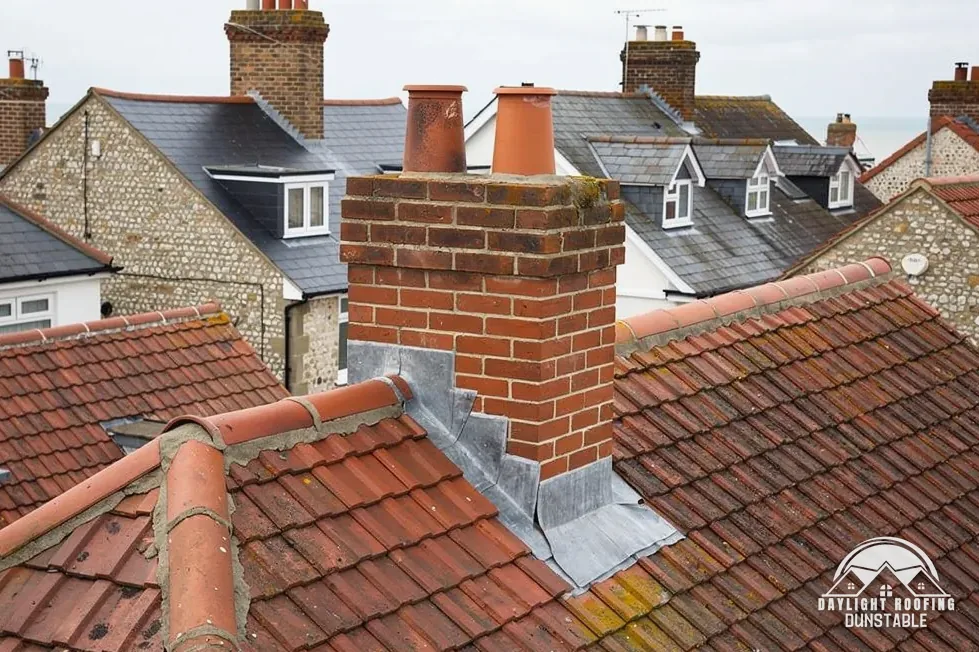
A chimney pot is a short tube fixed on top of a chimney stack to finish the flue. It lifts the outlet clear of the brickwork, directs smoke out into the air and is bedded in mortar that also sheds water. A cracked or leaning pot can let rain into the flue and should be looked at.
What a pot does at the top of a flue
Inside a stack, each flue is a tube that carries smoke up from a fire or boiler. The pot is where that tube ends. It stands proud of the brickwork or capping, so smoke leaves the stack above its top face rather than from a hole in it, and it gives the outlet a firm, round edge that holds its shape year after year.
Pots are made in clay, terracotta, concrete and metal, in plain, tapered or decorated forms, and a stack with several flues can carry a pot on each one. A pot may also carry a cowl or a mesh guard over its mouth. The stack itself, with its flashings and brickwork, is described under chimney repairs.
A pot does not stand loose. Its base is bedded in mortar on the capping, and a sloped collar of that mortar, the flaunching, sheds water away from the pot's foot. The pot, the bed and the collar work as a set: a pot with a sound body but a washed-out collar is still letting water reach the brickwork below, and the reverse is also true.
Because the pot is the last part of the flue, a blockage there, from a nest, fallen debris or a collapsed rim, stops smoke leaving. That is one reason a pot is looked at on every stack survey, whether or not the fire below it is in use.
How a pot cracks, tilts or loosens
A pot sits at the very top of the house, in rain and frost, and heat from the flue passes through it. A clay body that has taken in water can crack as the water freezes. Flue gases and soot can wear the inside of the pot, and the mortar bed beneath it ages in the weather like any other joint on the stack. A pot that has been struck by a falling slate or a branch can carry a crack that does not show from below.
| What shows | What it can mean |
|---|---|
| Crack running up the body | Frost or heat has split the pot |
| Pot leaning | The bed or collar has let go |
| Broken or chipped rim | A knock, or flaking with age |
| Mortar gaps at the foot | Water can run down beside the pot |
A leaning pot is the item to watch, since a pot that has moved once can move again in strong wind and fall onto the slope or the ground below. Where one is noticed from outside, keep people and parked cars clear of the ground below it until someone has looked at it up close, and avoid standing under it in a gale.
Replacing a pot and what comes with it
Replacing a pot is a stack-top job. Any cowl is lifted off, the old collar of mortar is cleared away, the pot is taken up and a new one is bedded in fresh mortar and flaunched, so that water runs off it and down the capping. The new pot is chosen to match the flue it serves, and a pot cannot simply be swapped for one that looks right but narrows the opening. Old pots that are sound and the right size can sometimes be refitted, which keeps the look of the roofline.
A pot replacement can be priced with re-doing the flaunching, because the two cannot be separated. The chimney flaunching page explains that mortar in full. Pots in a conservation area or on a listed home deserve a question to the council before a different style is fitted.
Getting to the top of the stack is part of the job. Scaffolding on the pavement or road needs a scaffold licence from the highway authority; we arrange the licence with our scaffolder. After the survey comes a single written total. The signs of chimney damage guide lists what else to look for in the same visit.