
The short answer
If lead flashing blows off, photograph the gap from the ground, contain any water that comes in and keep the lead if you can collect it safely, since it may be reusable. Do not climb up to press it back. A roofer can make the junction weatherproof for now and then refit or replace the flashing.
Why a lost flashing lets water in
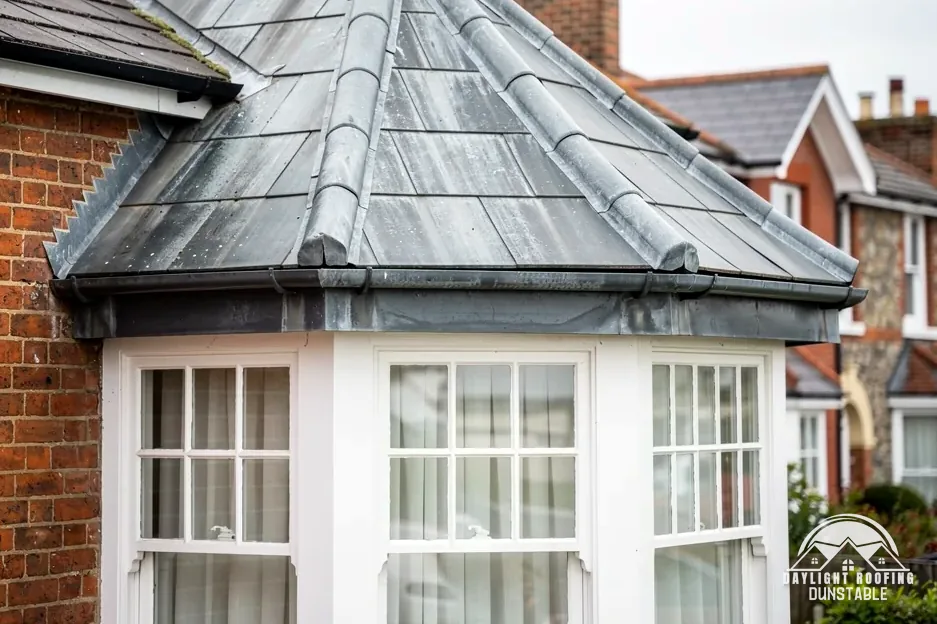
Tiles and slates overlap one another and shed rain by gravity. A flashing deals with the spots where that overlapping pattern ends: beside a chimney stack, against the cheek of a dormer, or along a tall side wall. A strip of lead is tucked into a groove in the masonry and dressed down over the covering, so rain sliding down the brickwork is carried over the junction and onto the tiles.
When the strip lifts, curls back or blows away, the junction is exposed. Rain sliding down the wall now meets a gap instead of a lapped edge, and it can enter the roof space beside the chimney or along the wall. Wind makes it worse, because lead that has been lifted once catches the gusts again and peels further.
| Position | What it seals | Sign it has gone |
|---|---|---|
| Chimney | Stack meets the roof | Stain on the chimney breast |
| Abutment | Slope meets a side wall | Damp on the wall below |
| Valley | Two slopes meet | Drips beneath the line |
| Roof window | Frame meets the covering | Marks around the frame |
What to do on the day
Look from the ground only. A flashing that has blown off sits at the edge of a roof or beside a chimney, which is where the footing is worst, and a ladder in a gale is a poor bet. Zoom in on the junction for your pictures, and photograph the lead too if it has dropped into the garden or onto a lower roof.
Collect the strip if it is on the ground and safe to pick up, since lead is heavy and its edges can cut. Put it somewhere dry. The piece may be reusable, and its length and thickness tell the person doing the repair what was there. Lead has a scrap value, which makes a loose sheet of it attractive to thieves, so keep it indoors rather than leaving it by the bins.
If water is coming in, put a container beneath the drip and move belongings away, and keep clear of electrics near the wet area, as set out on the page about whether to turn off the electrics if the roof leaks. Take a picture of the stain indoors as well. Tell your insurer, because a flashing torn away by wind may belong in a storm claim, and keep every picture together with its date.
Make safe first, then refit
A blown flashing is dealt with in two stages. The first is to stop the water by closing the gap with a temporary cover or a sealed repair, so the junction is weatherproof while the permanent work is arranged. The page on temporary roof covers explains what those are and what they cannot do.
The second stage is the refit. Sometimes the original lead is sound and can be dressed back into the wall. Sometimes it has creased, torn or split and a new length is needed. Rolled lead sheet is made to BS EN 12588 in codes 3 to 8; code 4, for example, is 1.80 mm thick, and the specification sets the code for each detail. MyJobQuote says correctly installed lead flashing "can last for over 80 years", which is a reason to repair or replace it properly instead of patching it with sealant.
The lead roofing and leadwork hub covers the work in depth, and its page on whether lead flashing can be repaired sets out the choice. Pictures of the gap sent to 07880 284133 on WhatsApp give us something to review ahead of a survey, and the emergency roof repairs hub shows how the make-safe and the permanent repair fit together.