
The short answer
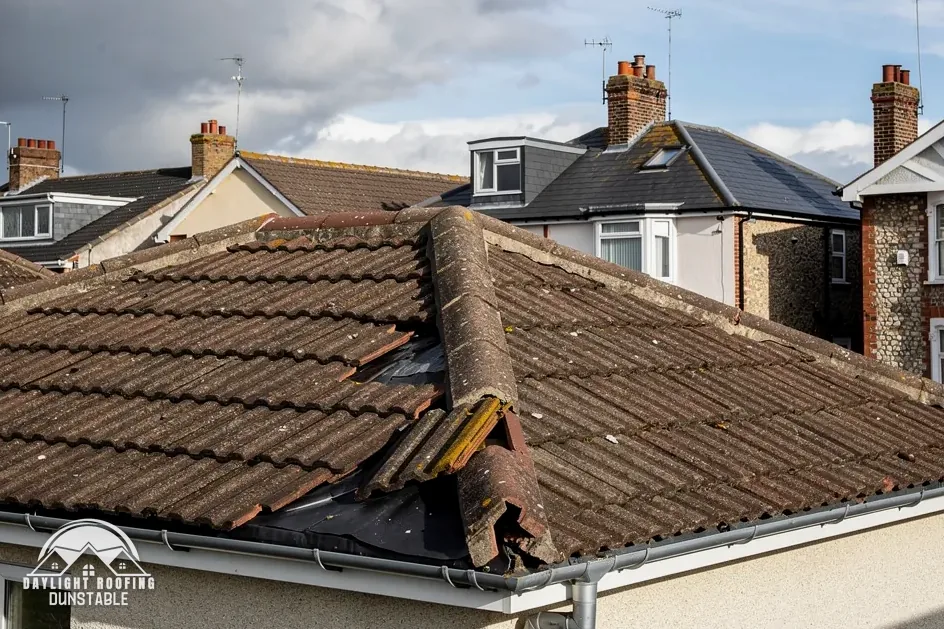
If roof tiles blow off, stop anyone walking on the ground below, photograph the gap and note where the tiles landed, then tell your insurer. Do not go up to look or to replace them. Contain any water inside and ask a roofer to make the roof watertight and replace the tiles once the wind has dropped.
Keep clear, then look from the ground
Tiles that have come off can land on a path, a car or a conservatory, and more may still be loose. Steer children and pets off the ground beneath the damaged slope, and avoid the pavement side of the house until you know how many tiles are involved. A broken tile has sharp edges and can slice a hand, so wear gloves to pick up pieces.
From the garden or the road, find the gap. A missing tile shows as a dark rectangle in the pattern, and a run of missing tiles along the ridge or the edge shows as a ragged line against the sky. Use the zoom on your phone and take several pictures. Count the gaps if you can, and note which slope they are on, since that tells a roofer where the weather is coming from.
Then walk around the house and the garden, looking for where the tiles landed. Photograph each one before it is moved, with a coin or a shoe beside it for scale. A tile found two gardens away, a dent in a car roof or a cracked paving slab all belong in the record. The page on wind damage to roofs lists what else a gale can inflict on a roof. Cracks, slipped tiles and a loosened ridge are easy to miss from a distance, so look along the whole roofline and not only at the obvious gap.
What not to do, and what to do indoors
Do not climb a ladder or go onto the roof to replace tiles yourself. A wet roof is slippery, a displaced tile can slide and take you with it, and the batten beneath a missing tile may have been loosened. A fall from height is a far worse outcome than a leak.
- Check the ceilings nearest the damaged slope for new stains or drips.
- Put a bucket under any drip and move furniture and electrical goods away.
- If water is near lights or sockets, follow the advice on the page about turning off the electrics if the roof leaks.
- Look in the loft from the hatch for daylight or damp, staying on the steps.
- Write down the date and time, and what the wind was doing.
Keep the broken tiles in a safe place instead of throwing them away. They show the type and size of tile on the roof, which helps whoever repairs it to find a match, and an insurer may ask to see them. Do not stack them against the house wall, where a gust can topple them.
Telling the insurer and arranging the repair
Photographs and notes make it easier to tell your insurer what happened. The Financial Ombudsman Service says it will "usually look at expert reports and photos", so the pictures from the ground, the inside of the house and the fallen tiles are all worth keeping. The policy sets out what is covered, and the page on whether an insurer pays for an emergency make-safe explains the Ombudsman's wording.
A roofer can survey the roof, see how far the damage spreads and quote one written total price. Where a few tiles have gone, replacing them may be the answer, and where fixings have failed across a slope the survey may find more. BS 5534 ties the fixing of each tile to a specification written for the site, which takes account of exposure. Until the repair is done, a temporary cover can keep the weather out.
Pictures of the gap sent to 07880 284133 on WhatsApp let us take a first look before a survey. The emergency roof repairs hub sets out the order of work, from the temporary cover to the lasting repair, and wind that is too strong for safe work will delay anything on the roof itself.