
The short answer
Patination oil is a finish that can be brushed onto new lead sheet to even out its colour and to limit the white marks that bright lead can leave on the surface below as it weathers. It is a cosmetic step. The lead keeps water out whether or not the oil is applied.
What new lead does as it weathers
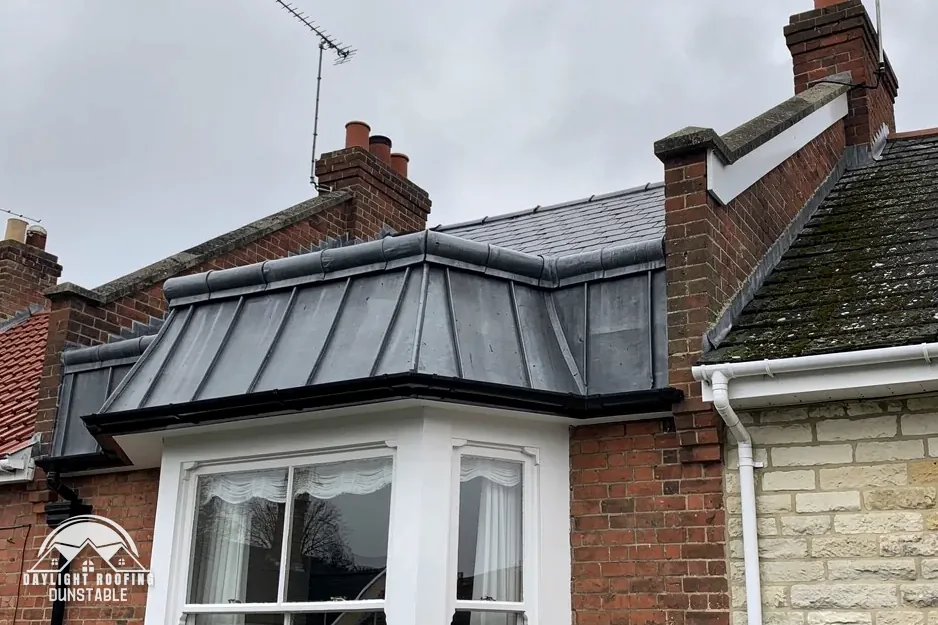
Freshly rolled lead sheet is bright and silvery. Once it is on a roof, the surface reacts with air and moisture and slowly turns to a dull grey. That grey skin is the patina, and it protects the metal below it. Lead that is left to weather unaided changes colour in patches, and it can take a good while to settle into an even finish, because sheltered and exposed areas weather at different rates.
While the patina is still forming, rain running over the lead can carry a pale deposit down the roof. Where the water drops onto stone, brickwork or render, it can leave a white mark. The mark does not mean the lead is failing, and it is a surface effect, but it is easy to see on a pale wall, and it can be hard to remove once it has dried in.
Patination oil is applied to the new sheet to deal with both of those, the patchy early colour and the run-off marks. It is brushed or wiped on as a thin coat, and the lead then weathers under it. The lead roofing hub covers the details this sheet is used for, and patination applies to any of them that will be seen.
What patination oil does not do
It is easy to read more into the oil than it offers, so the points below keep it in proportion.
- It does not make the lead waterproof. Lead sheet is watertight as a metal, and its joints are what keep water out.
- It does not mend a split, an edge that has lifted or a poorly lapped joint.
- It does not add years to the sheet. MyJobQuote says correctly installed lead flashing can last for over 80 years, and that describes the installation, not a surface treatment.
- It does not last for ever. The oil weathers off, and the natural patina takes over.
Each oil has its own maker's instructions on how and when to apply it, and those instructions are the ones to follow for the product in use. How well a particular oil performs is for its maker to state. A roofer who offers patination oil should be able to say which product it is and what the maker states for it.
None of this is a reason to avoid the finish when the roof and wall are in view. It is a reason to think of it as a cosmetic choice, made for how the roof and the wall below will look in the first seasons after the lead goes on.
When patination oil comes up on a job
The question arises where new lead sits in view or above a surface that stains. A new chimney flashing above pale brick, a lead roll beside a stone parapet, or a lined valley over a light render wall are the sort of places where the early look of the lead and the run-off matter. A lead detail that cannot be seen from any angle is a different matter, and patination makes little difference to how it works.
If you want it, ask for it to be written into the specification and the written quote, along with the lead code, so that the work and the finish are both stated. The code is a separate choice, and the page on what is code 4 lead shows how thickness is described.
An older roof that already has a settled patina does not need the finish. Cleaning or oiling old lead is a different job from treating new lead, and the survey is the point to raise it. Where lead has failed and is being compared with alternatives, the guide to lead and alternatives for flashings covers the materials.