
The short answer
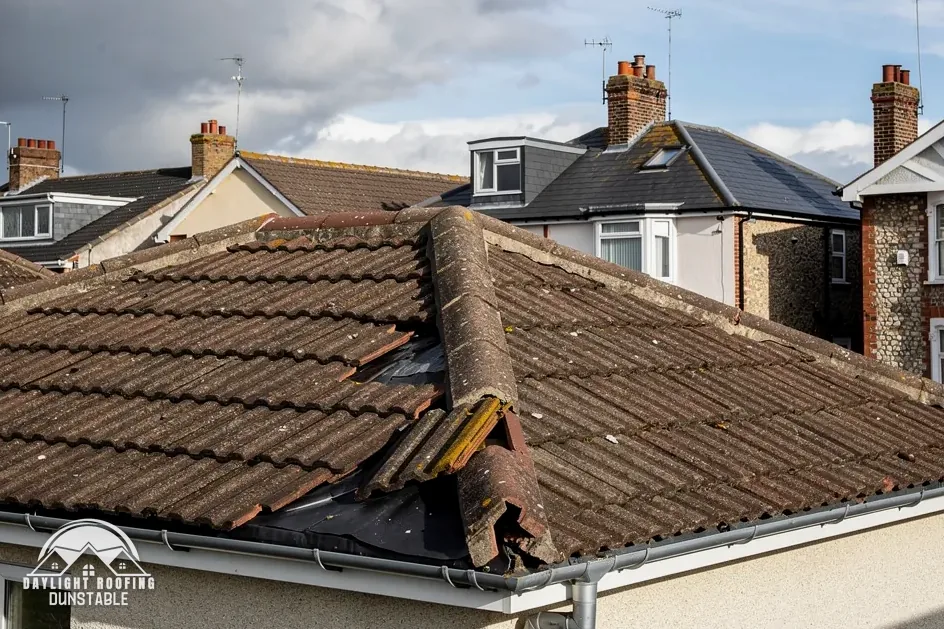
The hip iron is the metal bracket screwed to the roof at the foot of a hip, supporting the lowest hip tile so the run of tiles does not slide down the slope. It sits at the eaves end of a bedded hip. A rusted or loose one can let the hip tiles move.
What a hip iron does
A hip runs down the roof at an angle, so gravity pulls every hip tile towards the eaves. On a bedded hip, the tiles are set in mortar, which holds them in the main. The hip iron adds a mechanical stop at the lower end. It is a bracket, for example a flat strap with a lip or a hooked arm, screwed to the roof structure beneath the last hip tile, so the bottom tile has something to rest on.
Without that stop, the load of the whole hip line can bear on the lowest tile and on the mortar around it. With one, part of the downward push goes into the bracket and from there into the roof structure. The bracket is small and sits at the very edge of the roof, so it is easily missed from the ground.
Not every hip has one. Some roofs use another detail at the foot, some use an iron that has since been lost, and a dry hip system has its own starter fitting in place of a separate iron. The dry hip system answer describes that arrangement.
Hip irons differ from roof to roof. The make, the metal, the shape and the number of screws vary, and what suits a particular hip is decided when the roof is looked at.
How a hip iron fails
A hip iron is a fixing, and fixings can corrode, loosen or be pulled out. Rainwater runs down a hip and over the bracket, and the bracket sits where the hip meets the lower slopes. A metal that rusts can lose strength over time, and a screw that has worked loose in the batten holds less than it did.
A failing iron can show up in a few ways, some of them visible from the ground:
- The lowest hip tile has slipped, tilted or stepped out of line with the others.
- A gap has opened between the bottom of the hip and the tiles on either side.
- Rust stains run from the foot of the hip down the roof tiles.
- Mortar at the lower end of the hip has cracked or fallen away.
- The whole hip line looks as if it has moved down the slope.
Any of these can point to the iron, though they can also come from failed bedding along the hip. Telling the two apart needs a close look on the roof, and the hip tile repairs guide covers how a hip is assessed and put right.
A slipped bottom tile is more than untidiness. Once the end of a hip opens, rain can reach the bedding behind it, and the problem can spread along the hip.
Replacing one, and how it fits the standards
To replace the bracket, the lowest hip tile or tiles are lifted, the old iron comes out, a new one is fixed to sound timber and the tiles are set back. If the bedding around it has failed, that is re-bedded too. Because the tiles have to come up, the job can form part of a wider hip repair and need not stand alone.
A hip iron stops sliding, and it does not replace the fixings that resist lift, so it sits alongside them. Marley's guidance puts the point on hip tiles in the wording "mechanically fixed to resist the calculated wind uplift force", and says that since the 2015 amendments to BS 5534, mortar "could no longer be relied upon as the only means of securing the roof covering". BSI lists BS 5534:2014+A2:2018 as current, and BS 8612:2018 for dry-fix kits.
Ridge figures do not carry across to hips, so the cost of hip work waits for a survey. The length of the hip and the access both shape the total, which Daylight Roofing writes as a single figure after looking at the roof. A few photos of the lower end of the hip, sent to 07880 284133 on WhatsApp, help to show what is happening.
The ridge and verge repairs hub brings the rest of the guides together, and re-bedding versus dry ridge compares the main repair routes on the ridge.