
The short answer
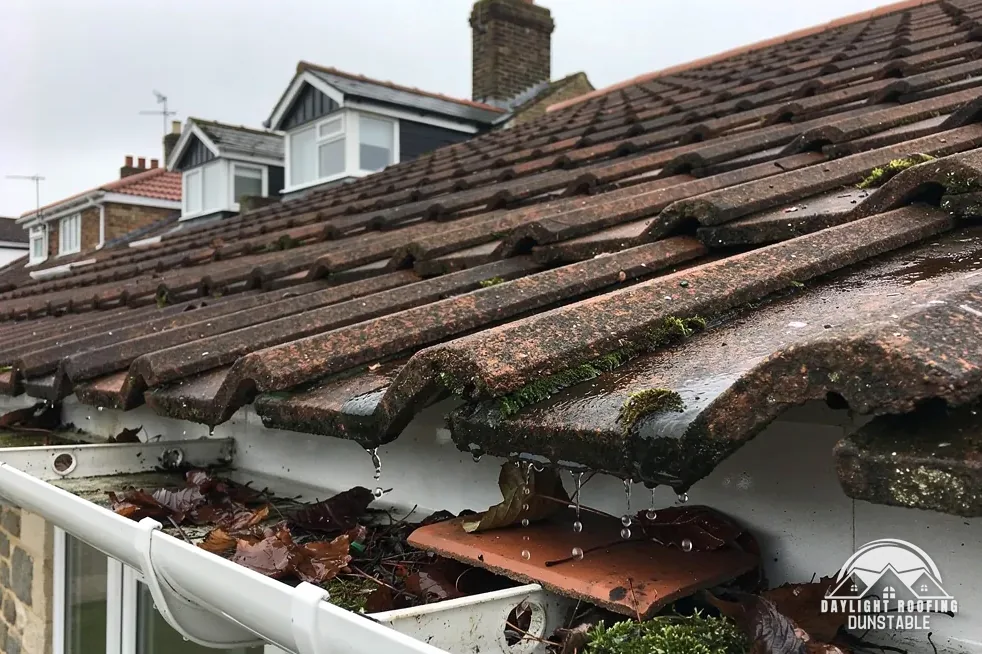
Yes, it can. Moss lifted off a roof lands in the gutters, on paths and patios, in borders and on cars below, along with grit from the tiles. Cover or move what you care about beforehand, shut windows, and check the gutters and drains afterwards, because loose moss can block them.
Where the moss ends up
Moss on a roof is not a thin film. A mat can be thick, wet and heavy, and it is bound together with grit shed from the tiles, leaf litter and seeds. When it is scraped, brushed or loosened by a treatment, the pieces fall. Gravity does the rest, and the debris follows the slope to the bottom and drops over the eaves.
The first place it lands is the gutter, which is why gutters fill so quickly during and after a clean. Some pieces bounce over the gutter or miss it in a gust and land on whatever is below: a path, a patio, a drive, the top of a car, a shed roof or a flower bed. Fine green dust and grit can spread further on a breezy day.
A roof with a conservatory, lean-to or porch below the slope sends its debris onto that lower roof first, and from there into its gutter. Window sills, door tracks and vents beside the walls pick up fine material too. A wet mat leaves a green stain on pale paving if it sits there, so it is worth knowing what is under each slope.
What to cover or move beforehand
A little preparation saves a lot of sweeping. Cars can be moved out of range, garden furniture, toys and pots cleared from beneath the roof edge, and washing taken in. Windows and vents on that side of the house are safer closed, and any fragile planting near the walls can be covered with a sheet. Pets and children need keeping clear of the area under the roof, since material can fall without warning. Neighbours whose gardens or cars sit under the eaves, as in a terrace or a semi with a shared drive, are worth a quick word beforehand so nothing is a surprise to them either.
- Move cars, furniture and plant pots away from the walls
- Close windows, vents and any open doors on the affected side
- Cover delicate plants, ponds and water butts
- Keep children and pets indoors or away from below the roof
- Check gutters and drains once the roof is done
Treatments bring their own considerations. A biocide run-off can reach borders and drains, and the label sets out the precautions for plants, pets and water. The page on whether roof cleaning is safe for plants and pets covers this in more detail.
Gutters, drains and what is left behind
Loose moss in a gutter is the part that causes harm if it is left. It can bung up an outlet so rainwater never reaches the downpipe, so it is worth checking the gutters and the gullies at the base of the downpipes once the work is done. Debris that has washed into a drain can block it, and a drain cover is easy to lift to look. The page on clearing gutters after a roof clean explains why.
Who deals with the debris is something to settle when the work is arranged, because it differs between jobs and between firms. Ask who will deal with what lands on paths and in gutters, and agree it in writing before the day, so nobody is surprised afterwards. Do not assume that every method leaves the same amount behind, since hand scraping and a soft wash move debris differently.
How much falls depends on the amount of growth and the method. The guide to roof cleaning methods compared sets the main ways side by side. To start with a particular roof, a photo on WhatsApp, 07880 284133, is a good place to begin, and the roof cleaning hub brings the other guides together.