
The short answer
Roof cleaning can be done with plants and pets in mind, but it needs planning. Run-off carries moss, grit and any treatment product into beds and drains, so cover plants, protect ponds and keep animals indoors until surfaces are dry. The product label sets the precautions, and it should be read before work starts.
Where the run-off ends up
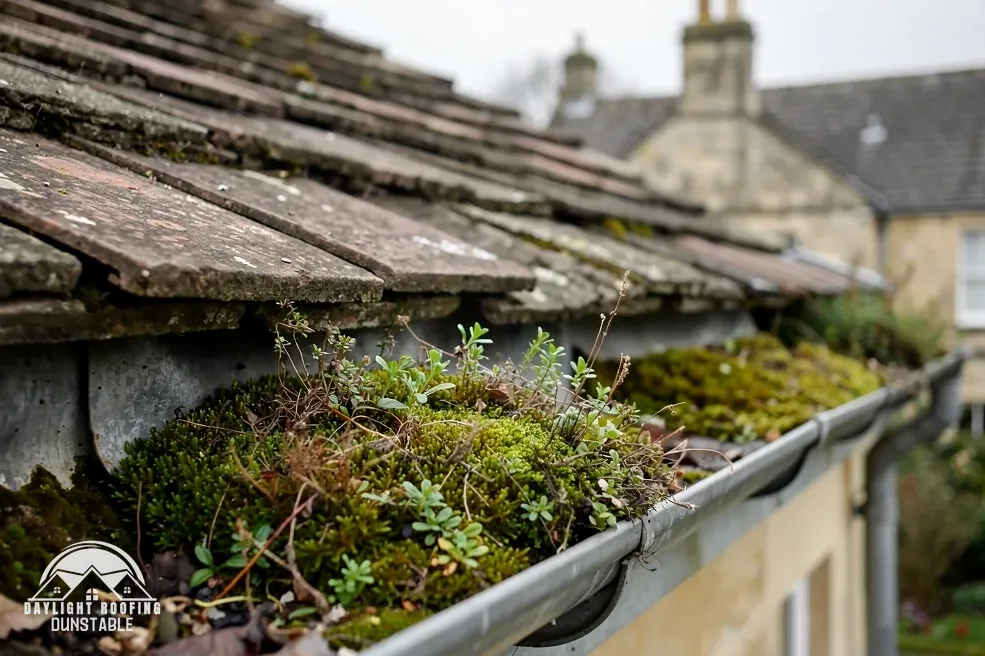
Everything that leaves the roof surface has to land somewhere. Moss, lichen and algae loosened from the tiles slide down the slope, into the gutters and out through the downpipes, and whatever misses the gutter drops straight onto the ground below. A wash or rinse adds water to that load, and a treatment product, where one is used, rides along with it.
That matters because a garden bed, a gravel strip or a patio at the foot of a wall sits directly in the path. A pond or a water butt close to a downpipe sits there too. Plants that stand up well to a rain shower may not cope with a concentrated flow of treatment liquid, and a product that is gentle on a roof can still be harsh on a leaf.
A treatment product is sold with a label, and the label is the document that counts. It states what the product is for, how it is applied, what to keep it away from and when people and animals may return. A product used outside its label is a problem whatever the intention, so ask which product is planned and read its label before the day.
A gentler method, such as scraping or soft brushing, sends less liquid into the garden, though the debris still lands. Marley, a tile maker, says "The use of high powered jet washes is not recommended as it can damage the surface of the slate or tile", which is a reason to prefer a low-pressure approach. The comparison of roof cleaning methods sets out how each one behaves.
Protecting plants and ponds
The protection is simple and happens before the roof is touched. A few jobs for the householder and the person doing the work are worth agreeing in advance.
- Move pots, planters and garden furniture away from the walls.
- Cover beds and low shrubs under the eaves with sheeting that reaches the ground.
- Cover a pond or water butt, and keep the downpipe outlet away from it.
- Sweep up moss and grit afterwards, so it does not wash into beds or drains in the next rain.
- Ask where the rinse water will go, and whether a gully or soakaway lies below.
Wet weather changes the picture. Heavy rain washes the loosened growth and any treatment product off the roof faster than planned, so a dry spell is a better window for the work. A treated roof is also washed by the next showers, and the label says how long the product needs to stay put.
Climbing plants, wall-trained shrubs and hanging baskets are the easiest to forget, because they sit on the wall itself. Take them down or cover them if the work reaches that edge.
Keeping pets and wildlife clear
Cats, dogs and small animals do not read labels. Dogs and cats investigate wet ground and may lick wet surfaces or drink from puddles, which is why a label can tell people to keep animals away until surfaces are dry. Keep them indoors during the work, with the back door shut, and until the label allows them back out.
Falling debris, ladders and tools make the work area unsafe for anyone who wanders in, including children. A rabbit, a hen run or a pond with fish needs the same thought as a flower bed: move the animals or cover the area, and wait until the surfaces are dry.
Wild animals can share the roof. It is an offence to intentionally take, damage or destroy a wild bird's nest while it is in use or being built, and damaging or destroying a bat roost is an offence whatever the intent. Roof work that affects bats can need a Natural England licence. Our page on roof cleaning, nesting birds and bats covers what to check before work starts.
The roof cleaning page explains the work in full, and you can send a photo of the garden below the eaves on WhatsApp on 07880 284133 if you want a view on what needs covering.