
The short answer
It may help, but the number of years a clean adds cannot be stated for any roof. Removing moss takes away something that keeps tiles damp, yet cleaning does not mend cracked tiles, worn mortar or failed flashings. Lifespan follows the material and its condition, and a clean is one part of looking after it.
What a clean can and cannot change
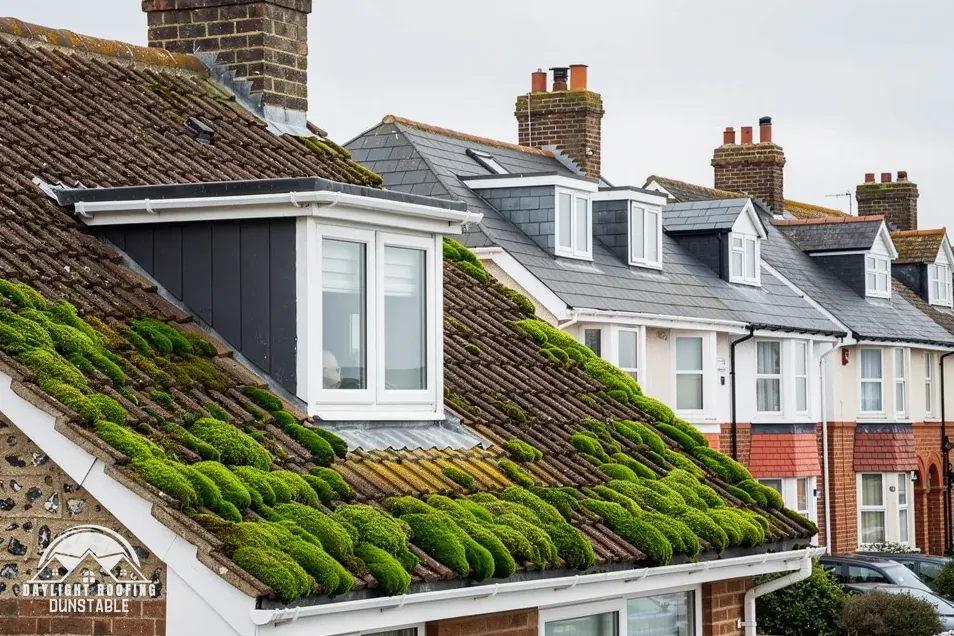
A clean removes growth that keeps a roof wetter than it would otherwise be. Moss soaks up rain, holds it against the tiles and fills the laps, and taking it away lets the covering dry out between showers. That is a sound reason to clean, and it is a plausible way for a clean to help a roof's life, but it is not a measured result. The size of any gain depends on how bad the growth was and on the condition of the roof beneath it.
A clean cannot repair what has already worn. A cracked tile stays cracked, mortar that has crumbled at the ridge stays crumbled, and a failed flashing still lets water in. A clean can show up these faults, because the covering is easier to read once the moss is gone, and that is useful in itself. The faults then need dealing with as repairs.
Method counts for a good deal. Marley says that "the use of high powered jet washes is not recommended as it can damage the surface of the slate or tile, thus reducing its expected life considerably". A clean done badly can shorten a roof's life, so the approach chosen is part of the answer. See the guide to roof cleaning and tile damage for how damage happens.
What published figures say about roof life
Published lifespans are approximate, and each source words its figure carefully. They describe materials, not the effect of cleaning, and they show how long a roof of that kind may be expected to last. Each figure stays with its source, and a clean cannot be added to it as so many extra years.
| Covering | Source and figure |
|---|---|
| Clay tiles | HomeBuilding: 60-80 years |
| Plain concrete tiles | HomeBuilding: 40-50 years |
| Roof tiles, Marley | "Typically, roof tiles are expected to last for around 60 years" |
| Welsh slate | HomeBuilding: 100+ years |
Marley follows its tile line with "This is not a guarantee or warranty of its longevity." HomeBuilding and Marley give different figures for concrete tiles, and both are shown. Neither is a promise for your house. What can be said is that a roof kept dry, with working gutters and sound laps, is in a better position than one left holding water for years on end. Slate, clay and concrete are all different products, so a figure for one should not be carried across to another, and an older roof of any kind deserves a closer look at its fixings, underlay and flashings, not just its surface.
What else keeps a roof going
Gutters are the first thing worth keeping clear. Moss and leaves that block an outlet send water over the edge and onto the fascia and the wall. Brett Martin gives a fall of 1 mm for every 600 mm towards the outlet, which is a gentle slope, and a section that has sagged holds water in its low spots until it evaporates. Standing water in a gutter adds weight to the brackets and keeps the fascia behind it damp. The page on whether moss can block gutters covers how that happens.
A look from the ground each year, with binoculars, can pick up slipped tiles, lifted ridge tiles and fresh growth while they are still small. Cutting back branches that shade the slope helps the surface dry out. Moss that returns suggests shade and damp are still present and deserve another look, which says little about whether the earlier clean did its job.
To start with your own roof, a photo on WhatsApp, 07880 284133, is a quick route, and the survey of the roof comes ahead of any figure. The roof cleaning hub links the related guides, and the guide to roof cleaning costs explains what moves a price up or down.