
The short answer
Yes, with care. A slipped or cracked slate can be replaced in winter once the roof has dried out, the footing is safe and the wind is light. Rain, ice and strong gusts can stop the work, and then a temporary repair holds the roof until a permanent one can be done properly.
What decides a winter repair
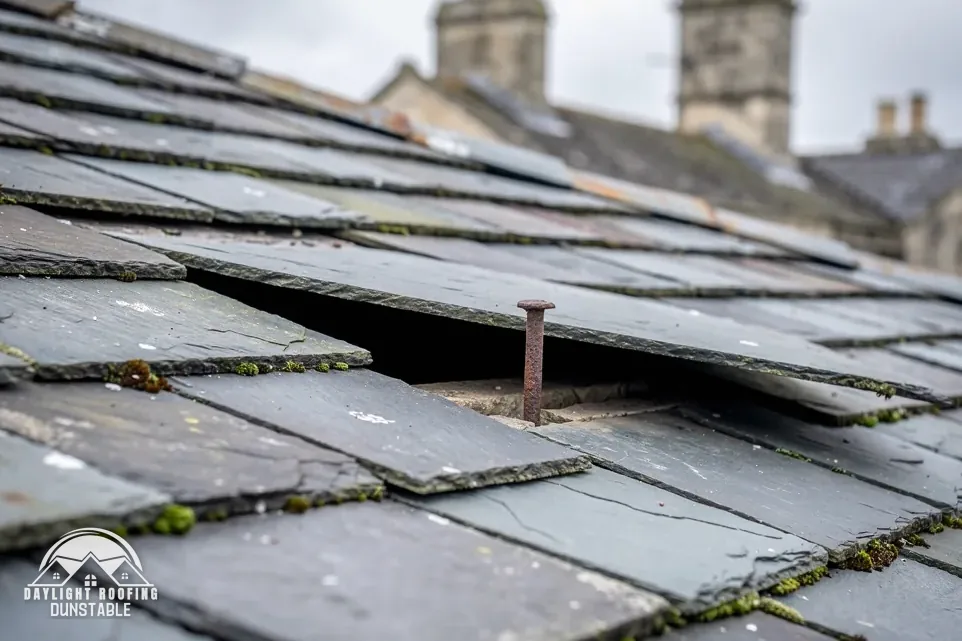
Slate is a hard, thin stone that is fixed with nails or hooks, and putting a replacement into a gap is hand work. No adhesive has to cure and no coating has to dry, so a cold day does not change the job itself. What the season changes is the setting around it. Days are shorter, ladders and boards are more likely to carry moisture, and a gust that would be a nuisance in July can catch a loose slate or a ladder.
The conditions that decide the matter are all things a roofer can judge from the ground or the ridge on the day:
- Rain falling on open work, which wets the battens and underlay beneath the gap.
- Frost or ice on the slope, the scaffold boards and the ladder rungs, which makes footing unsafe.
- Wind strong enough to lift a slate or push a ladder sideways.
- Poor light at the end of a short day, when cracks and nail holes are harder to judge.
None of these closes the roof for a whole season. A cold, still, dry morning can suit a repair better than a gusty afternoon in summer, which is why the decision is made on the day and not months ahead. It also means a firm date given a long way out for a winter repair cannot be relied on, and a caller should expect the booking to move if the forecast turns.
Temporary make-safe or permanent repair
A winter call can have two stages, and it helps to know which one is on offer. A temporary repair stops the roof letting in water or shedding slates until conditions allow the proper job. A permanent repair replaces what has failed and puts the roof back in working order.
| Stage | What it does |
|---|---|
| Temporary | Holds the roof until a dry, safe day allows the proper work |
| Permanent | Replaces the failed slates, nails or fixings |
Which stage is right depends on what has gone wrong. A single slipped slate with sound neighbours can be a permanent repair at once. A run of slates sliding because the nails have rusted through is a different matter, and the guide to nail fatigue on a slate roof explains why patching a single slate in that case shifts the trouble to the next one.
A temporary fix is a holding measure, not a finished job. If one is put on a roof, it should come with a plain account of what remains to be done and why, so the permanent repair is not forgotten once the weather improves.
Cost, cover and getting ready
On cost, MyJobQuote says emergency roofer call-out costs "typically range from £150 to £300, while extensive storm damage repairs can cost £1,200 or more" (page dated 22 October 2026). Those are that source's figures for emergency work, not a price for a slate repair at your address. Ours is a single written total that is worked out once the roof has been looked over, and it is not a call-out figure.
If the damage followed a storm, take photographs of it before anything is touched, and let your insurer know. After rain, a torch shone in the loft and pointed at the rafters and the underlay, shows whether water is getting in at this moment or whether a stain is old. Writing down the date of the first stain, and which room it appeared in, gives a roofer a useful lead on where the fault sits.
Where scaffolding is needed on the pavement or the road, the highway authority has to issue a scaffold licence; we arrange the licence with our scaffolder. The slating in winter guide covers new slating through the colder months, and the slate roofing hub lists the repairs and renewals that a roof survey looks at.