
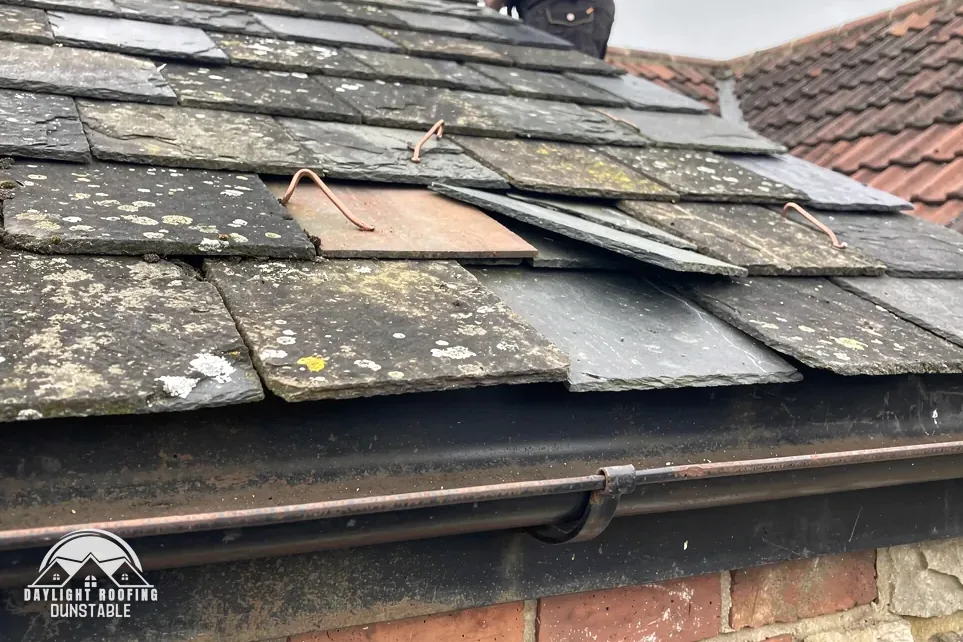
The short answer
Yes, old and new slates can be combined on one roof, provided the new ones match the old in size and thickness and sit well beside them in colour. Reclaimed slates are the closest match for a repair. A roof in a conservation area or a listed home may bring the council's view into the choice.
What has to match for a good result
A slate roof is laid in courses, each one overlapping the course below it, so the slates in a patch have to behave as part of the whole. Three qualities decide whether a mix works. Matching is judged on the roof, slate by slate.
- Size and thickness. A slate that is shorter or thinner than its neighbours changes the headlap and can leave the course sitting proud or lying flat against the batten.
- Colour and texture. Natural slate varies from quarry to quarry, and a new slate beside a weathered one can look like a patch for a while.
- Fixing. Nail holes and hook positions have to line up with the battens, so a slate is chosen to suit the existing gauge.
Headlap is the overlap that lets each course shed water over the joints below. Cupa notes that BS 5534 indicates a 20 degree minimum for natural slate in that setting: a 500 mm slate, a 115 mm overlap and moderate exposure. A slate of a different length changes that overlap, which is why a mismatch is more than a question of looks. The measurements are taken from the roof itself and not from a catalogue, since an old roof may have been laid to its own gauge.
Where reclaimed slate comes in
For a repair, a reclaimed slate of the same size and thickness is the closest match to an old roof, because it has already weathered. HomeBuilding (last updated 30 September 2025) gives approximate lifespans of 50-80 years for reclaimed Welsh slate, 100+ years for Welsh slate and 75-100 years for Spanish natural slate. Those figures are approximate, and no slate comes with a promise attached. Sound old slates can also be lifted and put back, so a patch does not always need new stock at all, and whether yours qualify is something a survey decides.
| Slate | Approximate lifespan |
|---|---|
| Welsh slate | 100+ years |
| Spanish natural slate | 75-100 years |
| Reclaimed Welsh slate | 50-80 years |
A whole slope re-covered in new slate is a different job from a patch, and the repair or replace a slate roof guide sets out how to decide between them. Natural slate and man-made slate are also different products, and the natural and man-made slate guide explains how they compare, so that a choice of stock is made with the figures in front of you.
Conservation areas, listed homes and the council
On an ordinary house, the choice of replacement slate is a matter of matching and sound practice. Inside a conservation area, or on a home that is listed, the council may take an interest in which slate goes on, because how the roof looks is part of what is protected. Listed building consent is needed for anything that would affect the building's character, and an Article 4 direction can remove permitted development rights in an area. Neither status stops a roof being repaired; both mean the council is consulted at the start.
Re-roofing a house is normally permitted development under Class C, but listing or an Article 4 direction can change the picture, so the council is asked first and not afterwards. Whether a particular road is in a conservation area or under an Article 4 direction is something only the council can confirm for your address. Pictures of the slope, with the full address, help the council's team answer that enquiry promptly and with fewer follow-up questions.
A patch of mixed slates is also a good moment to look over the whole slope. Slates close to failing can be hard to spot from the ground, and the slate roof problems page lists the faults a survey looks for. Our slate roofing page describes the work.