
The short answer
No, boots can crack slates that look sound, because slate is thin and brittle, and a pitched slate roof is slippery, especially when damp. Roofers reach the slope with a roof ladder or scaffolding. Look from the ground and the loft instead, and leave access to a roofer.
Why a slate roof is easily damaged underfoot
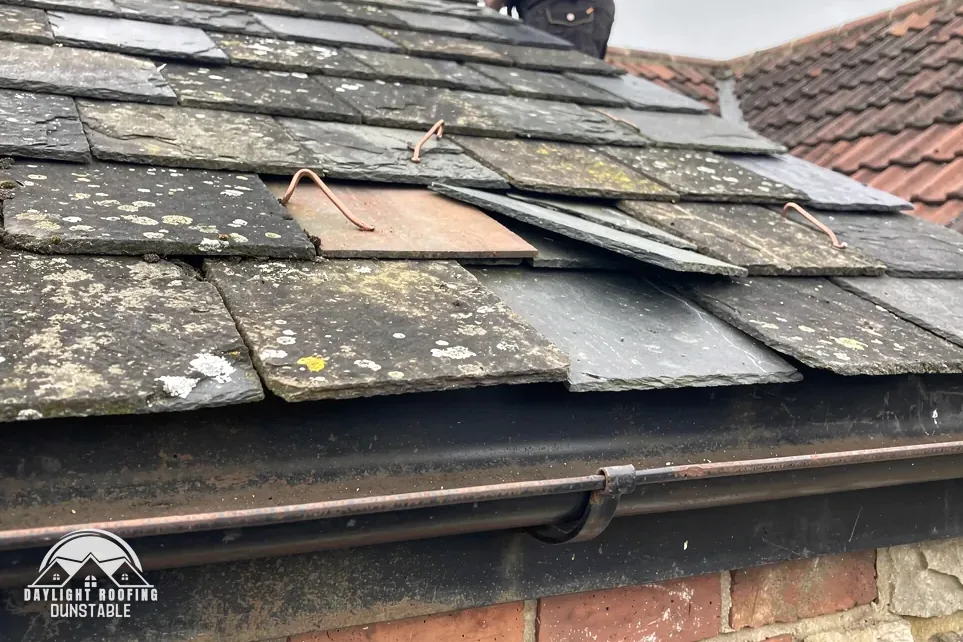
Each slate is a thin plate of stone hung from a single nail or hook near its top edge, with its lower edge resting on the course below. It sheds rain very well. It does not take a boot well. Weight that lands between the supports can crack the slate across, and the crack may be invisible from above because the slate higher up overlaps it.
That hidden damage is why walking on slates is a poor idea even when nothing seems to give. A cracked slate may hold for weeks and then let water through in the next heavy shower, and the mark on the ceiling shows up long after the footprints are gone. Nail holes and old fixings are weak points too, and a slate with a corroded fixing can slide away when stepped on.
Moss, algae and a film of damp make the surface slick. A pitched slope is steep enough that a slip can end in a fall to the gutter and then the ground, and a fall of that kind can cause serious injury. Nothing on the roof needs doing by hand from above, and the finish is not worth that risk. A roofer's access equipment is there to take the weight that a slate cannot. A cautious look from the ground is always safer.
How roofers reach a slate slope
Working on slate is possible without walking on it, because the load is spread and the person is held. The options depend on the roof.
- Scaffolding, which gives a level platform at the eaves and lets the work be done from outside the slope.
- A roof ladder, hooked over the ridge, which spreads weight along the slope and gives a firm footing.
- Crawling boards or similar, which spread the load across several slates and not just one.
- A tower or access platform at the gable, for a view and for small jobs close to the edge.
A scaffold set up beside a public road or footpath needs a licence of its own from the highway authority. We arrange the licence with our scaffolder, and a homeowner is not asked to sort it out.
Which access is right comes down to the roof's height, pitch and condition, and the work being done. A single slipped slate near the eaves may need only a ladder and a roof ladder, while work high on a slope or near a chimney may call for scaffolding. The guide to slate roof problems shows the faults that need a roofer on the slope.
What you can check without going up
Most of what a homeowner wants to know can be seen without leaving the ground or the loft. From outside, stand back and look along the ridge and the courses with binoculars, or take a zoomed photograph. Slipped slates, gaps in a course, broken pieces in the gutter and bare patches along the ridge or hips are all visible from below. A pair of binoculars on a clear day shows a surprising amount from the garden.
From inside, a torch in the loft after a wet spell can show damp on the rafters, daylight between the slates, or a drip on the underlay. Photographs of any ceiling stain, with the date, help to trace where water is getting in. If a slate has slid and is hanging, keep everyone clear of the ground beneath it.
Pictures sent to 07880 284133 on WhatsApp get a look from us. If slates are slipping across a slope, the nail fatigue guide describes a likely cause, and the repair or replace a slate roof guide helps to weigh a patch against a larger job. The slate roofing page lists the work we do.