
The short answer
Headlap is the distance by which a slate is covered by the slate two courses above it. That overlap, not any seal between slates, is what stops water travelling up and under a slate. Cupa's example for natural slate pairs a 115 mm overlap with a 500 mm slate at moderate exposure, and the roof's specification decides the figure.
What headlap is and why it counts
A slate roof is not sealed. The slates lie one over another in rows, called courses, and there is no mortar or adhesive between them. What keeps the weather out is the way they overlap: water that lands on a slate runs down its face, and any water that is pushed sideways or upwards by wind has to travel past the overlapping slates before it could reach the batten.
Headlap is the depth of that overlap: how far the foot of one slate reaches down over the head, or top, of the slate two courses beneath it. The more of a slate that is covered, the further water must travel to get through. The slates in each course also overlap their neighbours sideways by a smaller amount, called the side lap, and the two together form the barrier.
A slate is hung from nails near its head, so the overlapping slates also cover the fixings. That is how a roof can have thousands of nail holes and still shed water. The main slate roofing page describes the covering as a whole, and the headlap is the dimension that its watertightness depends on.
The 115 mm example and what it shows
There is no single headlap for every slate roof. The figure depends on the length of the slate, the pitch of the roof and how exposed the site is. Cupa, a slate maker, gives a worked example. Where a site has moderate exposure, and the slate is 500 mm long with a 115 mm overlap, BS 5534 indicates a minimum roof pitch of 20 degrees for natural slate.
| Item | Figure in the example |
|---|---|
| Slate length | 500 mm |
| Overlap | 115 mm |
| Exposure | Moderate |
| Minimum pitch | 20 degrees |
The example is a worked case, not a rule for every roof. Change one of the four items and the others move with it, so the table reads as a snapshot of one set of conditions and not as a table of values to look up. It is useful because it shows that the four items belong together. A steeper roof can sometimes use less overlap, and a shallower or more exposed one needs more. That is why the figure for a particular house is set in its specification and is not read off a general table. The link between overlap and pitch is covered in the minimum pitch for slate.
What the specification decides
On a new covering, the headlap is part of the setting out. The roofer works out the gauge, which is the distance between the lines of nails, from the length of the slate and the headlap required. Get the gauge wrong and the overlap is too small on every course across the slope, which is a fault that is built in from the start.
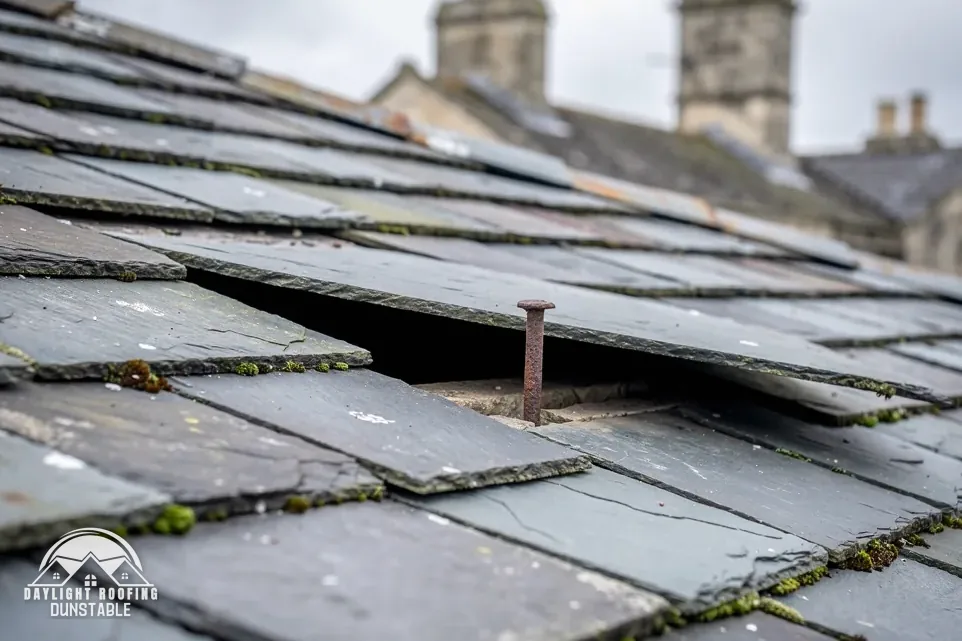
On an older roof, the headlap is already fixed by whoever laid it. A slate that has slipped down its course reduces the overlap above it, and that can leave a gap that lets water in. This is one of the reasons slipped slates matter, and the page on why slates slip looks at what makes them move.
The fixings that hold each slate come from a specification for the particular site, and the headlap is one line within it. A survey measures what is on the roof and compares it with what the pitch calls for. You receive one written price after that, and the work, whether a repair or a re-slate, is described in it.