
The short answer
Chimney repointing is the renewal of worn mortar joints between the bricks or stones of a stack. The old mortar is raked out to a set depth and the gaps are refilled with fresh mortar, which stops rain soaking into the brickwork. The job needs safe access, and its price waits for a survey.
What repointing means on a chimney stack
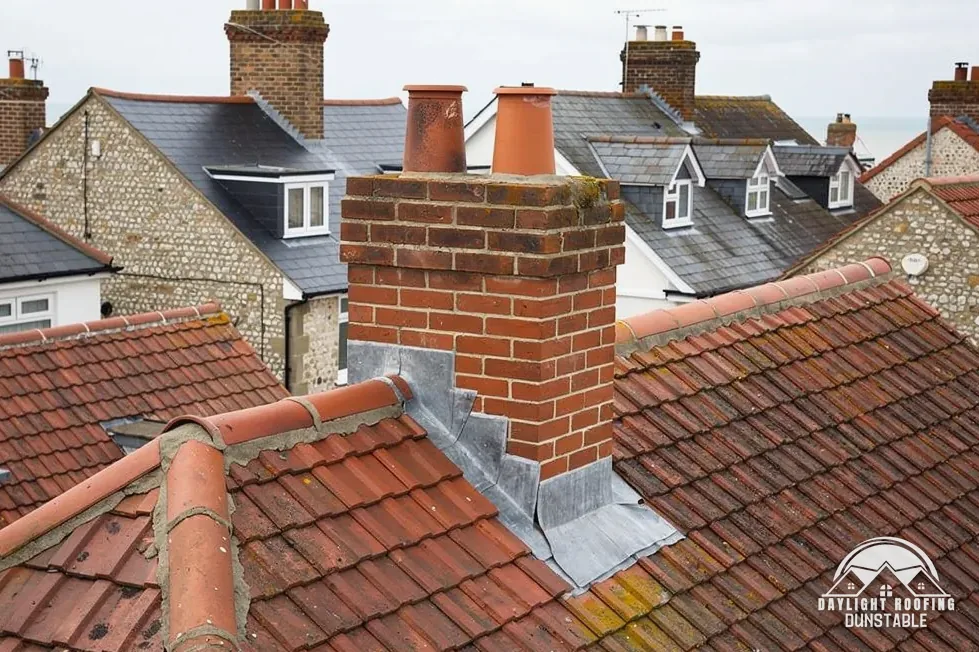
Brickwork is held together by mortar, and the visible face of each mortar joint is the pointing. Over the years that face weathers and erodes. Repointing renews it: old mortar is cut out of the joints to a depth, the gaps are cleaned and fresh mortar is pushed in and finished flush or slightly recessed, so water runs off the face instead of lodging in it. The aim is a joint that sheds water, not one that merely looks neat from the street.
A stack needs the work more than a house wall might, for a simple reason. It stands free of the roof with weather on all four faces, so its joints take rain, wind-driven rain, frost and sun from every direction, and no eaves shelter them. Hot flue gases rising inside can add their own stress to the inner faces of the joints.
Repointing is not the same as rebuilding. It treats joint faces, while the bricks and the structure behind them stay in place. If bricks themselves are soft, spalled or loose, repointing alone will not hold, and a section is taken down and rebuilt. The wider range of stack work sits under chimney repairs, from pots and flashings to full rebuilds.
Signs the mortar joints have worn
- Joints recessed far back from the brick face, so the bricks stand proud.
- Crumbling or sandy mortar that rubs away under a finger.
- Open gaps, or hairline cracks that run along the joints.
- Bricks that move or sit out of line.
- Plant growth, moss or small trees rooted in the joints.
- Pale, powdery marks on the brick, where water has been in and out.
Worn joints are a gateway. Water enters the open joint, soaks into the brick and can freeze inside it, which can break the face off the brick. That is a more costly fault than the original joint, since a brick that has lost its face needs replacing and not just repointing. Moss and plant roots in a joint hold water against the brick and widen the gap as they grow.
Damp on the chimney breast indoors may trace back to worn joints, but flashings and flaunching leak too, so the stack is read as a whole. The chimney flaunching page covers the mortar collar at the pots, and a survey tells the three sources of water apart.
How the work is done, and how it is priced
The joints are raked out to a depth that leaves room for a sound fill, brushed clean and dampened, then filled in stages and tooled. The new mortar needs to suit the old bricks, because a mortar much harder than the brick can push the wear onto the brick faces. The choice of mortar is part of the specification. Joints at the top, around the pots and capping, are done with the same care as the faces lower down, because they are open to the sky and drain onto the faces below.
Safe access is part of the work, because a stack is high and exposed. Scaffolding on the pavement or road needs a scaffold licence from the highway authority; we arrange the licence with our scaffolder. Planning that early matters, since the highway authority handles licences on its own timetable and not ours. A stack that is repointed in one visit, rather than patched a few joints at a time, gives a more even result.
A stack repointing job waits for a survey before it is priced. Published guides give figures that disagree with each other, and the size of the stack, its height and the amount of mortar to be replaced all change the job. A single written total comes after that survey, and the chimney repair costs guide covers what moves it.