
The short answer
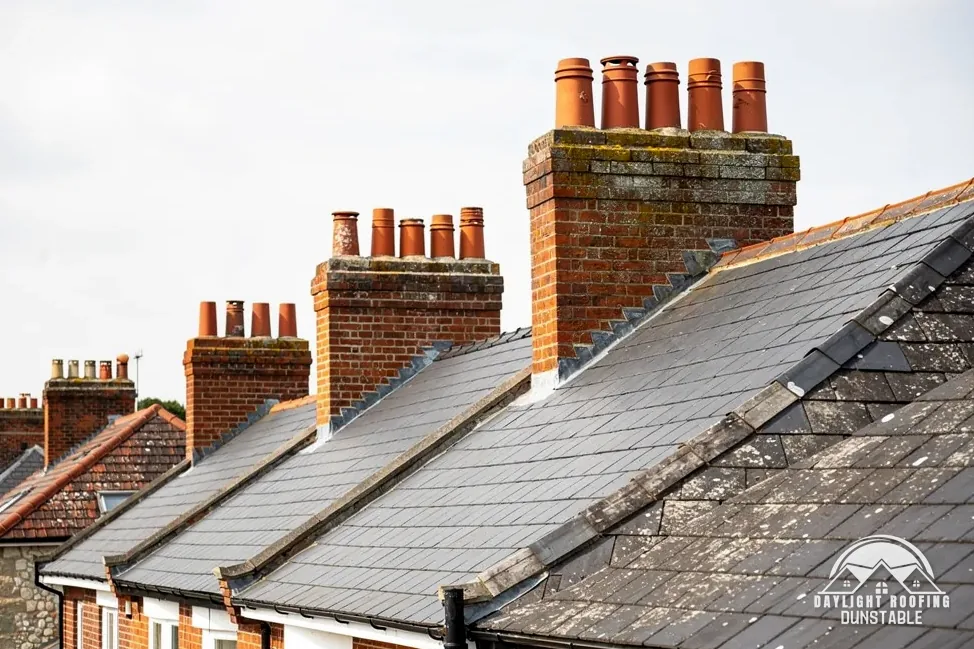
A damp chimney breast can come from rain getting into the stack through worn pointing, flaunching or a cracked capping, from failed flashings where the stack meets the roof, or from condensation in a capped flue. Each is a possibility, not a diagnosis, so the stack and the loft are looked at together.
Where the water can come from
A breast stays dry only while the stack above it keeps the weather out. The breast and the stack are one run of masonry, so water that enters high up can travel down inside the brickwork and show as a stain at head height or lower in the room. Worn pointing, cracked flaunching, a failed flashing or back gutter, an open pot and condensation are the routes a survey weighs, and each is a possibility, not a verdict. More than one can be at work on the same wall at once.
| Route | Where it starts |
|---|---|
| Worn pointing | Open joints on the stack faces |
| Cracked flaunching or capping | The top of the stack, round the pots |
| Failed flashing or back gutter | Where the stack meets the tiles |
| Open pot | Rain falling down an unused flue |
| Condensation | Inside a capped or cold flue |
Water from other sources can sit on the same wall. A leaking gutter, an overflowing pipe or a failed seal near the chimney may give a similar stain, so these are ruled out before the stack takes the blame. The stack itself is described under chimney repairs. A fireplace that is blocked off with a board and no vent can hold moisture behind it, which is one more reason the breast is read together with what sits in front of the flue.
Reading the clues from inside the house
The pattern of the damp says something about its source, though never the whole story, and a single visit to the room tells less than a few weeks of notes. Clues worth recording include:
- A stain that swells after rain and shrinks in dry spells, which can point to water entering from outside.
- A brown tide mark with a soft edge, where water has carried soot or tar from the flue.
- White powder or salts on the plaster, left behind as damp dries out.
- Paper lifting, or paint blistering, over the breast.
- A damp patch that returns in cold weather and not in rain, which can point to condensation.
- Staining on the loft face of the brickwork, close to the stack.
A flue that has been capped off and left can sweat, because warm moist air meeting cold masonry leaves water on its surface. Whether a capped flue has any ventilation is therefore part of the question, and a chimney specialist is the person to advise on it. The chimney leaks in wet weather guide takes the rain-driven routes further. Two clues that agree are stronger than one on its own.
Steps to take first
Start with a record. Photograph the stain, jot down the day and the weather before it, and take a torch to the loft to view the brickwork beside the stack, staying on the joists and never stepping between them. A dated set of photographs makes the cause easier to pin down than one visit, and it gives a roofer something to compare against what the stack shows once it is reached.
Then have the stack looked at from the roof side, and look at the brickwork from your own loft hatch. The pointing, flaunching, capping, pots, flashings and back gutter all sit on the list. Pricing follows the survey, given as one total on paper. The chimney repointing page and the chimney flaunching page explain two of the repairs that can follow.
Sealing or painting the wall inside may hide a stain, though it does nothing about the water behind it, and the damp returns. Treat the source first and redecorate once the brickwork has dried. To send us a photo of the stain or the stack, use WhatsApp on 07880 284133. Keep the photographs, since they show how the damp changes over time.