
The short answer
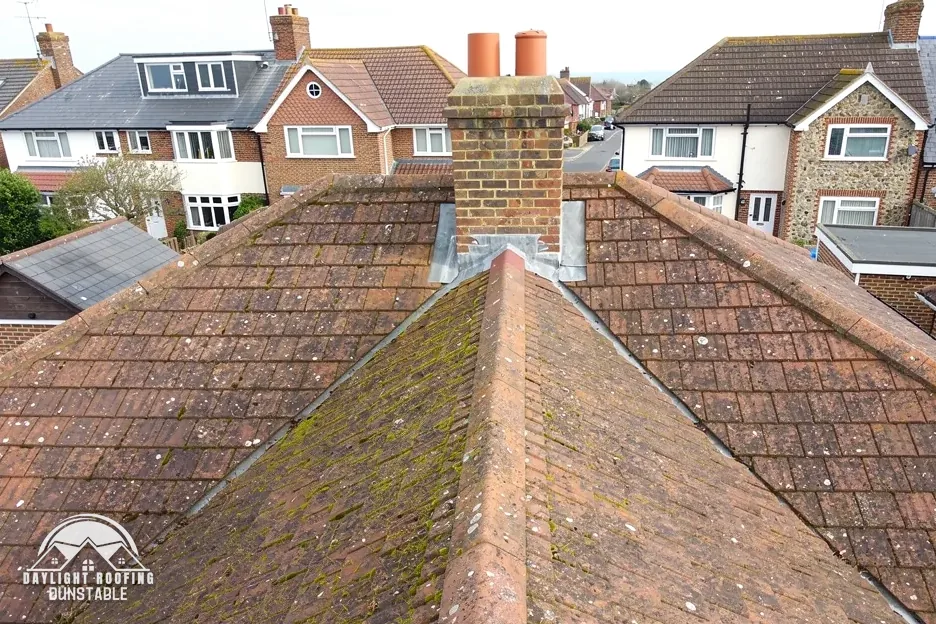
A ridge end cap, or on a bedded ridge an end tile set in mortar, closes the open end of the ridge at a gable or where it meets a hip. It stops wind and rain getting under the ridge tiles and keeps the opening from becoming a way in. Dry-fixed systems use a made cap in its place.
What the end of a ridge needs
Ridge tiles form a line over the apex of the roof, and each one is a hollow, arched shape. Left alone, the end of that line would be an open tube, with the hollow open to wind, rain and anything small enough to crawl or fly inside. Closing the end is a detail of its own, and it is separate from the joints between the tiles.
How it is done depends on where the ridge ends. At a gable, the ridge finishes beside the verge. Where the ridge meets hips, the ends are formed by the junction with the hip tiles. The treatments below are general, because the products and the details vary between roofs.
- An end tile or gable-end ridge tile, shaped to close the opening, bedded on mortar.
- Mortar, sometimes with small cut pieces of tile packed in, to fill the gap at the end.
- A made end cap, fixed or clipped, on a dry-fixed ridge system.
- Fittings at the hip and ridge junction, where a roof has hips.
The gable end shares its details with the verge, so the two are worth judging side by side. The roof verge answer describes that edge.
How ridge ends fail
The end of a ridge meets the wind side-on, with nothing beyond it to shelter the open edge. A bedded end tile relies on its mortar, and mortar can crack, soften and break up. When that happens, the tile can tilt or drop and the opening shows.
From the ground, the signs of a failing end are easy to look for:
- An end tile that has slipped, tilted or gone altogether.
- A dark gap or ragged mortar at the very end of the ridge.
- Pieces of mortar or tile lying below the gable.
- Birds seen flying in and out beneath the last ridge tile.
A dry-fixed end cap does not rely on mortar, so it is not subject to crumbling in the same way. It can still work loose if a clip or screw has gone, or if the cap has been knocked. Either way the fault is the same one: an open end that the weather and animals can use.
The why ridge tiles come loose guide covers how bedding fails along the whole ridge, and the end is one place where that failure can show.
Birds, bats and the open end
An open ridge end can let birds nest under the ridge tiles, and a nest there raises a legal question before anything is closed. Under the Wildlife and Countryside Act 1981, section 1 makes it an offence to act intentionally and take, damage or destroy "the nest of any wild bird while that nest is in use or being built". Closing the end while a nest is active is therefore something to avoid, and the work waits or is planned around it.
Bats are covered differently. GOV.UK says "All bat species, their breeding sites and resting places are fully protected by law", and it lists "repairing or replacing a roof" among the activities that can affect them. Damaging a roost carries no intent test. If bats are suspected under a ridge, the work waits until that has been looked into.
The birds under ridge tiles answer covers the nesting side in more detail. Outside those cases, closing a ridge end is a small repair, and a picture of the end of the ridge sent by WhatsApp to 07880 284133 can show whether the end tile is the only fault.
For the types of tile that make up the rest of the run, see types of ridge tile, and the ridge and verge repairs hub for the rest of the set. Daylight Roofing writes one total after the survey.