
The short answer
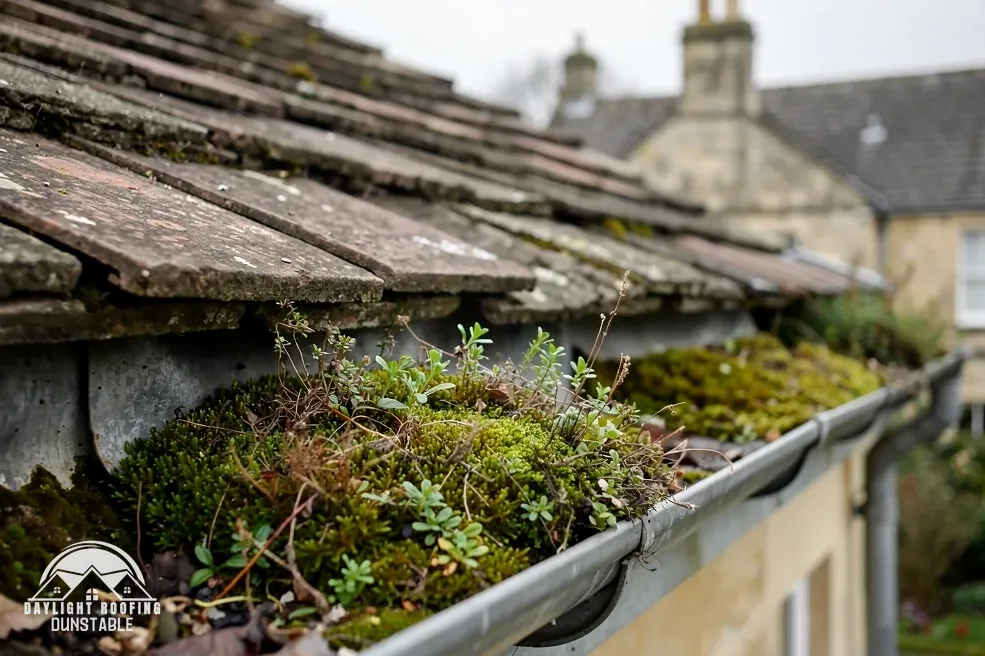
Moss grows on one side of a roof because that side stays damp longer. A slope facing north gets little direct sun, and one shaded by trees or a taller building dries slowly after rain, which gives moss the damp, shaded surface it needs. The sunnier slopes dry faster, so growth there is thinner or absent.
Sun and how fast a slope dries
Moss needs moisture and does not need much light. A roof gives it a surface that is wet after every shower, and what separates one slope from another is how quickly the water goes. In the northern hemisphere a slope that faces north receives little direct sun, so the tiles stay damp for far longer after rain than a south-facing slope does.
A slope that dries within hours leaves moss a short window to take hold, and spores that land on it struggle to establish. A slope that stays wet for a day or more gives the same spores time to root. Over several seasons the difference becomes visible, and the green patch settles on the shaded face while the sunny one stays clear.
The effect works at a smaller scale too. A valley, the shadow of a chimney or a dormer, or the line below a tall neighbouring wall can each keep a strip of one slope damp while the rest dries. So the boundary of a moss patch can follow the edge of a shadow, and a patch with a clean straight edge is a clue to what is casting it. Watching where the shade falls across the day, in winter as well as summer, shows which part of the slope is starved of sun for longest.
The page on moss, lichen and algae on roofs explains how each growth responds to damp and light.
Trees, walls and what keeps the roof wet
Shade does not come only from the compass. A tree that overhangs a slope cuts off the sun, drips water long after rain has stopped and drops leaves and seeds that settle on the tiles. A slope under a mature tree can stay wet and grow moss whichever way it faces, and fallen leaves lying in a valley act as a sponge.
- Overhanging branches that shade the slope and drip onto it.
- A taller building or wall that blocks the low winter sun.
- Leaves and debris trapped in valleys and behind chimneys.
- A gutter that overflows and keeps the lowest courses of tiles wet.
Each of these keeps moisture on the tile for longer, and moss follows the moisture. A gutter that spills over the edge is worth checking in particular, because the damp it creates sits right at the eaves, where moss on a roof can take hold. For removal that avoids damage to the tile surface, see our post on moss on roof tiles without a jet wash.
Which of these applies to your house is a matter of looking at the roof, the trees and the gutters together, rather than taking a guess from the pavement.
What to do about it
Removing the moss treats the symptom, and the shade that grew it stays. Cutting back an overhanging branch, if the tree is yours or you have the owner's agreement, lets in light and air. Clearing the gutters and valleys stops water sitting where it should drain. Neither will turn a north-facing slope into a sunny one, so some regrowth should be expected there, and a routine look every so often keeps it from building up unnoticed.
The table sets the main causes against a practical response.
| Cause | What helps |
|---|---|
| Faces north, little sun | Regular checks and cleaning |
| Overhanging tree | Cutting back, with permission |
| Leaves in valleys | Clearing debris |
| Overflowing gutter | Repair or clearing |
A thick mat deserves a proper look rather than being left, because it can keep the surface wet and can conceal a fault. When the growth is heavy, the slope should be checked for split or slipped tiles before or during any clean, and the gutters below it checked too. Our page on whether moss can cause a leak covers that, and the roof cleaning page explains the clean itself.