
The short answer
Reclaimed slate is natural roofing slate taken from an older roof, cleaned and sorted, then sold for reuse. It is used for repairs that need to match weathered slates, or for a new roof built to look old. HomeBuilding puts reclaimed Welsh slate at roughly 50 to 80 years.
What reclaimed slate is
Reclaimed slate is natural slate that has already served on a roof, whether on a house, a barn, a school or a chapel. When a building is demolished, or when a roof is stripped for replacement, the slates that are still whole can be taken down, sorted and sold. They are also called salvaged or second-hand slates. Because slate is split from stone and does not rot, a slate that has come off one roof can be perfectly fit to go on another.
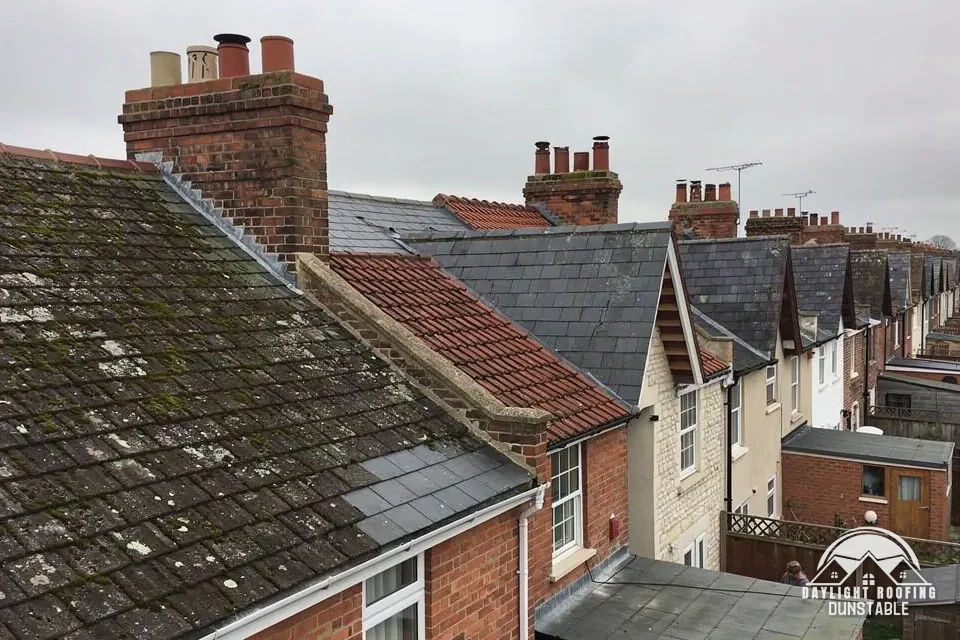
The appeal is partly in the appearance. A slate that has weathered for decades carries colour and surface texture that a new slate lacks, and a reclaimed batch can include slates of slightly different sizes and thicknesses, which gives a roof a varied look. That is a point in their favour on a historic building, and a drawback if a very even finish is wanted. It also means two reclaimed roofs are never quite alike.
Reclaimed slate sits in the same family as the products covered on the wider slate roofing page. It is natural slate, not a man-made one, so it falls in a different category from the manufactured products described in fibre cement slate.
How long reclaimed slate lasts
No slate comes with a promised life, and a second-hand one has already used part of whatever it had. HomeBuilding's new-roof cost guide, dated 30 September 2025, lists approximate lifespans for slate: Welsh slate "100+ years", Spanish natural slate "75-100 years" and reclaimed Welsh slate "50-80 years". These are the magazine's approximations and not guarantees.
| Slate | Approximate lifespan |
|---|---|
| Welsh slate | 100+ years |
| Spanish natural slate | 75-100 years |
| Reclaimed Welsh slate | 50-80 years |
The lower figure for reclaimed slate is not a ruling on quality. A reclaimed batch is made up of slates of different ages and conditions, so the range is wide and the condition of each slate counts. A slate that was cut and fixed well, and has not split along its layers, still has a good deal to give. One that is thin, flaking or chipped at the edges has less, whatever its origin. The listed ages are a rough guide to scale, with no promise attached to any single slate, and they are no substitute for looking at the slates themselves on the roof in question. How long a slate roof lasts, and what shortens it, is covered in how long a slate roof lasts.
When reclaimed slate suits a job
A match is the clearest reason to ask for reclaimed slate. Where a few slates must be replaced on an older roof, new slates can look flat and uniform beside weathered neighbours, and a reclaimed slate of similar age blends in. For a small repair that is worth thinking about, especially on a slope that faces the road.
A building that is listed, or that stands in a conservation area, can raise a further question about materials. Roof work on a listed home stays within permitted development, yet anything done "in any manner which would affect its character as a building of special architectural or historic interest" needs listed building consent, and the council can say whether a change of slate does. It is worth asking the council before work starts, not after, and a note of the answer is useful to have when the slates are ordered, since a delivery of the wrong slate cannot easily be sent back once it has been cut.
- Ask where the slates came from and whether they are whole, not just patched up.
- Check that the batch is sorted into sizes, so the courses run true.
- Expect some slates to be rejected on cutting, which is why extra are ordered.
The survey of the roof and its pitch comes first. Whether the job then uses new slates, reclaimed ones or a mix, you receive one price in writing for the job.